
 21 Sep 2026









- increase Georgia's transit cargo volumes;
- attract additional foreign direct investment;
- create thousands of jobs during both construction and operational phases;
- enhance the competitiveness of the Georgian economy;
- strengthen Georgia's position as a leading transportation and logistics hub in the South Caucasus.
Georgia Launches a Key Phase in the Construction of the Anaklia Deep-Sea Port
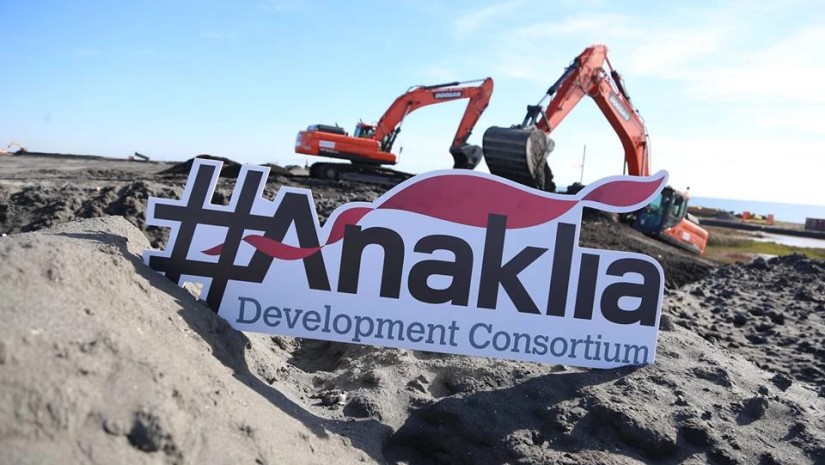
Georgia has begun dredging operations as part of the construction of the Anaklia Deep-Sea Port on the Black Sea coast, marking the transition of the project into an active phase of maritime infrastructure development. A specialized dredging vessel has arrived at the construction site to prepare the navigation channel and harbor basin for future operations.
According to Georgia's Ministry of Economy and Sustainable Development, the first phase of dredging will deepen the port basin to approximately 17.5 meters, enabling the facility to accommodate Post-Panamax container vessels and other large oceangoing ships that currently cannot call at most ports along the eastern Black Sea coast.
Construction of a 1.4-kilometer breakwater will proceed simultaneously with the dredging works, providing the protection necessary for year-round port operations under challenging weather conditions. The maritime engineering component of the project is being carried out by the Belgian company Jan De Nul, one of the world's leading firms specializing in dredging and marine infrastructure.
The first phase of the project is expected to establish a container terminal with an annual handling capacity of more than 600,000 TEU (twenty-foot equivalent units). In subsequent stages, the port's capacity is planned to expand to several million TEU annually, positioning Anaklia among the largest container ports in the Black Sea region.
Strategic Importance
The Anaklia project is regarded by the Georgian government as one of the country's most significant infrastructure initiatives since independence. Its primary objective is to transform Georgia into a major logistics hub along the Middle Corridor (Trans-Caspian International Transport Route), linking China, Central Asia, the South Caucasus, and Europe while bypassing Russia.
The strategic relevance of the Middle Corridor has increased substantially following the outbreak of the Russia–Ukraine war. As international shipping companies and logistics operators sought alternatives to traditional Eurasian transit routes, cargo volumes moving through Kazakhstan, the Caspian Sea, Azerbaijan, and Georgia have risen steadily.
Georgia's existing ports of Poti and Batumi remain important regional gateways, but their limited draft prevents them from accommodating the world's largest container ships without transshipment operations. The Anaklia Deep-Sea Port is intended to eliminate this limitation and become the country's first port capable of receiving large oceangoing container vessels directly.
Geopolitical Dimension
Beyond its commercial significance, the Anaklia project carries considerable geopolitical weight.
For years, both the United States and the European Union have supported the concept of a deep-sea port in Georgia, viewing it as a critical element in diversifying trade and transportation routes between Europe and Asia. At the same time, the project has faced repeated delays caused by political disputes, changes in investors, and financing challenges.

The original international consortium responsible for developing the port withdrew after its agreement with the Georgian government was terminated. The authorities subsequently decided to continue the project under a revised framework, maintaining state control while attracting new foreign partners.
Particular attention has been drawn to the participation of a Chinese company in the consortium selected to advance the project. This development has generated debate both within Georgia and among Western partners, given Anaklia's strategic importance for the future transport architecture of the Black Sea region.
Economic Impact
According to Georgian officials, the first phase of the Anaklia Port is expected to:
The project is also expected to stimulate broader infrastructure development, including railway modernization, highway expansion, logistics centers, industrial parks, and warehousing facilities around Anaklia.
Outlook
If construction proceeds according to schedule, the first phase of the Anaklia Deep-Sea Port could become operational before the end of the decade. Combined with expanding railway connections through Azerbaijan and Kazakhstan, the port has the potential to become one of the central nodes of the Eurasian transport network linking Europe and Asia.
At a time when global supply chains are undergoing significant restructuring and governments seek to reduce dependence on traditional transit routes through Russia and the Suez Canal, the successful completion of the Anaklia project could reshape the transportation landscape of the South Caucasus while substantially enhancing Georgia's role in international trade and regional connectivity.
CCBS Expert Group


 Latest news
Latest news
Latest newsDuma Elections Reinforce Kremlin Dominance Amid the War
21.Sep.2026
Zelenskyy Approves New Long-Range Ukrainian Operations Amid Russian Attacks
20.Sep.2026
US Sanctions Target Russias Main Pillar as Moscow Faces New Pressure on Oil Revenues
19.Sep.2026
Russia Begins State Duma Elections Amid War in Ukraine
18.Sep.2026
Bulgaria Strengthens Protection of Strategic Infrastructure Against Drones and Other Threats
18.Sep.2026
Georgia and Enka: How the Namakhvani Dispute Could Affect the Investment Climate
17.Sep.2026
Una Aleksandra Bērziņa-Čerenkova: After Russia’s Invasion, Latvia Began Banning Russian-Language Media
17.Sep.2026
Rainer Saks: Russia сould lose its influence in Armenia, just as it did in the Baltics
16.Sep.2026
Russian Drones Violated Moldovan Airspace Twice During Zelenskys Trips
16.Sep.2026
Operation Vivaldi: Ukraine Reports Advances Near Lyman as Fighting Intensifies
16.Sep.2026
Kazakhstan and South Korea Elevate Ties to Comprehensive Strategic Partnership
16.Sep.2026
Armenia Energy Diversification: Testing the Limits of Dependence on Russian Gas
15.Sep.2026
Tbilisi Distances Itself from Brussels as Kobakhidze Intensifies Criticism of European Policy
14.Sep.2026
Russia Fuel Crisis Gives the US a New Diplomatic Leverage Tool
14.Sep.2026
Trump Calls on Zelenskyy to Stop Strikes on Russian Oil Infrastructure
13.Sep.2026