
 20 Sep 2026









Romania Faces Political Deadlock: Nicusor Dan Moves to Form a New Government
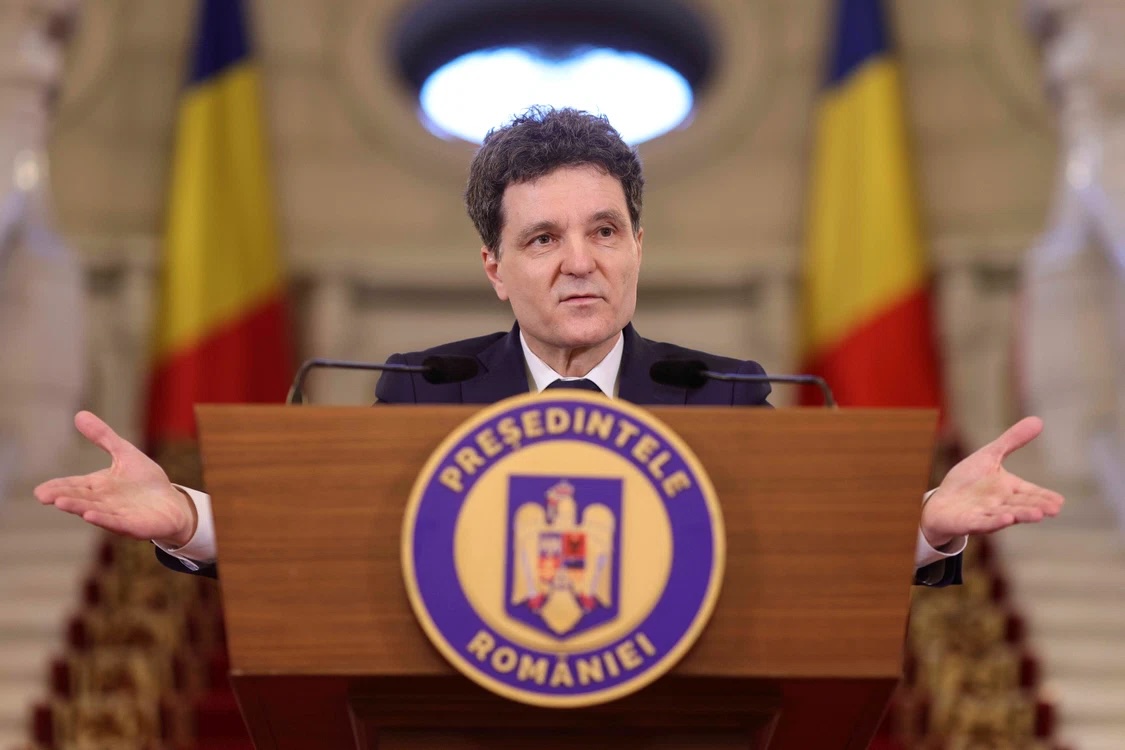
Romanian President Nicusor Dan resumed consultations with parliamentary parties on September 1 in an effort to form a new government and lead the country out of a prolonged political crisis. The head of state is seeking a parliamentary majority capable of supporting a stable cabinet. However, the negotiations are taking place amid serious disagreements between political forces, economic pressure, and the risk of losing hundreds of millions of euros in European funding.
Romanian President Nicusor Dan has launched a new round of consultations with political parties on the formation of a government. The president announced his intention to resume the talks on September 1 during his visit to Chisinau in late August.
According to Dan, Romania needs to establish a fully fledged government with political ministers as soon as possible. The president expressed confidence that the new round of negotiations could lead to a majority capable of ensuring the stable functioning of the cabinet. At the same time, he said he currently does not see sufficient support for the formation of an exclusively technocratic government.
Dan said he expects a new government to be formed before his departure for the United Nations General Assembly, which will take place in New York from September 18 to 28.
Why Romania Has Found Itself in a Political Deadlock
The political crisis intensified following the collapse of the governing arrangement and the withdrawal of the Social Democratic Party (PSD) from the government. The cabinet led by Ilie Bolojan subsequently lost stable parliamentary support and was ousted by a vote of no confidence in May.
Since then, the president has failed to secure a new stable majority. Dan now needs to find a political formula that would allow a functioning cabinet to be formed while avoiding another failed parliamentary vote.
Earlier, the president explained that he had not rushed to nominate a new prime minister precisely because of the risk of another unsuccessful attempt to form a government. According to Dan, another failed vote could negatively affect international rating agencies’ perception of Romania.
The president now believes that the political situation is more favorable for a new round of negotiations.
PSD Sets Its Own Conditions
One of the key participants in the negotiations remains the Social Democratic Party, the largest political force in parliament.
PSD is considering several options for the future government. These include forming a minority government led by the Social Democrats or creating a political cabinet centered around PSD with the participation of other parties.
At the same time, the Social Democrats have made clear that they are not prepared to support a government in which the party itself is not represented.
The position of PSD could therefore prove decisive for the further development of the political situation. At the same time, a scenario involving a prime minister who is not directly affiliated with any political party is also being discussed. According to our sources, such an option could receive support from some political forces, although no final agreement has yet been reached.
The President wants a Political, not a Technocratic Government
Nicusor Dan has effectively rejected a scenario in which the country would receive a cabinet consisting predominantly of independent experts. The president considers the formation of a political government backed by stable parliamentary support to be a more realistic option.
This is particularly important because Romania needs to make decisions on several critical issues at once, including budget policy, public-sector reform, deficit reduction, and the implementation of its commitments to the European Union.
Without a fully functioning government, carrying out these measures becomes significantly more difficult.
€770 Million — The Cost of Political Instability
The economic dimension of the crisis is becoming increasingly serious.
Romania risks losing approximately €770 million in European funding under the EU Recovery and Resilience Facility due to delays in implementing a number of reforms related to the public sector and wage system. Key commitments were supposed to be fulfilled by the end of August, but the political conflict has slowed the process.
The prolonged political crisis is therefore already beginning to have direct financial consequences for the country.
The problem goes far beyond a struggle between political parties over government positions. Bucharest is simultaneously facing the need to reduce budget imbalances, implement structural reforms, and maintain the confidence of financial markets.
Early Elections are not the Main Scenario for Now
The political deadlock has previously fueled speculation about the possibility of early parliamentary elections.
However, such a scenario remains extremely difficult and politically risky. Dan himself has previously opposed early elections, fearing that they could strengthen right-wing and ultranationalist forces.
The president’s current strategy is therefore focused primarily on finding a parliamentary formula that would allow a government to be formed without sending the country into another electoral cycle.
Bucharest needs a Solution before Autumn
Against this backdrop, the September negotiations could prove decisive.
The president has already indicated that he wants a fully functioning government in place before his trip to New York. If the political forces manage to reach an agreement, Romania will be able to move toward addressing its accumulated economic and administrative problems.
If the negotiations once again reach an impasse, pressure on the president and parliamentary parties will increase sharply.
The most sensitive issues will be the budget, European funding, and further reforms.
September could become a turning point for Bucharest: either Nicusor Dan finds a formula for a stable majority and forms a new government, or the political deadlock will deepen, increasing the economic cost of the confrontation between the parties.


 Latest news
Latest news
Latest newsUS Sanctions Target Russias Main Pillar as Moscow Faces New Pressure on Oil Revenues
19.Sep.2026
Russia Begins State Duma Elections Amid War in Ukraine
18.Sep.2026
Bulgaria Strengthens Protection of Strategic Infrastructure Against Drones and Other Threats
18.Sep.2026
Georgia and Enka: How the Namakhvani Dispute Could Affect the Investment Climate
17.Sep.2026
Una Aleksandra Bērziņa-Čerenkova: After Russia’s Invasion, Latvia Began Banning Russian-Language Media
17.Sep.2026
Rainer Saks: Russia сould lose its influence in Armenia, just as it did in the Baltics
16.Sep.2026
Russian Drones Violated Moldovan Airspace Twice During Zelenskys Trips
16.Sep.2026
Operation Vivaldi: Ukraine Reports Advances Near Lyman as Fighting Intensifies
16.Sep.2026
Kazakhstan and South Korea Elevate Ties to Comprehensive Strategic Partnership
16.Sep.2026
Armenia Energy Diversification: Testing the Limits of Dependence on Russian Gas
15.Sep.2026
Tbilisi Distances Itself from Brussels as Kobakhidze Intensifies Criticism of European Policy
14.Sep.2026
Russia Fuel Crisis Gives the US a New Diplomatic Leverage Tool
14.Sep.2026
Trump Calls on Zelenskyy to Stop Strikes on Russian Oil Infrastructure
13.Sep.2026
Ukraine Expands Pressure on Russia’s Shadow Fleet: Moscow’s Oil Logistics Under Threat
13.Sep.2026
The Riga Conference: Europe Prepares for Long-Term Confrontation with Russia and Reshapes Its Security Architecture
12.Sep.2026