
 13 Oct 2026









- Vladimir Putin called for a referendum on choosing between the EU and the Eurasian Economic Union (EAEU), warning of incompatibility and the risk of a “Ukrainian scenario”;
- The EAEU, at its summit in Astana, echoed this proposal on behalf of member-state leaders, effectively launching a countdown for Yerevan until December this year and raising the possibility of Armenia’s membership being suspended;
- Russia recalled its ambassador from Yerevan “for consultations”, a move widely interpreted as a diplomatic demarche;
- Directive restrictions were imposed on imports of Armenian products (fruit, vegetables, mineral water, and brandy), accompanied by explicit threats to increase gas prices.
- Peace and security: Pashinyan argues that only his policies can guarantee peace after Karabakh. The opposition accuses him of “surrendering Artsakh” and “betraying Russia”;
- Economics: Preferential Russian gas prices versus prospects of Western investment, diversification, and transport corridors. Many citizens fear economic repercussions from deteriorating relations with Moscow;
- Identity and security concerns: Some Armenians fear losing Russia’s protective role vis-à-vis Turkiye and Azerbaijan. Others fear renewed dependence on a patron that failed to provide security between 2020 and 2023;
- Undecided voters (around 40 percent): Their choices will likely determine the final outcome. They tend to favor stability and pragmatism over radical shifts.
The Pre-Election Situation in Armenia: The Final Week Before the Vote
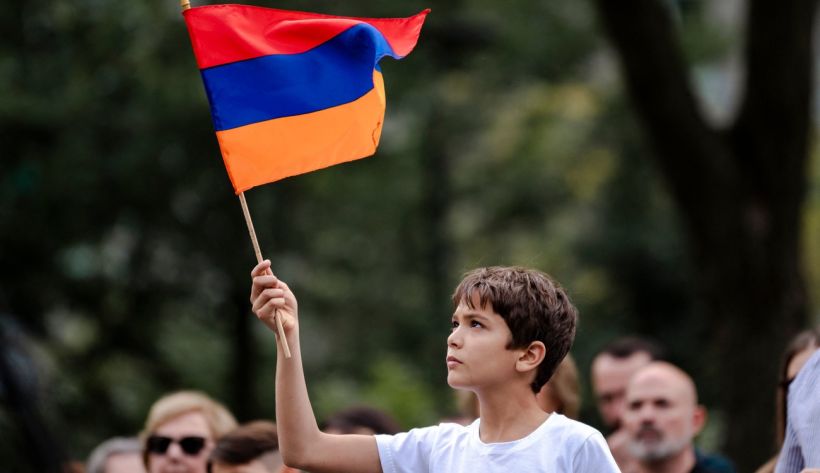
On June 7, 2026, Armenia will hold parliamentary elections that many politicians and experts describe as the most geopolitically charged in the country's modern history. Following the loss of Nagorno-Karabakh in 2023, the initialing of a peace agreement with Azerbaijan mediated by the United States, and the accelerated “turn to the West” under Prime Minister Nikol Pashinyan, Armenia has found itself at the center of competition between Russia, the EU, and the United States. The West has adopted a strategy of developing complementary tracks for Washington, Brussels, and key European capitals, based on prospects for strategic partnerships with Central Asian countries and the development of the Middle Corridor, in which the South Caucasus in general and Armenia in particular constitute a crucial link. Moscow, meanwhile, has chosen a path of active resistance, employing its full range of hybrid instruments of influence and destabilization.
The elections will serve not only as a test of confidence in the current government but also as a referendum on Armenia’s foreign policy direction: continued diversification of ties with the West or a return to Moscow’s orbit.
Geopolitical Context: From Russian Patronage to a Western Pivot
Traditionally, Armenia relied on Russia as its primary security guarantor within the CSTO framework and as a supplier of energy resources at preferential prices. However, the events of 2020–2023 fundamentally altered this balance. Russia, deeply engaged in the war in Ukraine, was unable and/or unwilling to intervene effectively in the Karabakh conflict, leading to the loss of Nagorno-Karabakh and the mass exodus of Armenians.
This significantly undermined trust in Moscow. Yerevan suspended its participation in the CSTO, removed Russian border guards from the airport and other facilities in 2025, and publicly expressed its intention to further reduce the Russian security presence in the country.
Prime Minister Pashinyan announced a course toward EU membership, and the National Assembly adopted the relevant legislation based on 60,000 citizen signatures. At the same time, Armenia dramatically intensified cooperation with the United States and Europe, formalizing strategic partnerships with the United Kingdom, Germany, France, as well as Bulgaria, Lithuania, Croatia, and other smaller EU and NATO member states.
Key milestones included the European Political Community Summit and the first bilateral EU–Armenia Summit held in Yerevan in early May 2026, during which investments of up to €2.5 billion under the Global Gateway initiative were pledged. Armenia also concluded a strategic partnership with the United States covering nuclear energy, critical minerals, semiconductors, defense, and security, as well as support for the TRIPP (Trump Route for International Peace and Prosperity) project.
U.S. President Donald Trump publicly praised Pashinyan as “a great friend and leader” following a productive two-hour visit to Yerevan by Secretary of State Marco Rubio.
Russia perceives these developments as a direct threat to its already weakened influence in the South Caucasus. In the weeks leading up to the elections, pressure has intensified:
Moscow does not conceal its support for its preferred Armenian opposition figures, including Russian-Armenian businessman Samvel Karapetyan and his “Strong Armenia” bloc, former President Robert Kocharyan and his “Armenia” alliance, as well as Gagik Tsarukyan, a close associate of Alexander Lukashenko, and his “Prosperous Armenia” party, all of whom maintain ties to Russian political and business circles.
According to open Western sources, Russia has resorted to disinformation campaigns, efforts to mobilize Armenian diaspora voters from Russia, and other hybrid methods involving security services such as the FSB, GRU, and SVR. Documents published in recent months have allegedly revealed long-standing connections between Moscow’s favored political figures and Russian security structures.
The West, by contrast, has openly supported Pashinyan. Visits by U.S. Vice President J.D. Vance, Secretary of State Marco Rubio, European summits, and rhetoric centered on democracy and resilience have positioned the current Armenian government as a barrier against Russian influence and as a defender of the country’s sovereignty and independence.
The EU sees Armenia as an opportunity to create a regional bridge and weaken Russia’s position in the South Caucasus, particularly amid the still unresolved crisis in relations between Georgia and the EU and United States.
Public Sentiment: Fatigue, Pragmatism, and Anxiety
Opinion polls present a complex picture. Pashinyan’s Civil Contract party leads with approximately 32–40 percent support, depending on polling methodology and treatment of undecided voters. Given the fragmented opposition, this gives the ruling party a realistic chance of securing either a parliamentary majority or the largest faction.
The main challengers include Karapetyan’s Strong Armenia bloc (approximately 10–15 percent) and Kocharyan’s Armenia alliance, with other opposition forces polling around or below the electoral threshold.
Pashinyan’s approval rating has risen to roughly 49 percent and, according to some May 2026 surveys—including the latest poll by Breavis—has reached as high as 65 percent.
However, many analysts argue that this reflects a “vote against returning to the past” rather than genuine enthusiasm for the government. Around 60 percent of citizens express distrust toward both the government and the opposition.
Armenian society is exhausted by wars, economic hardship, the loss of Karabakh, recurring crises, and constant political turbulence. Many associate former presidents Robert Kocharyan and Serzh Sargsyan with corruption and the failures of the past.
The opposition remains fragmented and has failed to offer a convincing alternative beyond restoring close relations with Russia and challenging Armenia’s agreements with neighboring states, the United States, and the European Union.
Key drivers of public opinion include:
The government’s campaign is built around positive messaging (“Armenia as a Crossroads of Peace”) and warnings about the risks posed by the opposition and renewed conflict. The opposition, meanwhile, appeals to nostalgia for a “reliable ally” and dissatisfaction with domestic policies.
Prospects and Risks
If Civil Contract consolidates its position, Armenia is expected to continue its course toward closer integration with the European Union — although full membership remains a long-term prospect — while deepening ties with the United States and pursuing normalization with neighboring countries.
This would strengthen diversification but could also lead to further deterioration in relations with Russia, including economic pressure, accelerated military disengagement, and possible repercussions for the Armenian community living in Russia.
A victory — or even a strong showing — by the pro-Russian opposition, while currently considered unlikely based on polling data, could slow Armenia’s westward trajectory, restore emphasis on the EAEU and CSTO, and complicate the peace process with Azerbaijan.
However, even under such a scenario, a complete reversal appears unlikely due to deep and arguably irreversible disappointment with Russian patronage.
The elections are taking place amid polarization, accusations of administrative resource abuse, and allegations of foreign interference. Voter turnout and the behavior of undecided and “silent” voters will be decisive.
Armenia today embodies a classic post-Soviet dilemma faced by small states: balancing security, economic interests, and sovereignty in a turbulent world where the old international order has disappeared and a new one has yet to emerge.
Regardless of the outcome, June 7 will determine whether Armenia becomes a bridge between East and West or remains hostage to geopolitical confrontation. Public fatigue appears to favor the pragmatic continuation of the current course, but the price of that choice may be several years of national mobilization, sustained pressure, internal tensions, and ongoing hybrid warfare.
Associate Expert, Armenian Institute of International and Security Affairs
Ruben MEGHRABYAN


 Latest news
Latest news
Latest newsGeorgia’s Constitutional Court Continues Case on Banning Opposition Parties: Political Pluralism at Stake
12.Oct.2026
Azerbaijan and Iran Step Up Security Contacts Amid Hijab Protests
12.Oct.2026
Personnel Shortages Complicate Ukrainian Forces’ Rotation: Ukraine Faces Long-Term Challenges on the Front Line
11.Oct.2026
Trump Eases Sanctions on Russian Fuel After Talks with Putin: Kyiv Fears Boost to Moscow’s War Revenues
10.Oct.2026
Putin Seeks to Strengthen Russia’s Influence in the Post-Soviet Space Through the CIS
10.Oct.2026
Russia and the South Caucasus: External Pressure, Political Competition and a Crisis of Trust
10.Oct.2026
Peaceful Settlement Between Armenia and Azerbaijan: Moving from Declarations to Implementation
10.Oct.2026
Moldova Ready to Accept as Many Ukrainians as Necessary if Situation Worsens This Winter
09.Oct.2026
Turkmenistan Turns Avaza into a Regional Diplomatic Hub as Caspian, Central Asian and CIS Agendas Converge
08.Oct.2026
Romania Scrambles Spanish F-18s After Aerial Targets Detected Near Ukrainian Border
07.Oct.2026
Berlin Deepens Defence Partnership with Kyiv: Germany to Provide Ukraine with €1 Billion in Military Aid
07.Oct.2026
European Parliament Against Georgian Dream: EU Prepares New Response to Tbilisi
06.Oct.2026
Bulgarian Foreign Minister to Discuss European Security and International Law in the Netherlands
05.Oct.2026
Rheinmetall in Bulgaria: Sofia Emerges as a New NATO Defence-Industrial Hub in the Balkans
05.Oct.2026
The Cost of a Long War: Moscow Expands Spending Plans Through 2029
05.Oct.2026