
 20 Sep 2026









Armenia focused on broad and lasting military-technical cooperation with Russia – PM
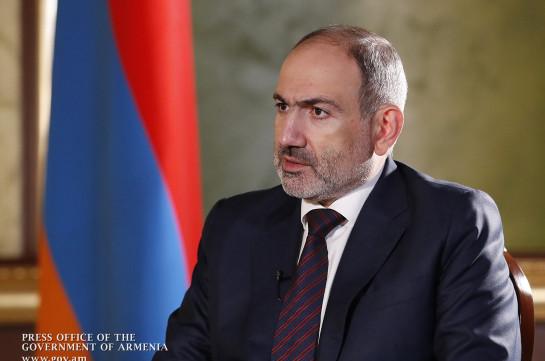
Armenia is focused on broad and lasting military-technical cooperation with Russia which derives from lasting and strategic interests of the two states, Armenia’s Prime Minister Nikol Pashinyan said in an interview to Russian Interfax.
“Taking into consideration that in the territory of Armenia two Armenian-Russian groups have been created and are functioning – the United Group of Forces and CSTO United Regional System of Air Defense in the Caucasian region – and that the two countries are CSTO member states in the format of which collective troops have been created, it is clear that Armenia is extremely interested in supplies from Russia to have contemporary and compatible arms and ammunition together with the Russian Federation and other CSTO allies,” he said, adding that with the same reason Armenia is interested in the delivery of arms and ammunitions to Armenia in the same bundling as for the Russian Armed Forces.
Asked whether Armenia will continue purchasing Russian weapon and SU-30SM fighters and ammunition for them in particular, the PM said, “I will give positive answer to the type of jet you mentioned because these are contemporary multi-functional fighters and their purchase is envisaged both by bilateral contracts and by the program of development of national armed forces.”
Pashinyan also stated that decisions on new Russian loan for acquiring weapon and on the needs of Yerevan will be made based on the results of the reforms in the army which are now being implemented.
“In this phase I see no reason to discuss the funding sources and the structure separated from the goals and the issues which will be predicated in the process of reforms in the army. As to the ongoing loan commitments, naturally they will be served properly and in time,” the PM stated.


 Latest news
Latest news
Latest newsUS Sanctions Target Russias Main Pillar as Moscow Faces New Pressure on Oil Revenues
19.Sep.2026
Russia Begins State Duma Elections Amid War in Ukraine
18.Sep.2026
Bulgaria Strengthens Protection of Strategic Infrastructure Against Drones and Other Threats
18.Sep.2026
Georgia and Enka: How the Namakhvani Dispute Could Affect the Investment Climate
17.Sep.2026
Una Aleksandra Bērziņa-Čerenkova: After Russia’s Invasion, Latvia Began Banning Russian-Language Media
17.Sep.2026
Rainer Saks: Russia сould lose its influence in Armenia, just as it did in the Baltics
16.Sep.2026
Russian Drones Violated Moldovan Airspace Twice During Zelenskys Trips
16.Sep.2026
Operation Vivaldi: Ukraine Reports Advances Near Lyman as Fighting Intensifies
16.Sep.2026
Kazakhstan and South Korea Elevate Ties to Comprehensive Strategic Partnership
16.Sep.2026
Armenia Energy Diversification: Testing the Limits of Dependence on Russian Gas
15.Sep.2026
Tbilisi Distances Itself from Brussels as Kobakhidze Intensifies Criticism of European Policy
14.Sep.2026
Russia Fuel Crisis Gives the US a New Diplomatic Leverage Tool
14.Sep.2026
Trump Calls on Zelenskyy to Stop Strikes on Russian Oil Infrastructure
13.Sep.2026
Ukraine Expands Pressure on Russia’s Shadow Fleet: Moscow’s Oil Logistics Under Threat
13.Sep.2026
The Riga Conference: Europe Prepares for Long-Term Confrontation with Russia and Reshapes Its Security Architecture
12.Sep.2026