
 23 Sep 2026









Baku Says It has Reached ''Real Peace'' with Armenia, but Sets Condition for Historic Agreement
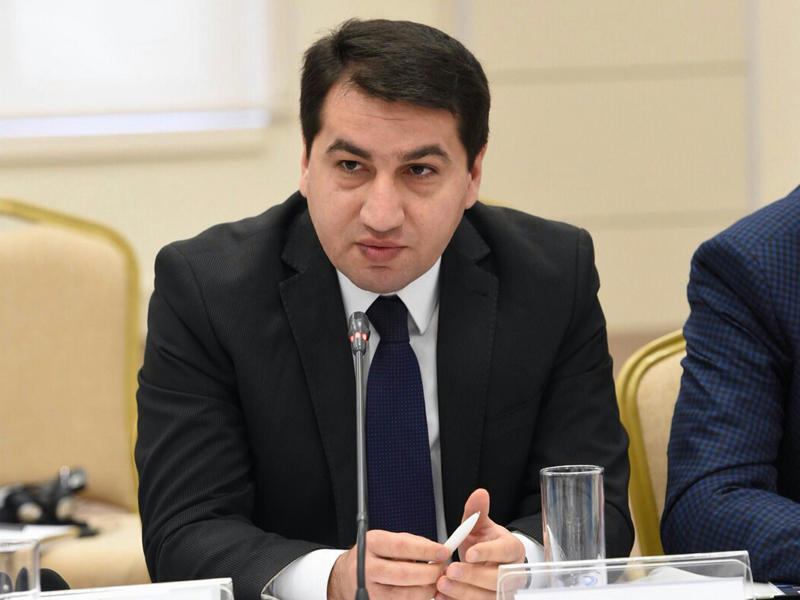
Azerbaijan believes its relationship with Armenia has already entered a stage of "real peace", but says the signing of a final peace treaty still hinges on one key issue — amendments to Armenia's Constitution. The statement was made by Hikmet Hajiyev, Assistant to the President of Azerbaijan, in an interview with Reuters.
According to Hajiyev, direct contacts between the two countries have increased significantly in recent months, while economic ties and trade are gradually recovering. As an example, he cited the supply of Azerbaijani petroleum products to Armenia, something that would have seemed almost unimaginable just a few years ago. In Baku's view, this demonstrates that peace between the two countries now exists not only in political rhetoric but also in practical day-to-day cooperation.
At the same time, Azerbaijani officials maintain that the preamble to Armenia's Constitution remains the main obstacle to a comprehensive peace agreement. Baku argues that references to late Soviet-era documents could be interpreted as territorial claims against Azerbaijan because they touch upon the issue of Nagorno-Karabakh. Azerbaijani authorities say they are not insisting on any specific legal mechanism but expect Armenia to formally remove provisions they believe contradict the principle of mutual recognition of territorial integrity.
Armenian Prime Minister Nikol Pashinyan has previously announced plans to pursue constitutional reform and submit a revised Constitution to a nationwide referendum. However, such a process would require a complex domestic political procedure and broad support from both parliament and the public. Azerbaijani officials have indicated that publishing a draft Constitution alone would not be sufficient; legally binding constitutional amendments are required.

Meanwhile, the two sides continue discussions on regional transport connectivity in the South Caucasus. Hajiyev said Azerbaijan has received positive signals from the United States regarding the implementation of the U.S.-backed TRIPP (Trump Route for International Peace and Prosperity) initiative. The proposed corridor would pass through Armenian territory, linking mainland Azerbaijan with the Nakhchivan Autonomous Republic and onward to Türkiye. According to Baku, infrastructure construction on Azerbaijan's side is expected to be completed by the end of 2026.
Analysts believe Azerbaijan's current position reflects its determination to consolidate the outcomes of recent years not only on the ground but also through legally binding guarantees. For Baku, eliminating any future basis for territorial disputes remains a strategic priority. In Armenia, however, constitutional reform remains a politically sensitive issue, as it affects not only relations with Azerbaijan but also public perceptions of the Nagorno-Karabakh conflict and its aftermath.
Should both sides overcome this final obstacle, the South Caucasus could see its first comprehensive peace treaty between Armenia and Azerbaijan in more than three decades of conflict. Such an agreement could unlock new transport corridors between Europe and Asia, significantly expand regional trade, and reshape the geopolitical balance among major stakeholders, including Russia, Turkiye, the United States, and the European Union.


 Latest news
Latest news
Latest newsBulgaria Strengthens Mobile Air Defence Through Strategic Partnership with Czechia
22.Sep.2026
Bulgaria Marks 118 Years of Independence: Veliko Tarnovo Becomes the Center of National Celebrations
22.Sep.2026
Tbilisi Links Georgia’s European Future to the Restoration of Territorial Integrity
22.Sep.2026
Duma Elections Reinforce Kremlin Dominance Amid the War
21.Sep.2026
Zelenskyy Approves New Long-Range Ukrainian Operations Amid Russian Attacks
20.Sep.2026
US Sanctions Target Russias Main Pillar as Moscow Faces New Pressure on Oil Revenues
19.Sep.2026
Russia Begins State Duma Elections Amid War in Ukraine
18.Sep.2026
Bulgaria Strengthens Protection of Strategic Infrastructure Against Drones and Other Threats
18.Sep.2026
Georgia and Enka: How the Namakhvani Dispute Could Affect the Investment Climate
17.Sep.2026
Latvia Banned Russia-Based Media After Russia’s Invasion of Ukraine, Latvian Institute of International Affairs Director Says
17.Sep.2026
Rainer Saks: Russia сould lose its influence in Armenia, just as it did in the Baltics
16.Sep.2026
Russian Drones Violated Moldovan Airspace Twice During Zelenskys Trips
16.Sep.2026
Operation Vivaldi: Ukraine Reports Advances Near Lyman as Fighting Intensifies
16.Sep.2026
Kazakhstan and South Korea Elevate Ties to Comprehensive Strategic Partnership
16.Sep.2026
Armenia Energy Diversification: Testing the Limits of Dependence on Russian Gas
15.Sep.2026