
 20 Sep 2026









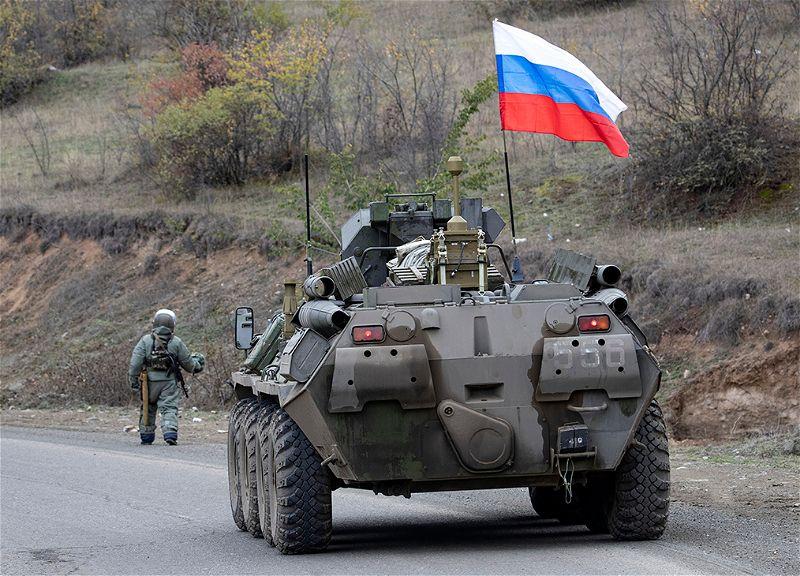
Russian military are arriving at the border with Kalbajar
The Kremlin denied information about the signing a document related to the deployment of Russian peacekeepers on the Armenian-Azerbaijani border signed during today's talks between Russian President Vladimir Putin and acting Prime Minister of Armenia Nikol Pashinyan.
"This message does not correspond to reality," the press secretary of the Russian president Dmitry Peskov told reporters, answering the question whether, according to media reports, documents will be signed during the negotiations, in particular on the deployment of peacekeepers at the border of the Sotk-Khoznavar section.
Earlier, the Armenian newspaper "Zhoghovurd" wrote that the acting prime minister, among other issues, would discuss with Russian President Vladimir Putin the options for deploying Russian peacekeepers on the Armenian border.
Nevertheless, part of the Russian military, who will be stationed between Armenia and Azerbaijan, have already arrived in Gegharkunik region, Governor of the region Gnel Sanosyan said at a press conference on Wednesday.
"There is a process under which the Russian military (some of them are already in the region) after a certain stage will be deployed along the border. The Armenian and Azerbaijani Armed Forces will be withdrawn from these areas. After that, clarification of certain sections of the border will begin," Sanosyan said.
Earlier, Russian Ambassador to Armenia Sergei Kopyrkin stated that discussions are underway regarding the deployment of Russian border guards on the border of Armenia and Azerbaijan.
Prior to that, an agreement was reached between Yerevan and Moscow on the transfer of a group of military from the 102nd base to the border with Azerbaijan. In addition, additional forces of the Russian Border Service were deployed to Goris.
The most acute situation since mid-May has been between Kalbajar (Azerbaijan) and Geghargunik (Armenia), as well as between Lachin and Gegharkunik.


 Latest news
Latest news
Latest newsUS Sanctions Target Russias Main Pillar as Moscow Faces New Pressure on Oil Revenues
19.Sep.2026
Russia Begins State Duma Elections Amid War in Ukraine
18.Sep.2026
Bulgaria Strengthens Protection of Strategic Infrastructure Against Drones and Other Threats
18.Sep.2026
Georgia and Enka: How the Namakhvani Dispute Could Affect the Investment Climate
17.Sep.2026
Una Aleksandra Bērziņa-Čerenkova: After Russia’s Invasion, Latvia Began Banning Russian-Language Media
17.Sep.2026
Rainer Saks: Russia сould lose its influence in Armenia, just as it did in the Baltics
16.Sep.2026
Russian Drones Violated Moldovan Airspace Twice During Zelenskys Trips
16.Sep.2026
Operation Vivaldi: Ukraine Reports Advances Near Lyman as Fighting Intensifies
16.Sep.2026
Kazakhstan and South Korea Elevate Ties to Comprehensive Strategic Partnership
16.Sep.2026
Armenia Energy Diversification: Testing the Limits of Dependence on Russian Gas
15.Sep.2026
Tbilisi Distances Itself from Brussels as Kobakhidze Intensifies Criticism of European Policy
14.Sep.2026
Russia Fuel Crisis Gives the US a New Diplomatic Leverage Tool
14.Sep.2026
Trump Calls on Zelenskyy to Stop Strikes on Russian Oil Infrastructure
13.Sep.2026
Ukraine Expands Pressure on Russia’s Shadow Fleet: Moscow’s Oil Logistics Under Threat
13.Sep.2026
The Riga Conference: Europe Prepares for Long-Term Confrontation with Russia and Reshapes Its Security Architecture
12.Sep.2026