
 24 Jun 2026









- Growing public dissatisfaction with Russia's role in the South Caucasus after the exodus of the Armenian population from Nagorno-Karabakh;
- Strengthening pro-European sentiment in Armenia;
- Intensification of Armenia’s relations with France, the U.S., and the EU;
- Statements by Pashinyan suggesting that “Armenia’s foreign policy course needs reassessment.”
Valentina Matvienko’s Visit to Yerevan: “There Is No Crisis of Trust Between Russia and Armenia”
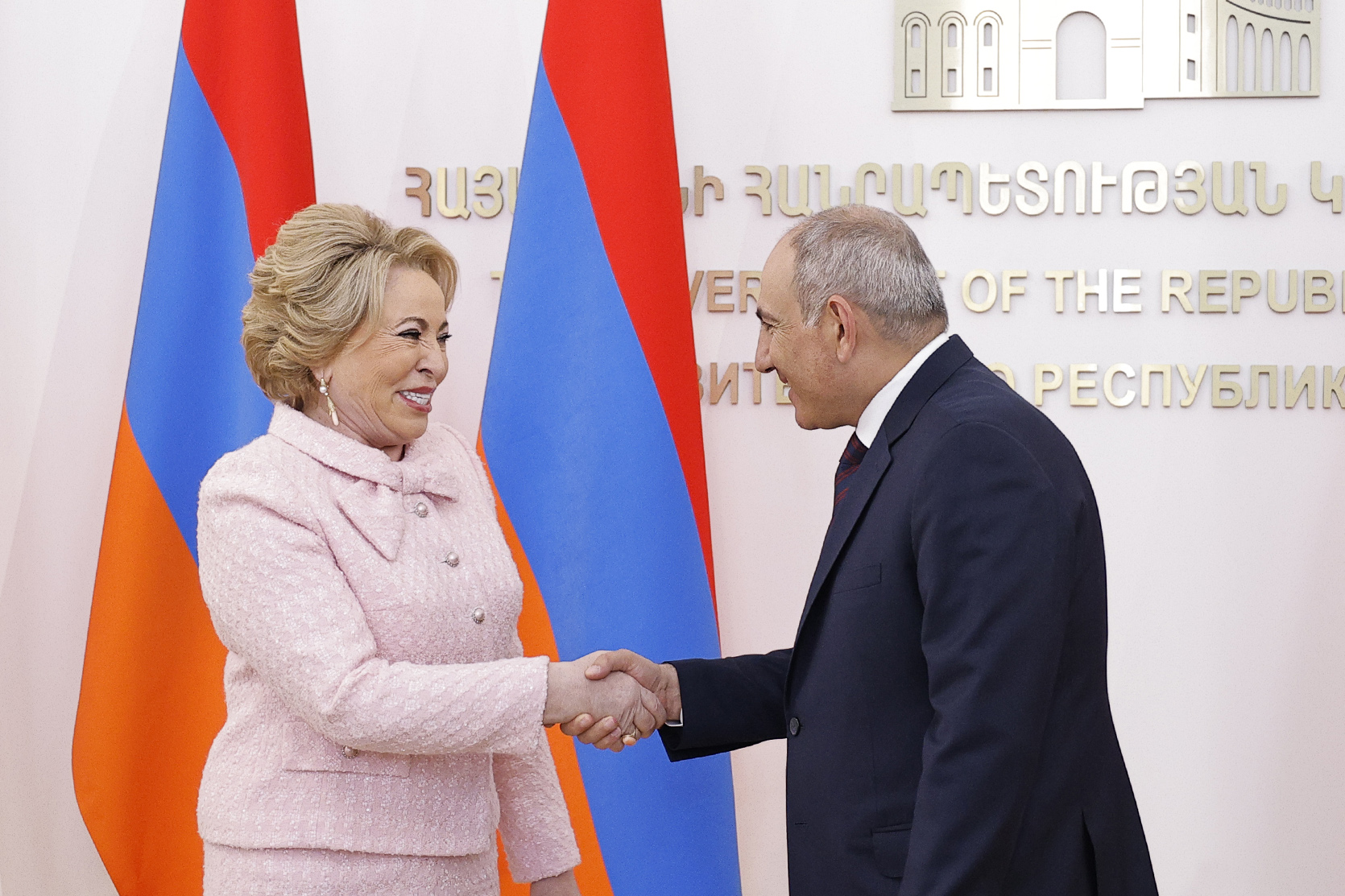
On June 6, 2025, Chairwoman of the Federation Council of the Russian Federation Valentina Matvienko arrived in Yerevan, where she met with Armenian Prime Minister Nikol Pashinyan. This event became an important element against the backdrop of increasingly unstable Russian-Armenian relations observed over the past several months.
Matvienko conveyed personal greetings from Russian President Vladimir Putin to Pashinyan and emphasized that constructive relations between Moscow and Yerevan continue, despite some disagreements that have emerged following events in Nagorno-Karabakh and Armenia's efforts to improve ties with the West.
Matvienko's quote: “There is no and cannot be a crisis of trust. Armenia is our strategic ally and an important partner in the CSTO and the EAEU.”
The meeting took place amid:
Nevertheless, Matvienko sought to demonstrate that the Kremlin remains interested in maintaining influence and allied relations with Armenia. During the meeting, Nikol Pashinyan confirmed his commitment to a “strategic dialogue,” but according to Armenian sources, did not give any clear signals that Armenia is returning to closer coordination with Russia on defense and security matters. The Armenian side continues to emphasize a multi-vector foreign policy, in which Moscow is just one of several partners.
Matvienko's visit can be seen as an attempt by Russia to retain Armenia within its sphere of influence, amid growing competition with the West. It also sends a message to domestic and international audiences that Russia has not lost control over its CSTO allies. For Armenia, the visit presents an opportunity to show openness to dialogue, while still pursuing a balanced foreign policy.
The visit did not mark a breakthrough but was symbolically important: Russia is trying to reaffirm its presence in the South Caucasus. However, trust between the sides continues to erode, and this visit is unlikely to reverse Armenia's strategic drift toward the West.


 Latest news
Latest news
Latest newsUkraine’s Battlefield Experience Opens New Opportunities in Asia’s Drone Market
19.Jun.2026
Azerbaijan’s Oil Trap: Why the Economy Is Standing Still
18.Jun.2026
Motorcycle Noise Seen as Obstacle to Air Defense Operations in Crimea
17.Jun.2026
Rising Wages and Euro Integration: Bulgaria Enters a New Economic Era
17.Jun.2026
Armenia After June 7: Pashinyan Remains in Power, Moscow Unhappy
17.Jun.2026
$300 Billion Deal: Iran Poised to Receive the Largest Investment Package in Modern Middle Eastern History
16.Jun.2026
Infrastructure Pressure: Putin Acknowledges the Economic Impact of Ukrainian Attacks
15.Jun.2026
Kyiv and Moscow Trade Blame After Damage Reported at Kyiv Pechersk Lavra
15.Jun.2026
IMF Raises Georgia’s Economic Growth Forecast to 6.5% for 2026
15.Jun.2026
EU Opens the Door to Ukraine and Moldova as First Membership Talks Begin
14.Jun.2026