
 14 Jul 2026









- Failure of generators. The
generators are not designed for long-term operation. If they fail or run out of
fuel, the cooling systems of reactors and storage facilities may cease to
function. This could cause nuclear fuel overheating and, in the worst case, a
radioactive release.
- International consequences. Any
radiation release from ZNPP would not be limited to Ukraine – radioactive
particles could spread to neighboring countries, turning the incident into an
international problem.
- Political pressure and an argument for military
aid. Ukraine is actively using the nuclear threat issue in
international discourse as an argument for strengthening air defense systems
and accelerating assistance.
- Russian manipulation. Some observers believe that Russia may be deliberately provoking a crisis in order to tighten its control over the plant and use it as a tool of political leverage.
Nuclear Safety Threat: Zaporizhzhia NPP Cut Off from External Power, IAEA and Ukrainian Experts Sound the Alarm
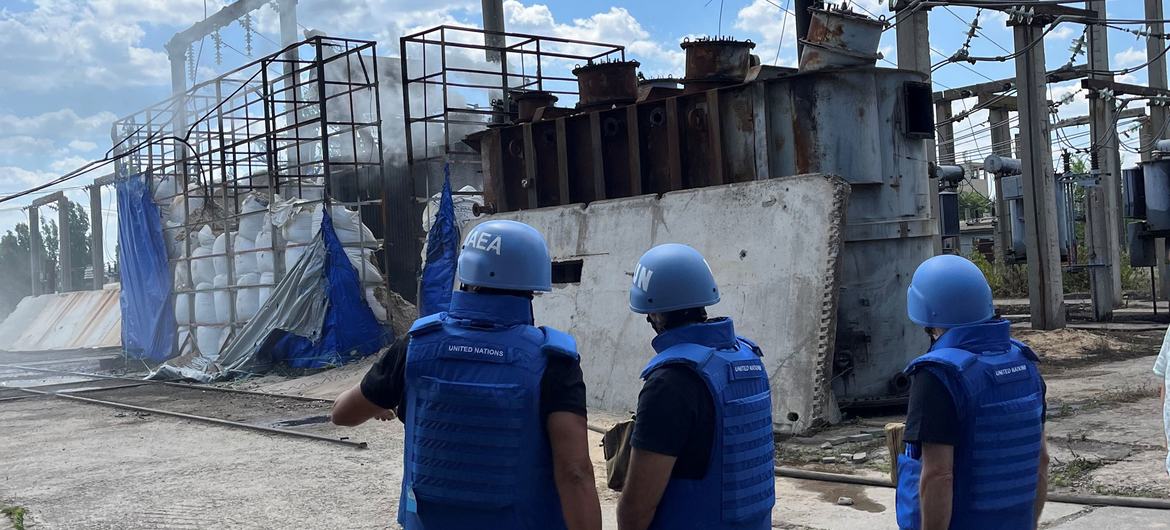
Ukrainian President Volodymyr
Zelensky once again drew the attention of the international community to the
danger looming over the country’s key nuclear facilities – in particular the
Chornobyl zone and the Zaporizhzhia Nuclear Power Plant (ZNPP). According to
him, due to a series of drone strikes and damage to power transmission lines,
the plant has been completely cut off from external electricity supply, with
emergency diesel generators remaining the only source of power.
The
ZNPP has been under Russian control since the beginning of the full-scale
invasion, but even after being taken out of active generation, it requires
constant power supply to maintain the cooling systems of reactors and spent
fuel storage facilities.
Since
the last disconnection of external power lines, ZNPP has been without external
electricity for more than a week (by some estimates, 6–7 days). Despite
multiple previous outages, none of them lasted this long.
The
plant is currently operating on diesel generators, but they are designed
primarily for emergency backup. The IAEA stresses that such a prolonged
external disconnection is an “unsustainable” situation in terms of nuclear
safety.

IAEA
Director General Rafael Grossi stated that the agency “is cooperating with both
sides of the conflict” to restore external electricity supply as soon as
possible.
“The plant is currently relying on emergency diesel generators – the last line of defense – but this is clearly an unsustainable nuclear safety situation”, Grossi said.
“Ignoring nuclear and radiation safety requirements, shelling of power lines, and obstacles to repairs – all of this may lead to the development of an accident”, noted Oleh Korikov, Head of Ukraine’s State Nuclear Regulatory Inspectorate.
Greenpeace
expert Shaun Burnie described the current outage as “the longest since the
start of Russian occupation”. He also questioned Russian claims that repairs
were impossible: according to satellite imagery, the damage to high-voltage
lines shows no signs of shelling.
Ukrainian
authorities state that Russia is obstructing repair efforts by restricting
access for technical crews and blocking restoration work, increasing the
likelihood of an emergency scenario.
Possible
Scenarios and Risks:
Expert Group CCBS


 Latest news
Latest news
Latest newsUS Ready to Lift Sanctions on Turkiye and Restore Its Participation in the F-35 Program
09.Jul.2026
Trump Announces Transfer of License to Ukraine for Patriot Interceptor Missile Production
09.Jul.2026
The NATO Summit in Ankara Marked a New Stage in the Alliance's Transformation
08.Jul.2026
The war in Ukraine - the “liberation of Novorossiya” is a mission impossible
07.Jul.2026
Ursula von der Leyen's Visits to Baku and Yerevan Signal Brussels' New Strategy
07.Jul.2026
Putin's Approval Ratings Decline as Russians Grow Increasingly Concerned About the Economy and the War
06.Jul.2026
Erdogan and Radev Discuss Black Sea Security and Defense Cooperation
06.Jul.2026
OPEC+ Accelerates Output Recovery as Kazakhstan Increases Oil Production from August
05.Jul.2026
Georgia and Uzbekistan Elevate Relations to Strategic Partnership
05.Jul.2026
Iran Turns Khamenei Funeral into a Show of Strength as Week-Long National Mourning Begins
04.Jul.2026