
 14 Jul 2026









Armenia and Azerbaijan Discuss Bypass Trade Routes: A Challenge to Georgia’s Transit Role
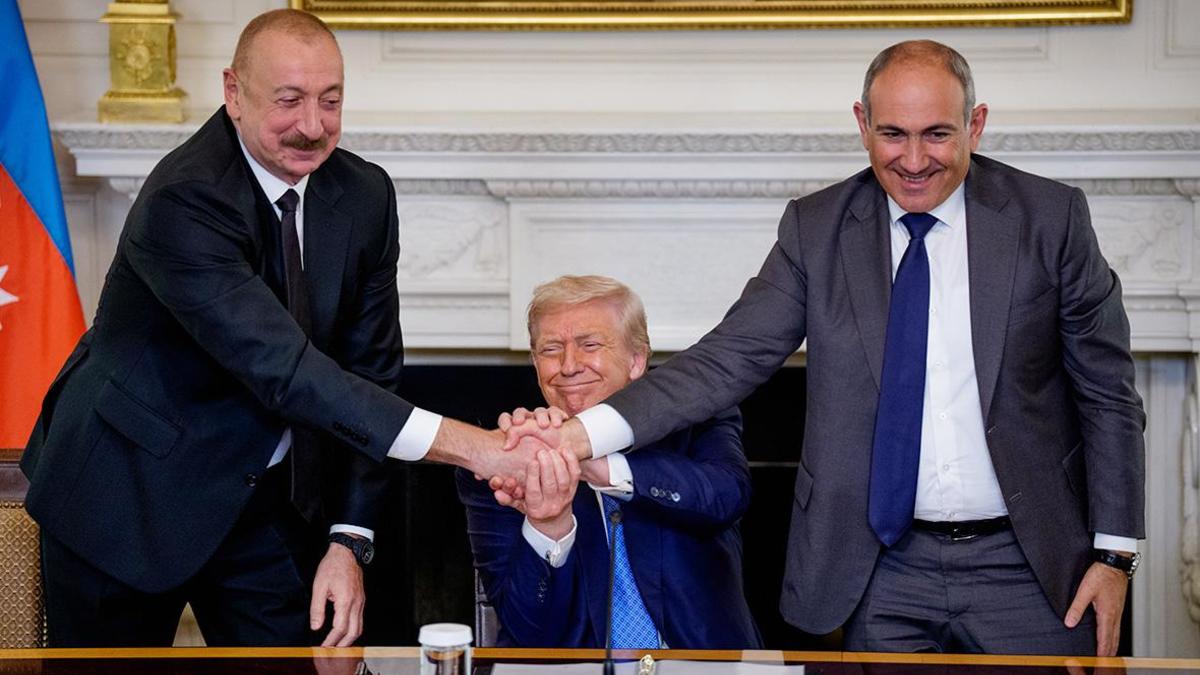
At the international economic forum in Davos, the leaders of Armenia and Azerbaijan discussed the possibility of creating direct trade routes that could bypass transit through Georgia. Although the initiative is still at the discussion stage, it has already raised serious concerns in Tbilisi about the country’s future role as a key transport corridor between the Caucasus, the Caspian region, and Europe.
It is worth noting that Georgia has historically served as an important transit hub for goods moving from Central Asia and the Caucasus region to Europe, as well as for the import and export of energy resources. A potential reduction in Georgian transit could negatively impact revenues from transport logistics, reduce the country’s strategic significance, and call into question investment plans for infrastructure projects such as railways and highways that are part of the Middle Corridor.
In Tbilisi, officials note that direct trade between Armenia and Azerbaijan via new routes could theoretically accelerate the movement of goods and reduce costs for neighboring countries, but at the same time, it weakens economic dependence on Georgia and diminishes its influence in regional politics. Experts warn that even a partial decline in transit flows will create long-term economic challenges for the Georgian economy and may require a revision of strategies for transport sector development and foreign economic policy.
Amid discussions of direct routes, uncertainty and risks remain: much depends on political stability in the region, the resolution of contentious issues between Armenia and Azerbaijan, as well as the participation of international investors in implementing new logistics projects. Thus, the current talks in Davos raise questions about Georgia’s future strategic position in the South Caucasus transport network and its ability to maintain its role as the main regional transit hub.


 Latest news
Latest news
Latest newsUS Ready to Lift Sanctions on Turkiye and Restore Its Participation in the F-35 Program
09.Jul.2026
Trump Announces Transfer of License to Ukraine for Patriot Interceptor Missile Production
09.Jul.2026
The NATO Summit in Ankara Marked a New Stage in the Alliance's Transformation
08.Jul.2026
The war in Ukraine - the “liberation of Novorossiya” is a mission impossible
07.Jul.2026
Ursula von der Leyen's Visits to Baku and Yerevan Signal Brussels' New Strategy
07.Jul.2026
Putin's Approval Ratings Decline as Russians Grow Increasingly Concerned About the Economy and the War
06.Jul.2026
Erdogan and Radev Discuss Black Sea Security and Defense Cooperation
06.Jul.2026
OPEC+ Accelerates Output Recovery as Kazakhstan Increases Oil Production from August
05.Jul.2026
Georgia and Uzbekistan Elevate Relations to Strategic Partnership
05.Jul.2026
Iran Turns Khamenei Funeral into a Show of Strength as Week-Long National Mourning Begins
04.Jul.2026