
 14 Jul 2026









Azerbaijan and Georgia Strengthen Strategic Partnership with New Package of Agreements Signed
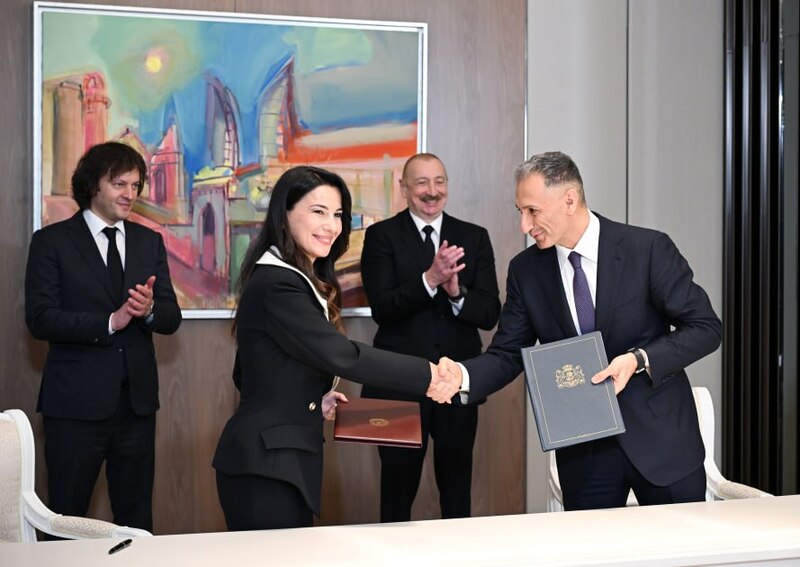
Azerbaijan and Georgia have signed a new package of strategic agreements that experts are already describing as one of the most significant milestones in regional cooperation in recent years. The agreements cover transport, energy, logistics, and trade, reflecting the two countries’ ambition to transform the South Caucasus into a key transit corridor connecting Europe and Asia. Against the backdrop of the ongoing war in Ukraine, instability in the Middle East, and shifts in global logistics, the region’s importance has grown considerably, while Baku and Tbilisi are seeking to capitalize on this moment to strengthen their strategic positions.
The primary focus of cooperation remains the development of the Middle Corridor — an international transport route linking China and Central Asia with Europe through the Caspian Sea, Azerbaijan, Georgia, and Turkiye. Interest in this corridor has surged since 2022, as many international companies began searching for alternatives to routes passing through Russia. As a result, cargo traffic through the South Caucasus has increased significantly, while the European Union has intensified investment in the region’s infrastructure.
Particular attention has been given to the modernization of the Baku–Tbilisi–Kars railway, widely regarded as the backbone of the emerging Eurasian trade network. The parties plan to expand the railway’s capacity, speed up cargo transit, and simplify customs procedures. In addition, Azerbaijan and Georgia agreed to strengthen coordination between ports and railway operators in order to reduce delivery times between Asia and Europe. For Baku, this means increased transit revenues and a stronger position as the leading logistics hub of the South Caucasus. For Georgia, it represents an opportunity to reinforce its role as a strategic transit bridge between the Caspian and Black Seas.
Energy cooperation has also become a crucial component of the agreements. Azerbaijan remains one of Europe’s key alternative gas suppliers following the EU’s efforts to reduce dependence on Russian energy resources. Strategic pipelines crossing Georgian territory ensure the delivery of Azerbaijani gas to Turkiye and European markets. Discussions are currently underway regarding the expansion of the Southern Gas Corridor, as well as joint projects aimed at transmitting green energy across the Black Sea to Europe. These initiatives primarily involve the export of electricity generated from renewable energy sources in Azerbaijan and Central Asia.
Against this backdrop, cooperation between Baku and Tbilisi is acquiring not only economic but also geopolitical significance. Experts note that the strengthening transport and energy partnership between Azerbaijan, Georgia, and Turkiye is gradually reshaping the regional balance of power and increasing the South Caucasus’ importance in international trade. At the same time, Europe’s dependence on routes through Russia and Iran is declining, making the Middle Corridor one of the EU’s strategic priorities.
However, analysts warn that serious challenges remain. The region continues to face political instability, tensions surrounding Iran, and the need for substantial infrastructure investment. Moreover, in order to compete effectively with other international trade routes, Azerbaijan and Georgia will need to accelerate the digitalization of logistics, customs modernization, and port development. Nevertheless, the latest agreements demonstrate that Baku and Tbilisi are committed to a long-term strategic partnership. If fully implemented, these projects could transform the South Caucasus into one of Eurasia’s most important transport and energy hubs in the coming years.
CCBS Expert Group


 Latest news
Latest news
Latest newsUS Ready to Lift Sanctions on Turkiye and Restore Its Participation in the F-35 Program
09.Jul.2026
Trump Announces Transfer of License to Ukraine for Patriot Interceptor Missile Production
09.Jul.2026
The NATO Summit in Ankara Marked a New Stage in the Alliance's Transformation
08.Jul.2026
The war in Ukraine - the “liberation of Novorossiya” is a mission impossible
07.Jul.2026
Ursula von der Leyen's Visits to Baku and Yerevan Signal Brussels' New Strategy
07.Jul.2026
Putin's Approval Ratings Decline as Russians Grow Increasingly Concerned About the Economy and the War
06.Jul.2026
Erdogan and Radev Discuss Black Sea Security and Defense Cooperation
06.Jul.2026
OPEC+ Accelerates Output Recovery as Kazakhstan Increases Oil Production from August
05.Jul.2026
Georgia and Uzbekistan Elevate Relations to Strategic Partnership
05.Jul.2026
Iran Turns Khamenei Funeral into a Show of Strength as Week-Long National Mourning Begins
04.Jul.2026