
 28 Aug 2026









- It sends a signal to the domestic audience. The government is demonstrating toughness and a willingness to adopt radical measures in response to security threats, which is particularly important amid political competition and pressure from right-wing forces.
- It is intended as a deterrent, with authorities expecting that the threat of execution will reduce the number of attacks. However, the effectiveness of such measures remains debatable, as research across different countries does not provide conclusive evidence that capital punishment significantly reduces violence in politically or ethnically driven conflicts.
- The law carries
substantial foreign policy risks, potentially increasing Israel’s international
isolation, especially in relations with European countries where the death
penalty is strongly opposed. It may also heighten tensions in the Arab world,
where the decision could be perceived as an escalation and trigger protests or
further violence.
Israel Changes the Rules: Death Penalty Returns
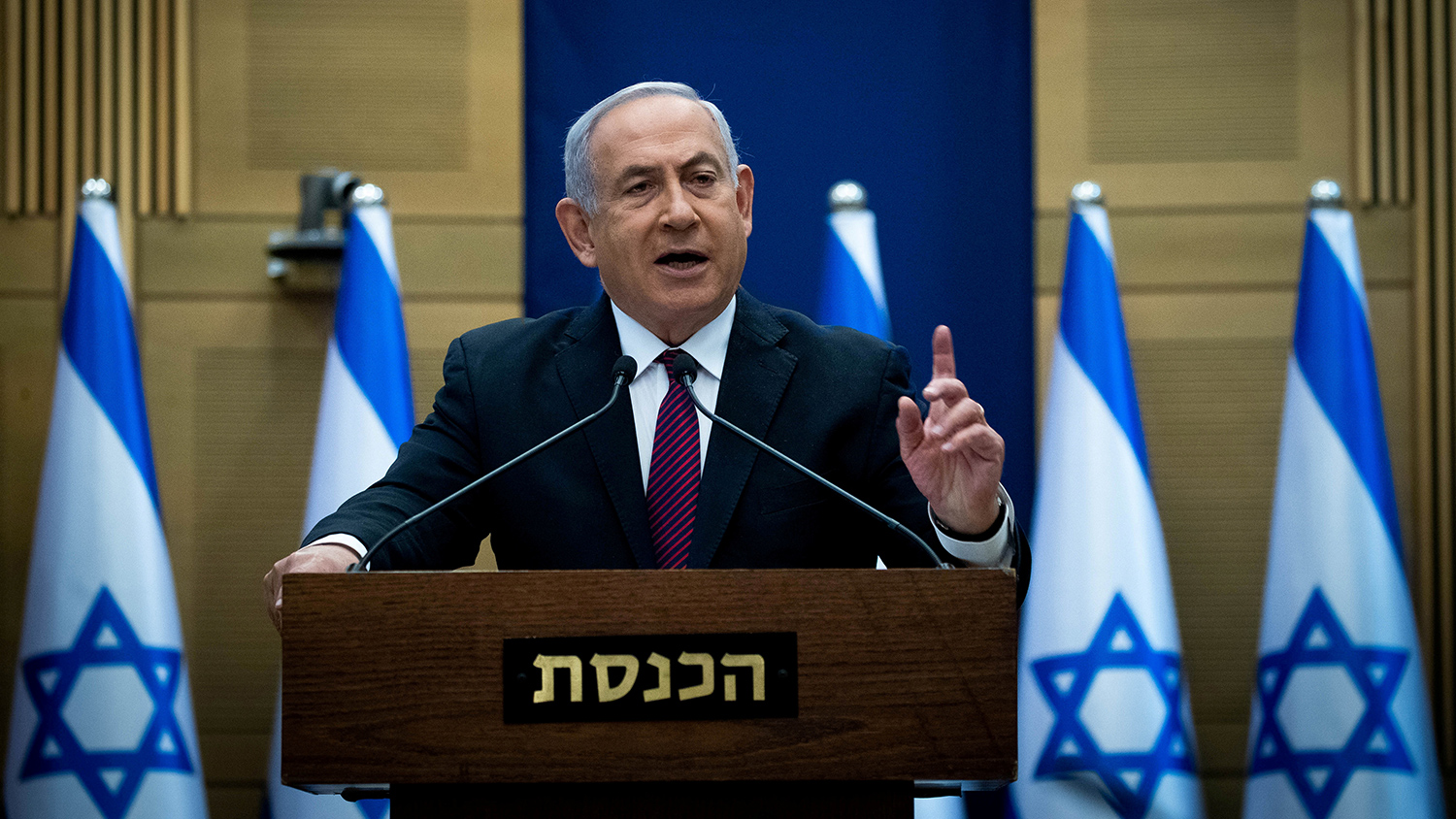
The
Knesset has approved a law introducing the death penalty for Palestinians
convicted of killings motivated by nationalist intent. The decision was passed
by a majority vote in the Israeli parliament with strong backing from the
ruling coalition led by Prime Minister Benjamin Netanyahu, reflecting a broader
shift toward stricter security policies amid a protracted conflict.
 The Knesset has passed a death penalty law targeting Arab
terrorists
The Knesset has passed a death penalty law targeting Arab
terrorists
The legislation stipulates that death by hanging will
become the primary punishment for such crimes, with sentences to be carried out
within 90 days of the court’s ruling. The option of commuting the sentence to
life imprisonment will remain only in exceptional cases, significantly limiting
judicial discretion. A key feature of the law is that it will mainly apply in
military courts, which handle cases involving Palestinians in occupied
territories, while Israeli citizens in comparable situations fall under the
jurisdiction of civilian courts. This distinction has already become a central
argument for critics, who point to potential inequality before the law.
The reaction to the law has been sharply critical. The
Palestinian leadership, headed by Mahmoud Abbas, condemned the measure as a
“legalization of extrajudicial killings” and a step that undermines any
prospects for negotiations. International human rights organizations and
several bodies within the United Nations have also expressed concern, citing possible
violations of international humanitarian law and human rights principles.
Within Israel itself, parts of the legal community and the opposition warn that
the law could be challenged in the Supreme Court and may set a dangerous
precedent for the politicization of criminal justice.

The Trial of Adolf Eichmann
The historical context adds further significance. Israel
has effectively not applied the death penalty since 1962, when Nazi war
criminal Adolf Eichmann was executed. Since then, capital punishment has been
regarded more as an exception than as a tool of ongoing policy. Its
reintroduction in the current context signals a qualitative shift in the
state’s approach to deterrence and punishment.
From an analytical perspective, the move can be viewed across several dimensions:
Analysts also warn that the law could become a catalyst for
further radicalization of the conflict. At a time when political resolution is
already at an impasse, such measures may strengthen hardline actors on both
sides, narrowing the space for compromise. In this sense, the initiative may prove
to be less a tool of stabilization and more a factor contributing to a new
cycle of escalation.


 Latest news
Latest news
Latest newsRussia Intensifies Strikes on Ukraine’s Infrastructure, Targeting Warehouses and Logistics Hubs
28.Aug.2026
A New Economic Framework for Central Asia and the Caucasus: The Role of Azerbaijan and Uzbekistan
28.Aug.2026
Moscow Warns London: Russia Considers Strikes on British Military Targets
27.Aug.2026
Kazakhstan Launches a New Economic Strategy: GDP Growth, Investment and Pension Reform
27.Aug.2026
CIA Director Visits Moscow: Trump Hopes for Results
26.Aug.2026
Former Ukrainian Defense Minister Warns of Risk of Gradual Defeat in War with Russia
25.Aug.2026
Putin Authorizes Temporary State Management of Critical Infrastructure Vulnerable to Drone Attacks
24.Aug.2026
The United States Rapidly Expands Missile Production: Pentagon Accelerates Output of Tomahawks and Other Critical Weapons
24.Aug.2026
Record Supplies: Armenia Boosts Fish Exports to Georgia
23.Aug.2026
Political Battle During Wartime: Zelensky Opposes Elections
23.Aug.2026
Romania Approves Construction of One of the Largest Solar Power Plants in Europe
23.Aug.2026
Ex-Ukrainian Defence Minister Fails in Bid to Pressure Zelenskiy
22.Aug.2026
Upper Lars: Why Border Queues Have Become a Political Signal for Georgia and Russia
22.Aug.2026
Russia-Ukraine War: No Decisive Breakthrough on the Front and Intensifying Ukrainian Deep Strikes on Russia
21.Aug.2026
TRIPP, Peace, and a New Geopolitical Crossroads: How Armenia Has Changed One Year After Washington
20.Aug.2026