
 14 Jul 2026









No Conditions for Elections and Referendums in Ukraine Today
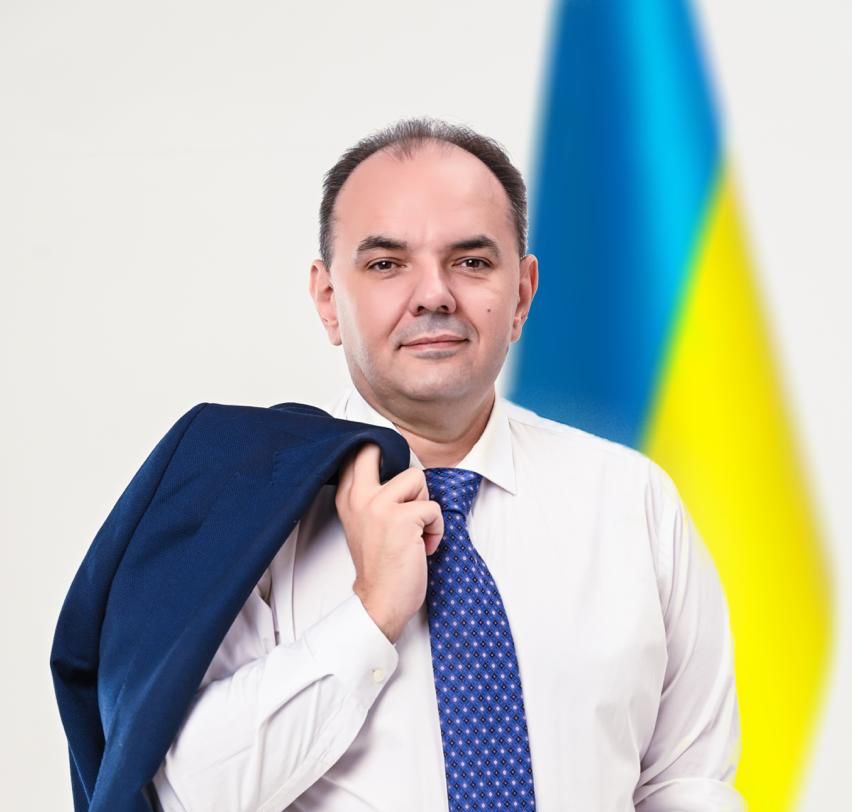
In an interview with our publication, former Member of Parliament of Ukraine, Director of the Institute of Danube Studies, Doctor of Law, and Professor Vitalii Barvynenko shared his view on the prospects for ending the war and the political dynamics in Ukraine.
— The war between Russia and Ukraine has been ongoing for more than four years. Do you see any prospects for achieving peace?
— I would say that this war has been ongoing since 2014 and consists of three stages. The first was the hot phase of 2014–2015, when Donetsk and Luhansk were seized and Crimea was annexed without a fight. The second period, from 2016 to 2022, was characterized by clashes along the line of contact. It was a “low-intensity” conflict, more of an interwar phase. The third stage is once again a hot phase, which began on February 24, 2022.
Unfortunately, I do not see any grounds for ending the war. Ukraine and Russia have mutually exclusive goals. The position of the Ukrainian authorities is the restoration of internationally recognized borders. At the same time, Russia has enshrined in its Constitution the incorporation of four Ukrainian regions and Crimea into its territory.
Today, it is difficult to imagine that either side would abandon its territorial claims. Based on my communication with representatives of the Ukrainian establishment and my understanding of the situation from within, I cannot imagine anyone in the Verkhovna Rada of Ukraine or through a referendum initiating such issues.
There is a widespread belief that such matters can be resolved through a referendum. However, under current Ukrainian legislation, an initiative group must first be registered by the Central Election Commission of Ukraine. It is hard to imagine that 800 people would submit a written initiative to revise state borders — such a group would immediately face legal consequences.
Those who argue that such issues should be decided by referendum simply do not understand Ukrainian law. The Constitution and the Criminal Code clearly provide for liability for encroachment on the territorial integrity of the state. This would first require changing the legislation, which in practice is highly unlikely.
Many members of parliament would rather resign their mandates than support such decisions. There have already been precedents — for example, the Kharkiv Agreements of 2010, for which some deputies were later charged with high treason. Today, many parliamentarians fear a repetition of such scenarios.
Therefore, the situation appears to be a deadlock. There is currently no legal way out. Either strong international guarantees and pressure on both sides will be required, or we must accept that in the near future — at least within a year — there is no chance of ending the war.
— It would seem that there has been pressure from Donald Trump, but no results…
— Donald Trump has put forward a number of initiatives and applied pressure, including in a fairly tough manner. However, within Ukraine, this has rather led to consolidation around Volodymyr Zelensky.
At the same time, beyond a general desire to achieve peace as quickly as possible, Trump does not have a clear and well-developed plan of action. The Ukrainian side is also taking into account the political cycle in the United States: there is little time left before the November congressional elections, and there is a possibility of a shift in the political balance.
Given this, some advisers to the Ukrainian government believe that, despite losses, it is not advisable to make compromises before the autumn.
— I cannot imagine how a referendum could be held during a war.
— It is indeed impossible. As of today, about 7 million people are internally displaced persons and have lost their voting addresses. They are located both abroad and in other regions of the country.
After the end of hostilities, it will take at least six months to compile new voter lists. At present, the register is effectively closed. Therefore, discussions about a referendum are more of a political tool — a way to “take the temperature” of society — rather than a real mechanism for resolving the issue.
— Does the same apply to presidential elections?
— Yes. These discussions are largely aimed at international partners. As of today, there are no conditions in Ukraine for holding either elections or referendums.
Even if security is ensured, it will take at least six months to restore voter registers, and a full electoral cycle will require no less than nine months from the end of hostilities.
One may have different views on the current government — I myself am critical of it — but from a legal standpoint, there is currently only one legitimate authority in Ukraine, and there are no objective conditions for holding elections.
— Are there alternative views within the Ukrainian political elite on how to end the war?
— I do not think that positions involving the relinquishment of territory can openly exist within the Ukrainian elite today. No public official will say that part of the country is “not needed”.
There may be discussions about temporary forms of settlement — for example, freezing the conflict under an international mandate. But the issue of voluntarily ceding territory is not on the table.
— How do you assess the current situation on the front line?
— Ukraine still has a certain degree of resilience. However, it should be understood that its strongest positions were in the autumn of 2022 and early 2023. Now the main task of the Armed Forces of Ukraine is to hold their positions at least until autumn.
— How do you assess Zelensky’s visits to the Persian Gulf countries?
— These visits are viewed differently, but they are an important element of defense strategy. It is not only about drone supplies, but also about deeper cooperation in the field of security.
— How does the conflict in the Middle East affect the war?
— It diverts attention from Ukraine, which is a negative factor. However, the reduced ability of Iran to assist Russia is, on the contrary, a positive development.
At the same time, European countries are interested in keeping Ukraine on the agenda and will not allow it to disappear from the focus of attention.
— Can Ukraine endure without financial assistance from the EU?
— This is a serious issue, as about 70% of the budget is formed through external borrowing. However, destabilization of Ukraine would create serious risks for European Union countries.
Therefore, support from Europe will continue.


 Latest news
Latest news
Latest newsUS Ready to Lift Sanctions on Turkiye and Restore Its Participation in the F-35 Program
09.Jul.2026
Trump Announces Transfer of License to Ukraine for Patriot Interceptor Missile Production
09.Jul.2026
The NATO Summit in Ankara Marked a New Stage in the Alliance's Transformation
08.Jul.2026
The war in Ukraine - the “liberation of Novorossiya” is a mission impossible
07.Jul.2026
Ursula von der Leyen's Visits to Baku and Yerevan Signal Brussels' New Strategy
07.Jul.2026
Putin's Approval Ratings Decline as Russians Grow Increasingly Concerned About the Economy and the War
06.Jul.2026
Erdogan and Radev Discuss Black Sea Security and Defense Cooperation
06.Jul.2026
OPEC+ Accelerates Output Recovery as Kazakhstan Increases Oil Production from August
05.Jul.2026
Georgia and Uzbekistan Elevate Relations to Strategic Partnership
05.Jul.2026
Iran Turns Khamenei Funeral into a Show of Strength as Week-Long National Mourning Begins
04.Jul.2026