
 27 Jun 2026









Ankara and Yerevan Begin Restoring the Ani Bridge Amid Warming Relations
The
signing of a memorandum between Turkiye and Armenia on the joint restoration of
the historic Ani Bridge has become one of the most symbolic developments in the
normalization process between the two countries in recent years. The document
was signed in Yerevan during the European Political Community summit following
a meeting between Armenian Prime Minister Nikol Pashinyan and Turkish Vice
President Cevdet Yılmaz. The memorandum was signed by the special
representatives for normalization from both sides — Serdar Kılıch for Turkiye
and Ruben Rubinyan for Armenia.
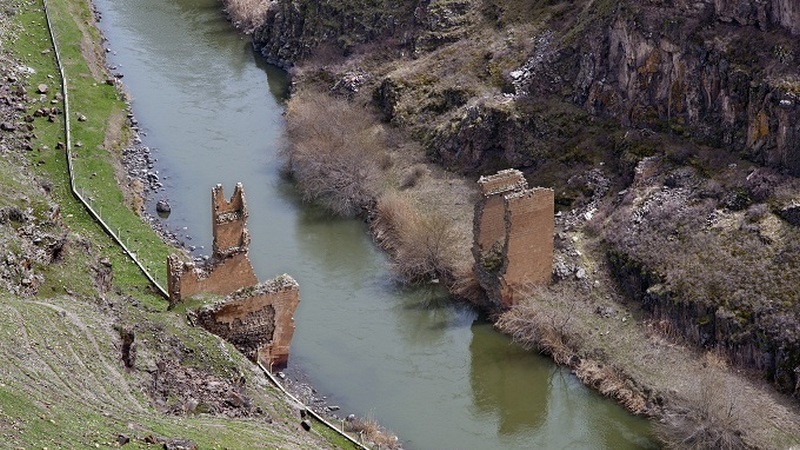
The agreement concerns the medieval Ani Bridge spanning the
Akhurian River, which today forms part of the Armenian-Turkish border.
Historically, the bridge was part of the Silk Road trade routes and connected
the ancient city of Ani — the capital of the medieval Armenian Bagratid Kingdom
— with regions of Eastern Anatolia. Although only fragments of the structure
and several bridge supports have survived to this day, the site retains
enormous historical and political significance for both countries.
Officials in Ankara stress that the initiative is not
merely a cultural project, but also an important political signal. Cevdet
Yılmaz stated that the joint restoration could become an example of “symbolic
and concrete cooperation” capable of fostering trust and contributing to
long-term peace in the South Caucasus. According to him, the parties also
discussed prospects for cooperation in transportation, customs, energy, and
digital infrastructure.
For Armenia, the signing of the memorandum carries not only
diplomatic but also strategic importance. Yerevan is seeking to demonstrate its
readiness to open regional communications and gradually reduce tensions with
neighboring states. The agreement is particularly notable given the
intensification of contacts between Ankara and Yerevan following the 2020
Karabakh war and the subsequent shifts in the regional balance of power. It was
after these developments that the Armenian-Turkish normalization process gained
renewed momentum.
Experts note that the Ani Bridge
restoration project has become the first publicly visible and tangible joint
initiative undertaken by the two countries in decades. Symbolism plays a
central role here: a bridge that long stood on a geopolitical fault line is now
being transformed into an instrument of diplomatic rapprochement. Turkish
analysts have already described the initiative as “a bridge between the past
and the future,” emphasizing that it could test the ability of both sides to move
from symbolic gestures toward practical cooperation.
At the same time,
expectations of a rapid breakthrough in bilateral relations remain limited.
Turkiye and Armenia still do not maintain full diplomatic relations, while
their land border has remained closed since 1993. Despite a series of meetings
between special envoys and the gradual expansion of contacts, the normalization
process continues to be closely linked to Armenian-Azerbaijani negotiations and
the broader geopolitical dynamics of the South Caucasus.
This latest step also fits into a broader international context. The European Political Community summit in Yerevan became the largest diplomatic event hosted by Armenia in recent years, bringing together dozens of European leaders. For Yerevan, it was an opportunity to present itself as a platform for regional dialogue, while for Ankara it served as another demonstration of Turkiye’s growing involvement in shaping the future security and logistical architecture of the South Caucasus.


 Latest news
Latest news
Latest newsThe war in Ukraine – Russia is loosing its logistics fleet
21.Jun.2026
Ukraine Brings the War to Moscow: Exchange of Strikes Reshapes the Nature of the Conflict
20.Jun.2026
Satellites, Soldiers, and Sanctions: The Cost of Russia’s Ambitions Is Rising
20.Jun.2026
Ukraine’s Battlefield Experience Opens New Opportunities in Asia’s Drone Market
19.Jun.2026
Azerbaijan’s Oil Trap: Why the Economy Is Standing Still
18.Jun.2026
Motorcycle Noise Seen as Obstacle to Air Defense Operations in Crimea
17.Jun.2026
Rising Wages and Euro Integration: Bulgaria Enters a New Economic Era
17.Jun.2026
Armenia After June 7: Pashinyan Remains in Power, Moscow Unhappy
17.Jun.2026
$300 Billion Deal: Iran Poised to Receive the Largest Investment Package in Modern Middle Eastern History
16.Jun.2026
Infrastructure Pressure: Putin Acknowledges the Economic Impact of Ukrainian Attacks
15.Jun.2026