
 23 Nov 2026









Two Commercial Vessels Attacked in the Black Sea off Bulgaria
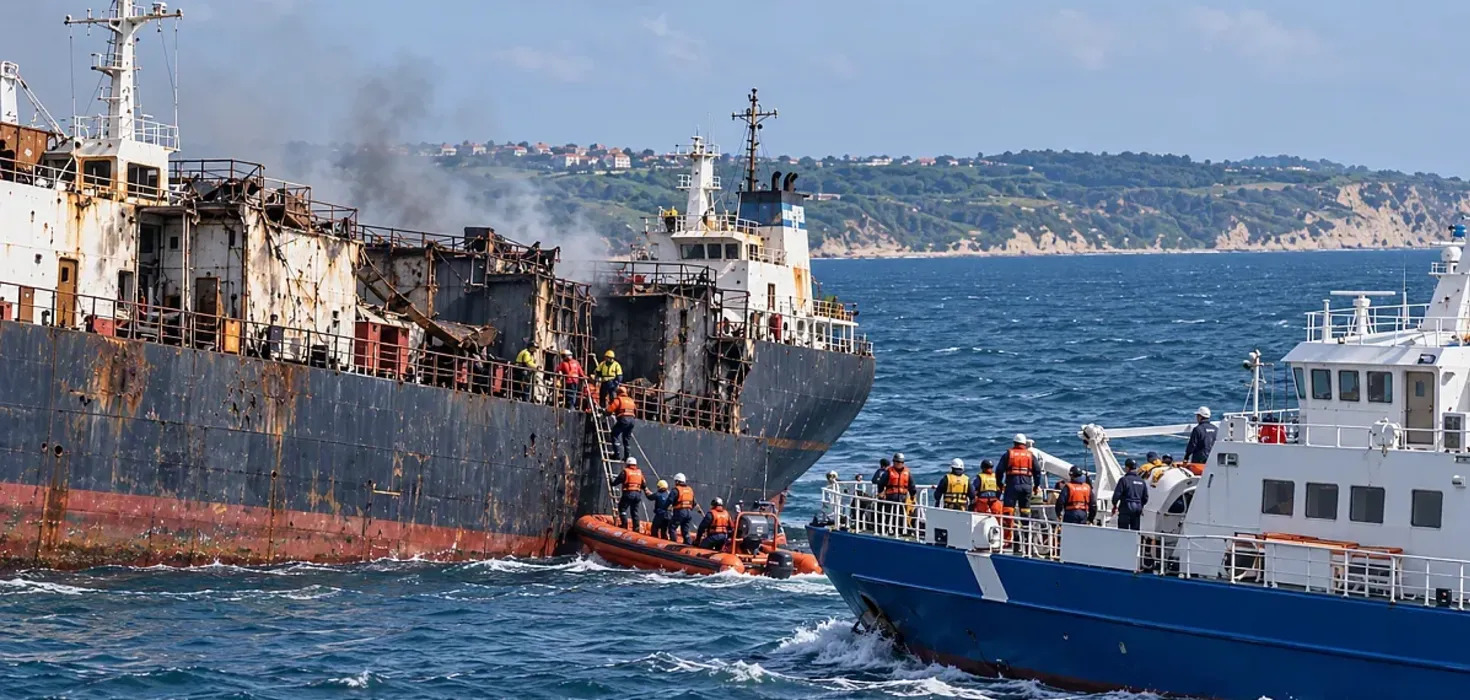
The attack on two commercial vessels in the Black Sea near the Bulgarian coast highlights the expanding security risks associated with the Russia–Ukraine war. Attacks on civilian maritime assets are heightening European concerns over the safety of international shipping routes and the vulnerability of maritime traffic in the western Black Sea. The incident is particularly significant in the context of Bulgaria's NATO membership and the Alliance's growing role in safeguarding regional maritime security.
On 22 November, two commercial vessels came under attack by aerial and maritime drones in the Black Sea, approximately 70 nautical miles off the Bulgarian coast. One of the vessels sank, while the other caught fire. Bulgarian rescue services launched an operation to evacuate the crew of the damaged vessel.
The incident highlights the growing vulnerability of civilian shipping in the Black Sea, where military operations are increasingly generating security threats beyond the immediate area of the Russia–Ukraine conflict. The use of aerial and maritime unmanned systems significantly complicates efforts to protect commercial shipping routes, as conventional surveillance and vessel protection mechanisms may not always be capable of detecting such threats in a timely manner.
The geographical location of the incident is a particular cause for concern. As a NATO member with access to the western Black Sea, Bulgaria occupies a strategically important position along major international shipping routes. Attacks on commercial vessels in the vicinity of the Bulgarian coast increase risks to regional transport infrastructure, maritime logistics and the economic interests of Black Sea littoral states.
The incident also takes on additional significance amid intensified efforts by European countries to strengthen maritime surveillance and coordination in the Black Sea. Bulgaria and Romania are regarded as key components of NATO's eastern flank, while the security of their maritime routes is directly linked to the resilience of Europe's collective defence architecture.
The question of responsibility remains particularly important. The origin of the drones and the party responsible for organising the attack have not yet been officially established. Therefore, attributing the incident to any specific party involved in the Russia–Ukraine conflict would be premature. Nevertheless, the nature of the attack underscores the need for more effective intelligence-sharing, expanded maritime surveillance capabilities and improved response mechanisms to threats against civilian shipping.
According to the CCBS assessment, the attacks on commercial vessels near the Bulgarian coast reflect the increasingly complex military and strategic environment in the Black Sea. The expanding use of unmanned systems is turning maritime trade routes into an additional area of vulnerability, with implications extending beyond the Russia–Ukraine conflict. Under these circumstances, NATO will have to address not only military deterrence but also the protection of international shipping, critical maritime infrastructure and the economic interests of regional states.
Further developments could accelerate the establishment of a more comprehensive NATO maritime security framework in the Black Sea, encompassing enhanced intelligence and surveillance capabilities, greater coordination among naval forces and improved preparedness among littoral states to respond to threats posed by unmanned systems.


 Latest news
Two Commercial Vessels Attacked in the Black Sea off Bulgaria
23.Nov.2026
EU Allocates Another €1 Billion to Ukraine: European Military Support Takes on a Long-Term Dimension
22.Nov.2026
Europe Prepares a Military Mission for Ukraine: 2800 Troops Rehearse Post-War Deployment Scenarios
21.Nov.2026
Russian Missiles and a Drone Fall on Polish Territory: NATO Faces New Threats on Its Eastern Flank
21.Nov.2026
Russia Strikes Kyiv Bridges Following Ukraine’s Attack on the Crimean Bridge: Transport Infrastructure Becomes a New Front in the Escalation
20.Nov.2026
The "Coalition of the Willing" Discusses Security Guarantees and Continued Support for Kyiv
19.Nov.2026
Tanker Sinks off Bulgaria After Being Hit Four Times: All 19 Crew Members Rescued
18.Nov.2026
Europe Accelerates Defence Integration: EU Identifies 8 Priorities for Joint Weapons Development
17.Nov.2026
Bulgaria and North Macedonia Plan to Begin Construction of New Border Crossing in October 2027
17.Nov.2026
Central Asia Accelerates Digitalisation of the Trans-Caspian Transport Corridor
16.Nov.2026
Bulgaria, Romania and Turkiye Deploy Naval Assets in BETUL 8 Rescue Operation
16.Nov.2026
Armenia Becomes the EU’s Leading Partner in the South Caucasus: Georgia Loses Influence in Europe’s Regional Strategy
15.Nov.2026
Ukraine Expands Its Campaign Against Russia’s Strategic Infrastructure
15.Nov.2026
Defence Partnerships without a Common Strategy? Turkiye Expands Military Ties with Qatar, Saudi Arabia and Pakistan
14.Nov.2026
Kobakhidze Says Georgia is Ready to Restore Political Dialogue with the European Union
14.Nov.2026