
 20 Sep 2026









Russian Drones Violated Moldovan Airspace Twice During Zelenskys Trips
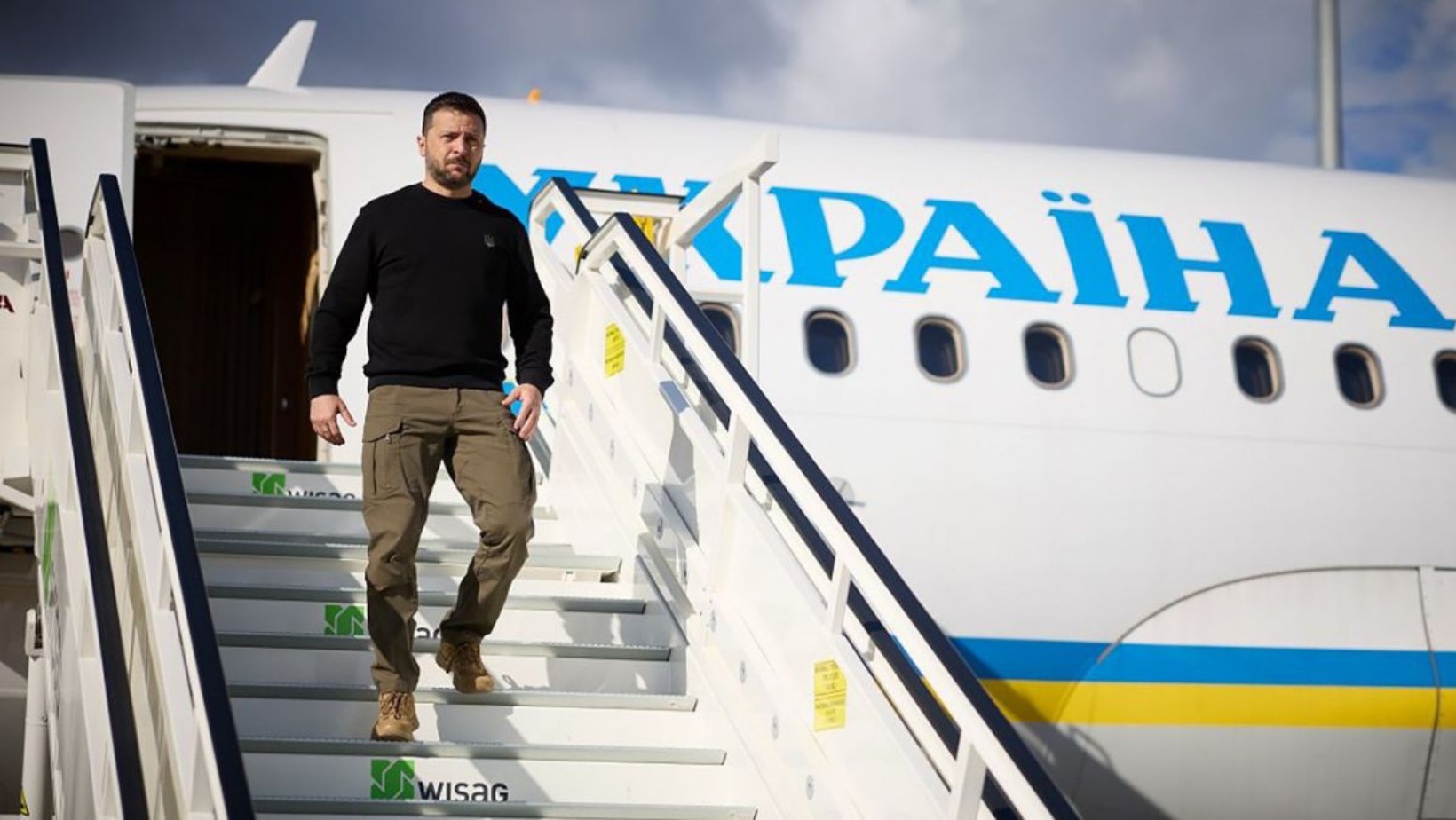
Kishinev is facing a new
security challenge: over several days in September, drones flying from the
direction of Ukraine repeatedly crossed Moldovan airspace. One of the most
serious incidents occurred while Ukrainian President Volodymyr Zelensky was in
Kishinev.
Moldovan airspace was once
again directly affected by the consequences of the Russia-Ukraine war in
September. Over several days, drones repeatedly crossed the countrys border,
prompting Moldovan authorities to impose temporary flight restrictions and
strengthen monitoring of the airspace.
Particular attention was drawn
to the incident on September 8, when a Shahed/Geran-type drone entered Moldovan
airspace. According to Moldovan authorities, the aircraft was detected at
around 16:20 local time. The military tracked its movement, after which the
drone crossed the border into Romania, a NATO member state. It later returned
to the vicinity of Moldova and eventually crashed.
The incident had a direct
impact on civil aviation. Moldovan authorities temporarily closed the airspace,
resulting in delays to several flights, including the aircraft carrying
Ukrainian President Volodymyr Zelensky, who was scheduled to depart from
Kishinev for Norway.
Zelensky was in Moldova in
transit at the time. After completing his visit to Kishinev, he was scheduled
to travel to Oslo to attend events related to the funeral of King Harald V of
Norway. The closure of Moldovan airspace delayed his departure.
Norwegian Prime Minister Jonas
Gahr Store subsequently said that Zelenskys aircraft had reportedly come close
to being threatened by a drone while departing Moldova. However, the exact
distance between the drone and the aircraft was not officially established.
Some sources suggested that
the drone may have been in close proximity to the Ukrainian presidents
aircraft. However, Moldovan and Ukrainian officials did not confirm that the
drone had deliberately targeted Zelenskys aircraft. The Norwegian side also
later clarified that the exact level of danger to the aircraft had not been
established.
On September 15, Zelensky
himself said that Russian drones had violated Moldovan airspace twice during
his trips through the country. According to him, his presidential aircraft was
in Kishinev on both occasions. The Ukrainian president suggested that the
presence of his aircraft may have been one of the factors, but he did not claim
that Russia had directly attempted to attack his aircraft.
The situation continued on
September 14. On that day, Moldovan authorities reported at least two separate
violations of the countrys airspace.
The first drone was detected
at around 10:33 near the settlement of Palanca in southeastern Moldova. It
entered Moldovan airspace from Ukraine, near Mayaki, and flew approximately 500
meters over Moldovan territory. About one minute later, the aircraft returned
to Ukrainian airspace along the same route. The incident was confirmed by both
the Moldovan Border Police and the State Border Guard Service of Ukraine.
The second drone entered
Moldovan airspace at around 11:09 in the Choburciu-Pervomaisc area. According
to Moldovas air operations service, the drone remained over Moldovan territory
for approximately ten minutes. At 11:19, it left Moldovan airspace near the
Ukrainian settlement of Kuchurgan and continued flying towards Stepove.
It is important to highlight
that these incidents involved direct violations of Moldovas sovereign airspace.
Moldova is not a party to the war, but its geographical position between
Ukraine and Romania makes it vulnerable to drones used in the Russia-Ukraine
conflict.
Secondly, the incidents raise
concerns for civil aviation. The September 8 incident demonstrated that the
appearance of a drone can lead to the temporary closure of Moldovan airspace
and disrupt operations at Chisinau International Airport. According to CCBS,
three departures and four arrivals were delayed at the time.
Thirdly, there is a
cross-border dimension. In one of the September incidents, a drone continued
towards Romania after flying over Moldova. This is particularly sensitive for
Bucharest because Romania is a NATO member. Such incidents require coordination
between Moldovan, Ukrainian and Romanian air surveillance and border-control
authorities.
Moldovan state institutions
already have airspace monitoring capabilities and regularly detect drone
incursions. The authorities also cooperate with Ukraine and other partners to
establish the routes and trajectories of such aircraft.
At the same time, Moldovas
capabilities to counter modern attack drones are considerably more limited than
those of NATO countries. For Kishinev, the key challenge is therefore not only
detecting such objects, but also determining their trajectory in time, warning
civil aviation and preventing the possible consequences of drone crashes.
Previous incidents show that
the problem is not isolated. Throughout 2026, Moldovan authorities have
repeatedly reported drones entering the countrys airspace from the direction of
Ukraine. In some cases, the drones were identified as Shahed/Geran-type systems
used by Russian forces in the war against Ukraine.
Recent events demonstrate how
closely Moldovas, Ukraines and Romanias security concerns are interconnected.
Moldovas airspace is increasingly becoming part of a broader risk zone created
by the war in Ukraine.
The southern part of Moldova
is of particular importance. This area includes routes connecting Ukraines
Odesa region with Moldova and Romania. Russian attacks on infrastructure in
southern Ukraine increase the possibility that individual drones may deviate
from their intended routes or cross into the airspace of neighboring countries.
At the same time, the
incidents are intensifying the broader debate over European security. Moldova
is seeking deeper integration with the European Union, while Romania remains
one of its key partners in infrastructure and security. Consequently, each new
airspace violation is not merely a bilateral issue between Kishinev and Moscow,
but also part of the broader security architecture of Eastern Europe.
Given the repeated incidents,
Kishinev may increasingly have to treat airspace protection not as an isolated
or temporary challenge, but as a permanent element of national security.


 Latest news
Latest news
Latest newsUS Sanctions Target Russias Main Pillar as Moscow Faces New Pressure on Oil Revenues
19.Sep.2026
Russia Begins State Duma Elections Amid War in Ukraine
18.Sep.2026
Bulgaria Strengthens Protection of Strategic Infrastructure Against Drones and Other Threats
18.Sep.2026
Georgia and Enka: How the Namakhvani Dispute Could Affect the Investment Climate
17.Sep.2026
Una Aleksandra Bērziņa-Čerenkova: After Russia’s Invasion, Latvia Began Banning Russian-Language Media
17.Sep.2026
Rainer Saks: Russia сould lose its influence in Armenia, just as it did in the Baltics
16.Sep.2026
Russian Drones Violated Moldovan Airspace Twice During Zelenskys Trips
16.Sep.2026
Operation Vivaldi: Ukraine Reports Advances Near Lyman as Fighting Intensifies
16.Sep.2026
Kazakhstan and South Korea Elevate Ties to Comprehensive Strategic Partnership
16.Sep.2026
Armenia Energy Diversification: Testing the Limits of Dependence on Russian Gas
15.Sep.2026
Tbilisi Distances Itself from Brussels as Kobakhidze Intensifies Criticism of European Policy
14.Sep.2026
Russia Fuel Crisis Gives the US a New Diplomatic Leverage Tool
14.Sep.2026
Trump Calls on Zelenskyy to Stop Strikes on Russian Oil Infrastructure
13.Sep.2026
Ukraine Expands Pressure on Russia’s Shadow Fleet: Moscow’s Oil Logistics Under Threat
13.Sep.2026
The Riga Conference: Europe Prepares for Long-Term Confrontation with Russia and Reshapes Its Security Architecture
12.Sep.2026