
 20 Sep 2026









Operation Vivaldi: Ukraine Reports Advances Near Lyman as Fighting Intensifies
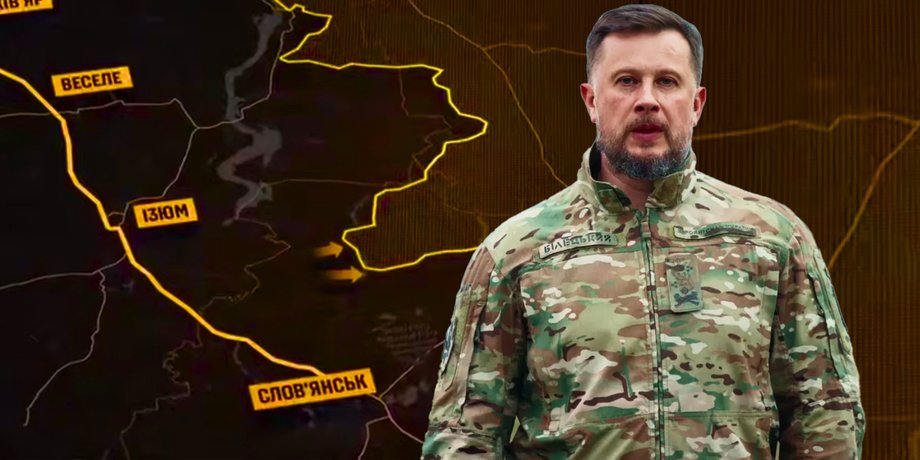
Ukrainian forces are conducting a
counteroffensive operation in the Lyman area in Northern Donetsk Region. The
Ukrainian command calls this effort Operation "Vivaldi". During the
first phase, Ukrainian forces managed to regain control over several
settlements and clear a significant area of Russian units. Independent analysts
confirm Ukrainian advances; however, the exact scope of the changes along the
frontline remains a subject of ongoing assessment.
The
launch of the operation was publicly announced by the Commander of the Third
Army Corps of the Armed Forces of Ukraine, Brigadier General Andriy Biletskyi.
According to him, during the first phase of the operation, Ukrainian units
liberated the settlement of Sredne and cleared Russian forces from Novoselovka,
Yarova, Aleksandrovka, and the outskirts of Korovii Yar. In total, the
Ukrainian side claimed the recovery or clearing of approximately 85 square
kilometers of territory.
According to the Institute for the Study of War (ISW),
Ukrainian actions northwest of Lyman carry significance beyond the tactical
level. Analysts believe that the advance of Ukrainian troops has complicated
Russian plans for a wider envelopment of the fortified Ukrainian defense line
in the Donetsk Region. This refers to the so-called "fortress belt" —
a chain of major cities including Sloviansk, Kramatorsk, and other settlements.
The Russian command aims to establish conditions to advance toward this area
from multiple directions.
The ISW assesses that the Ukrainian operation near Lyman
hampered attempts to encircle this defensive area from the north. Analysts also
noted that Ukrainian units executed strikes against Russian communications and
logistics lines.
According to CCBS data, the Ukrainian side launched strikes
against supply facilities up to 120 kilometers behind the frontline, aiming to
disrupt the delivery of fuel and other resources to Russian units.
It should be noted that Lyman holds strategic importance
for both sides due to its location and transportation networks. Control over
this district creates opportunities for further operations toward Sloviansk and
Kramatorsk. Ukrainian reports of advances have received partial confirmation
from independent analysts.
However, the widespread use of drones, high intensity of
strikes, and the existence of a "gray zone" make real-time
verification of reports directly from the battlefield difficult.
The Ukrainian command uses the designation
"Vivaldi" for this counteroffensive operation in the Lyman area.
Public statements by the Ukrainian military describe the operation as
consisting of several phases. According to the Ukrainian account, the initial
goal was to halt the advance of Russian units, disrupt their logistics, and
eliminate positions that could be used for further offensive actions. Following
this, Ukrainian forces began expanding the territory under their control. The
first phase of the operation influenced Russian plans in the region, though
this primarily represents an operational shift rather than a large-scale
breakthrough of the front.
Russian military sources also report active fighting in the
Lyman area; however, their assessments differ from the Ukrainian version.
Russian military bloggers acknowledged certain difficulties and lost positions
while reporting attempts by Russian units to reclaim them. Due to conflicting
statements from both sides and the lack of full independent access to the
frontline, claims regarding the exact number of lost settlements, casualties,
and the precise scale of advances should be viewed with caution.
The primary significance of Operation
"Vivaldi" lies not so much in the total area of claimed advances, but
in its strategic location. If Ukrainian forces manage to consolidate their
gains, the Russian command may need to adjust its offensive plans toward
Sloviansk and Kramatorsk. At the same time, analysts note that Russian forces
retain the capability to launch strikes and conduct offensive operations in
other sectors of the Donetsk Region.


 Latest news
Latest news
Latest newsUS Sanctions Target Russias Main Pillar as Moscow Faces New Pressure on Oil Revenues
19.Sep.2026
Russia Begins State Duma Elections Amid War in Ukraine
18.Sep.2026
Bulgaria Strengthens Protection of Strategic Infrastructure Against Drones and Other Threats
18.Sep.2026
Georgia and Enka: How the Namakhvani Dispute Could Affect the Investment Climate
17.Sep.2026
Una Aleksandra Bērziņa-Čerenkova: After Russia’s Invasion, Latvia Began Banning Russian-Language Media
17.Sep.2026
Rainer Saks: Russia сould lose its influence in Armenia, just as it did in the Baltics
16.Sep.2026
Russian Drones Violated Moldovan Airspace Twice During Zelenskys Trips
16.Sep.2026
Operation Vivaldi: Ukraine Reports Advances Near Lyman as Fighting Intensifies
16.Sep.2026
Kazakhstan and South Korea Elevate Ties to Comprehensive Strategic Partnership
16.Sep.2026
Armenia Energy Diversification: Testing the Limits of Dependence on Russian Gas
15.Sep.2026
Tbilisi Distances Itself from Brussels as Kobakhidze Intensifies Criticism of European Policy
14.Sep.2026
Russia Fuel Crisis Gives the US a New Diplomatic Leverage Tool
14.Sep.2026
Trump Calls on Zelenskyy to Stop Strikes on Russian Oil Infrastructure
13.Sep.2026
Ukraine Expands Pressure on Russia’s Shadow Fleet: Moscow’s Oil Logistics Under Threat
13.Sep.2026
The Riga Conference: Europe Prepares for Long-Term Confrontation with Russia and Reshapes Its Security Architecture
12.Sep.2026