
 21 Sep 2026









Duma Elections Reinforce Kremlin Dominance Amid the War
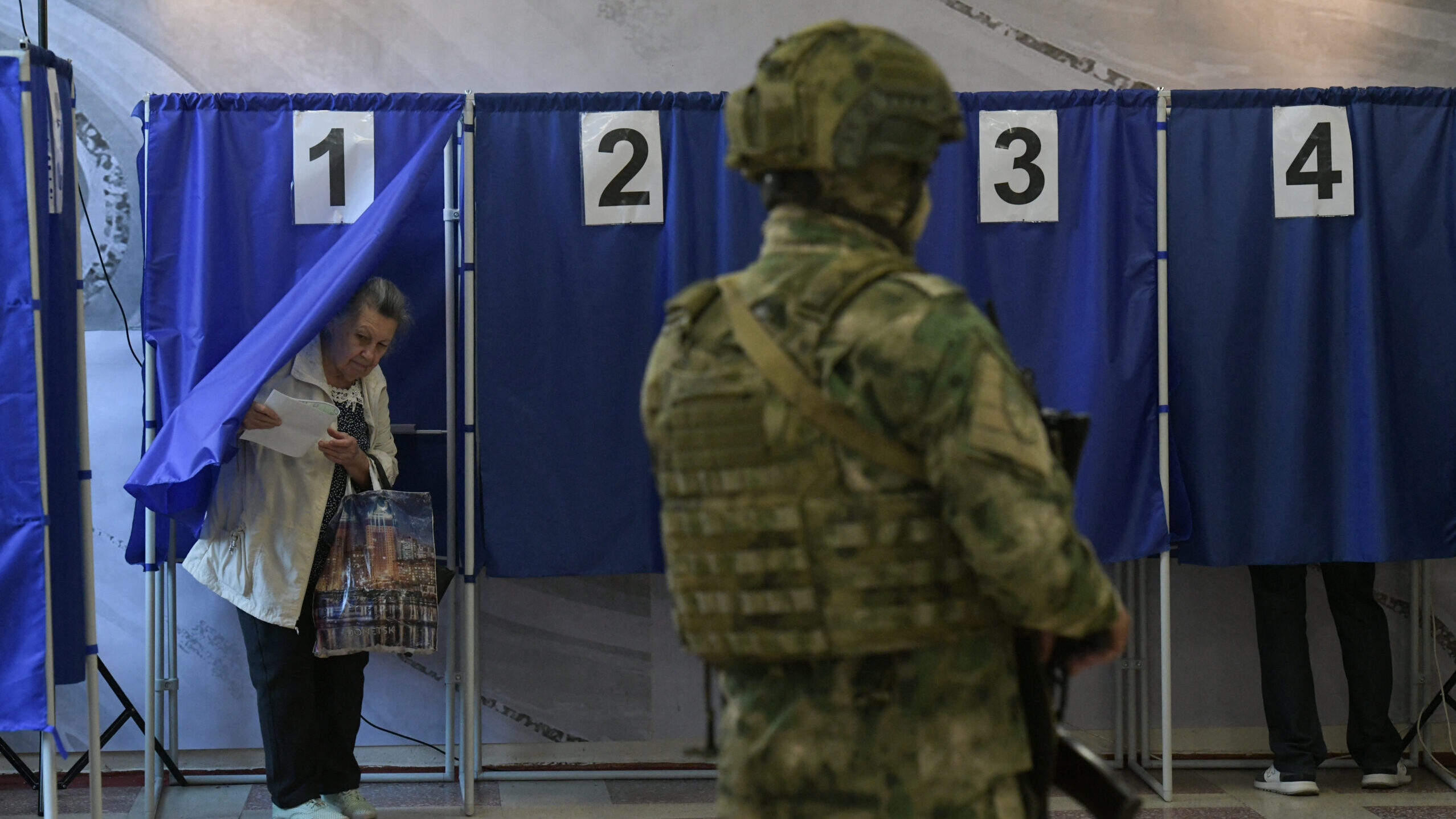
United
Russia wins 57.83% of the vote and retains its constitutional majority in the
State Duma. For the first time since the full-scale war against Ukraine began,
parliamentary elections were held amid limited political competition and
without an OSCE election observation mission.
The
United Russia party, which supports President Vladimir Putin, has retained
control of the State Duma following the parliamentary elections held on
September 18–20. According to preliminary data from the Central Election
Commission (CEC), after more than 95% of the ballots had been counted, the
party received 57.83% of the vote in the federal electoral district and,
according to the CEC, holds 355 of the 450 seats in the State Duma.
The
result gives United Russia a constitutional majority and allows the Kremlin to
maintain virtually unchanged control over the lower house of parliament. In the
previous parliamentary elections in 2021, the party received 49.8% of the vote,
representing a significant increase in its official result in the current
election.
The
current vote was the first parliamentary election in Russia since the start of
the full-scale invasion of Ukraine in February 2022. During the campaign, the
Kremlin presented the election as an indicator of public support for the
Russian leadership’s policies and the ongoing war. According to CCBS, the
political system remained under tight control throughout the campaign, while
most openly anti-war candidates were prevented from participating in the
elections.
The
degree of political competition was one of the key issues surrounding the
election. The main parliamentary parties allowed to participate did not pose a
systemic challenge to the presidential authorities, while the participation of
independent and anti-war politicians was significantly restricted. Restrictions
also affected the Yabloko party and its representatives, who had criticized the
war.

Additional
questions about the transparency of the process arose after the Russian
authorities decided not to invite OSCE/ODIHR observers. The organization stated
that Moscow’s refusal to facilitate international observation was inconsistent
with Russia’s commitments as an OSCE participating State and deprived the electoral
process of an independent assessment. The OSCE also said that the Russian
authorities had failed to provide substantive responses to its attempts to
establish pre-election dialogue and prepare an observation mission.
On
election day, Russian authorities also reported cyberattacks targeting remote
electronic voting systems and communications networks. Moscow said the attacks
had been repelled, although the Russian authorities’ claims of Ukrainian
involvement were not accompanied by publicly released evidence.
Another
international dispute was triggered by the holding of Russian elections in
Ukrainian territories that Moscow has declared part of Russia. Ukraine and a
number of Western countries do not recognize Russia’s jurisdiction over these
territories. As a result, the State Duma election has implications not only for
Russia’s domestic political system but also for the international legal and
political dispute surrounding the occupied Ukrainian territories.
The
election result gives the Kremlin an opportunity to portray the preservation of
its parliamentary majority as evidence of continued public support for its
political course. However, the official results primarily reflect voting
conducted within Russia’s existing political system, where opportunities for
opposition participation, independent campaigning and external observation were
significantly restricted. The electoral result alone therefore cannot provide
an unequivocal measure of public support for all aspects of the Russian
leadership’s policies, including the war against Ukraine.


 Latest news
Latest news
Latest newsDuma Elections Reinforce Kremlin Dominance Amid the War
21.Sep.2026
Zelenskyy Approves New Long-Range Ukrainian Operations Amid Russian Attacks
20.Sep.2026
US Sanctions Target Russias Main Pillar as Moscow Faces New Pressure on Oil Revenues
19.Sep.2026
Russia Begins State Duma Elections Amid War in Ukraine
18.Sep.2026
Bulgaria Strengthens Protection of Strategic Infrastructure Against Drones and Other Threats
18.Sep.2026
Georgia and Enka: How the Namakhvani Dispute Could Affect the Investment Climate
17.Sep.2026
Una Aleksandra Bērziņa-Čerenkova: After Russia’s Invasion, Latvia Began Banning Russian-Language Media
17.Sep.2026
Rainer Saks: Russia сould lose its influence in Armenia, just as it did in the Baltics
16.Sep.2026
Russian Drones Violated Moldovan Airspace Twice During Zelenskys Trips
16.Sep.2026
Operation Vivaldi: Ukraine Reports Advances Near Lyman as Fighting Intensifies
16.Sep.2026
Kazakhstan and South Korea Elevate Ties to Comprehensive Strategic Partnership
16.Sep.2026
Armenia Energy Diversification: Testing the Limits of Dependence on Russian Gas
15.Sep.2026
Tbilisi Distances Itself from Brussels as Kobakhidze Intensifies Criticism of European Policy
14.Sep.2026
Russia Fuel Crisis Gives the US a New Diplomatic Leverage Tool
14.Sep.2026
Trump Calls on Zelenskyy to Stop Strikes on Russian Oil Infrastructure
13.Sep.2026