
 13 Oct 2026









EU Association Implementation Report: ‘Georgia continued steadily on its European path’
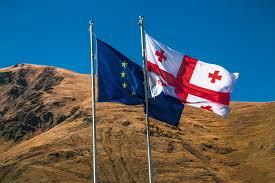
The European Union has published its Association Implementation Report on Georgia, which says that the country ‘continued steadily on its European path including in the challenging COVID-19 context’.
The document published earlier today reads that Georgia ‘has remained committed to the implementation, obligations and undertakings of the Association Agreement, despite COVID-19 related challenges’.
Alignment to the EU acquis as well as to European standards in the area of human rights has broadly continued. The EU stood by Georgia and made unprecedented and substantial efforts to support and help Georgia deal with the COVID-19 sanitary and socio-economic crisis”, the document reads.
It notes as well that ‘looking ahead, a demonstrated reform commitment as regards democracy consolidation and reform of the judiciary will be crucial to further advance on its European path’.
Based on the document, ‘the revised electoral framework, agreed in an inter-party dialogue during the first half of 2020, provided a sound basis for holding democratic elections and partially addressed previous OSCE/ODIHR and Council of Europe/Venice Commission recommendations’.
Nevertheless, despite overall competitive elections, a number of shortcomings have undermined the trust in the process and the opposition parties have boycotted the early proceedings of the new parliament”, the EU has reported.
The document meanwhile reads that ‘this demonstrates the need for further democratic consolidation, including by addressing the final recommendations of OSCE/ODIHR, through an inclusive dialogue and ahead of the October 2021 local elections’.
In the short-term, an inclusive political agreement between the majority and opposition is needed to enable work in parliament to advance the important reform agenda. More broadly, tackling the polarisation in Georgian politics and media remains a challenge”, it says.
The document also focuses on the ‘implementation of the fourth wave of judicial reforms', saying 'in general upholding the highest standards of ethics and integrity in the judiciary will remain essential throughout 2021’.
 On June 27, 2014 Georgia signed the Association Agreement (AA) with the European Union, which includes the Deep and Comprehensive Free Trade Area (DCFTA). Photo: Nino Alavidze/Agenda.ge
Meanwhile, it says ‘it will be important that the selection procedure for Supreme Court judges is brought into line with European standards as soon as possible and that no further Supreme Court judges are appointed on the basis of the current legal framework’.
Further reform of the High Council of Justice will remain a priority. Setting up an ambitious anti-corruption agenda could help regain momentum in the fight against corruption, notably high-level corruption”, the document reads, noting that ‘it will also be important for Georgia to continue proactively addressing the continued high number of unfounded asylum applications’.
Finally, the document notes that ‘it will be crucial to ensure an inclusive, green and sustainable recovery from the COVID-19 crisis and to make further progress on digitalisation and digital literacy’.
Moreover, structural reforms also ‘remain crucial as they make Georgia’s economy less vulnerable to external developments, notably COVID-19, and enhance the investment climate and trade potential’.


 Latest news
Latest news
Latest newsInflation in Romania Accelerates to 6.61%: Rising Prices Increase Pressure on Households and the Economy
13.Oct.2026
Can Europe Protect the International Criminal Court from Trump’s Sanctions?
13.Oct.2026
Georgia’s Constitutional Court Continues Case on Banning Opposition Parties: Political Pluralism at Stake
12.Oct.2026
Azerbaijan and Iran Step Up Security Contacts Amid Hijab Protests
12.Oct.2026
Personnel Shortages Complicate Ukrainian Forces’ Rotation: Ukraine Faces Long-Term Challenges on the Front Line
11.Oct.2026
Trump Eases Sanctions on Russian Fuel After Talks with Putin: Kyiv Fears Boost to Moscow’s War Revenues
10.Oct.2026
Putin Seeks to Strengthen Russia’s Influence in the Post-Soviet Space Through the CIS
10.Oct.2026
Russia and the South Caucasus: External Pressure, Political Competition and a Crisis of Trust
10.Oct.2026
Peaceful Settlement Between Armenia and Azerbaijan: Moving from Declarations to Implementation
10.Oct.2026
Moldova Ready to Accept as Many Ukrainians as Necessary if Situation Worsens This Winter
09.Oct.2026
Turkmenistan Turns Avaza into a Regional Diplomatic Hub as Caspian, Central Asian and CIS Agendas Converge
08.Oct.2026
Romania Scrambles Spanish F-18s After Aerial Targets Detected Near Ukrainian Border
07.Oct.2026
Berlin Deepens Defence Partnership with Kyiv: Germany to Provide Ukraine with €1 Billion in Military Aid
07.Oct.2026
European Parliament Against Georgian Dream: EU Prepares New Response to Tbilisi
06.Oct.2026
Bulgarian Foreign Minister to Discuss European Security and International Law in the Netherlands
05.Oct.2026