
 14 Oct 2026









Iran to return to oil market
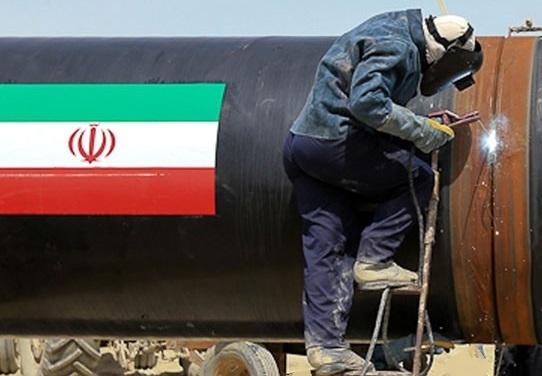
Iran is preparing to ramp up global oil sales as talks to lift U.S. sanctions show signs of progress. But even if a deal is struck, the flow of additional crude into the market may be gradual, Bloomberg reports. State-controlled National Iranian Oil Co. has been priming oil fields -- and customer relationships -- so it can increase exports if an accord is clinched, officials said. Under the most optimistic estimates, the country could return to pre-sanctions production of almost 4 million barrels a day in as little as three months. It could also tap a flotilla’s worth of oil that’s hoarded away in storage.
But there are many hurdles to overcome. Any agreement must fully dismantle the gamut of U.S. barriers on trade, shipping and insurance involving Iranian entities. Even then buyers may still be reluctant, according to Mohammad Ali Khatibi, a former official at NIOC. “Our return may be a gradual process rather than swift and sudden -- it can’t happen overnight,” Khatibi, also Iran’s former OPEC envoy, said in an interview. That’s partly due to the coronavirus pandemic having “significantly hurt demand,” he said.
The pace of Iran’s comeback may prove critical for the oil market. While fuel consumption is on the rebound as governments distribute vaccines and major economies reopen, it remains depressed by lockdowns and new virus outbreaks. Extra Iranian supplies would impose a burden on other members of OPEC+, which has toiled for more than a year to clear a glut built up as the pandemic spread.
Within Reach
U.S. and Iranian diplomats, currently negotiating via intermediary governments in Vienna, have signaled that an agreement is within reach. If successful, the negotiations could reactivate a 2015 international nuclear accord that Donald Trump withdrew the U.S. from three years later. That would require Iran to once again accept limits on its atomic activities, in return for the lifting of an array of tough sanctions imposed by the former president. Tehran has already taken advantage of a less hostile climate since President Joe Biden came to power in January. It is reviving petroleum sales, sending more crude to emboldened Chinese buyers. Iran’s production has climbed almost 20% this year to 2.4 million barrels a day, according to data compiled by Bloomberg, though most of that oil is still used domestically. “Even if the sanctions are not removed, depending on their ability to sell oil in the gray market, they will increase their production further,” said Sara Vakhshouri, president of consultancy SVB Energy International LLC in Washington.
Maintaining Wells
Engineers at NIOC have been rotating crude production between different fields to maintain sufficient reservoir pressure, according to officials at the company, who asked not to be identified. The procedure is crucial for keeping up output levels. Gas injections at older oil fields in the south of the country are playing a similar role, SVB’s Vakhshouri said. If there’s a deal with the U.S., the Islamic Republic could increase production to almost 4 million barrels a day in three to six months, according to Iman Nasseri, managing director for the Middle East at consultant FGE, who has decades of experience covering the region and worked in Iran. Others expect a slower pace. It would take 12 to 15 months after the lifting of sanctions to increase production to 3.8 million barrels a day, Reza Padidar, head of the energy commission of the Tehran Chamber of Commerce, said in an interview. Some work required to restore capacity at fields, such as removing and servicing blocked bore-hole pumps, can take as long as one month per well, he said.
Difficult Talks
With Tehran and Washington still haggling to secure the best terms, a deal may take much more time. If recent confrontations in the Persian Gulf between U.S. and Iranian naval vessels escalate, it might slip away altogether. Talks could also be affected by next month’s elections in Iran, after which President Hassan Rouhani is stepping down. While Supreme Leader Ayatollah Ali Khamenei has so far endorsed the negotiations, Rouhani’s successor may take a harder stance against the U.S. Even if sanctions are removed, Iran faces other problems. Many refiners sign annual contracts at the start of the year, leaving little room for Tehran to strike its own long-term supply agreements for the time being, Khatibi said. “Our biggest concern is limitations imposed on our customers and their fear of buying oil from Iran,” he said. “As we draw closer to the end of the year, we’ll see more term contracts happen.”
Trump’s sanctions “suffocated” Iran’s relationships with traditional customers including India, China, South Korea, Japan and Turkey to a greater extent than previous trade restrictions, said Padidar of the Tehran Chamber of Commerce. For Wall Street banks like JPMorgan Chase & Co. and trading houses such as Vitol Group, the oil market is recovering fast enough to comfortably absorb additional Iranian barrels. Pent-up demand for travel stands to propel consumption higher in the second half. “There is space for oil from Iran to return,” said Mike Muller, head of Asia for Vitol Group, the world’s largest independent oil trader. “It won’t come back in one big bang.”


 Latest news
Latest news
Latest newsInflation in Romania Accelerates to 6.61%: Rising Prices Increase Pressure on Households and the Economy
13.Oct.2026
Can Europe Protect the International Criminal Court from Trump’s Sanctions?
13.Oct.2026
Georgia’s Constitutional Court Continues Case on Banning Opposition Parties: Political Pluralism at Stake
12.Oct.2026
Azerbaijan and Iran Step Up Security Contacts Amid Hijab Protests
12.Oct.2026
Personnel Shortages Complicate Ukrainian Forces’ Rotation: Ukraine Faces Long-Term Challenges on the Front Line
11.Oct.2026
Trump Eases Sanctions on Russian Fuel After Talks with Putin: Kyiv Fears Boost to Moscow’s War Revenues
10.Oct.2026
Putin Seeks to Strengthen Russia’s Influence in the Post-Soviet Space Through the CIS
10.Oct.2026
Russia and the South Caucasus: External Pressure, Political Competition and a Crisis of Trust
10.Oct.2026
Peaceful Settlement Between Armenia and Azerbaijan: Moving from Declarations to Implementation
10.Oct.2026
Moldova Ready to Accept as Many Ukrainians as Necessary if Situation Worsens This Winter
09.Oct.2026
Turkmenistan Turns Avaza into a Regional Diplomatic Hub as Caspian, Central Asian and CIS Agendas Converge
08.Oct.2026
Romania Scrambles Spanish F-18s After Aerial Targets Detected Near Ukrainian Border
07.Oct.2026
Berlin Deepens Defence Partnership with Kyiv: Germany to Provide Ukraine with €1 Billion in Military Aid
07.Oct.2026
European Parliament Against Georgian Dream: EU Prepares New Response to Tbilisi
06.Oct.2026
Bulgarian Foreign Minister to Discuss European Security and International Law in the Netherlands
05.Oct.2026