
 14 Oct 2026









EU to ask Azerbaijan for extra gas supplies
Europe is concerned with "the Russian armed forces concentrated on the western border of the Russian Federation." Moscow says that the Russian forces can be deployed anywhere on the Russian territory. The Russian Foreign Ministry asks a counter-question: "What are the armed forces and armaments of distant countries doing close to Russia?"
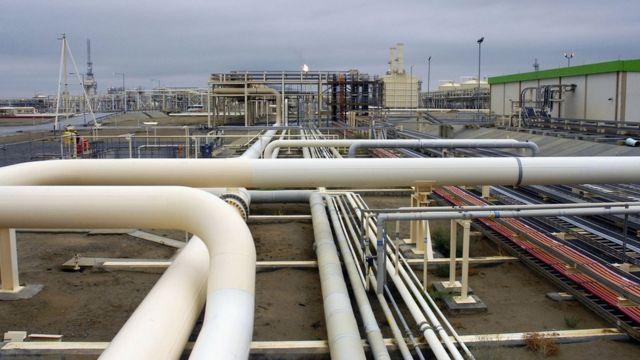
The EU is planning to ask Azerbaijan for potential emergency gas deliveries as it rushes to arrange contingency plans, Financial Times writes. Kadri Simson, the EU’s energy commissioner, will fly to Baku early next month for talks with the Azeri energy and natural resources ministers, in a bid to drum up support. The planned discussions with an ally of Moscow are an indication of the depth of concern in the EU over the risk of a renewed surge in energy prices.
Russia supplies about 40 per cent of EU gas needs, giving it huge sway over European energy markets. Brussels is concerned that any sanctions on Moscow could provoke countermeasures restricting gas supplies.
Simson will be in Baku next Friday to attend a long-planned ministerial conference. But she also aims to hold discussions with the energy and natural resources ministers of Azerbaijan, Parviz Shahbazov and Mukhtar Babayev, to explore the country’s willingness to expand shipments to the EU via the Trans Adriatic Pipeline (which runs from Turkey to southern Europe), an EU official said.
“We expect these discussions to focus on Azerbaijan’s role in diversifying the gas supplies to Europe,” the official added. “That includes the potential of increasing the gas supply via Trans Adriatic Pipeline to the EU. TAP’s annual capacity is currently around 10 bcm and it has been a stable and reliable supplier to the EU.”
Azerbaijan has close ties with Moscow. Russian peacekeeping troops are currently patrolling parts of the Karabakh region that Baku regained following a war with neighbouring Armenia.
“Azerbaijan has always been seen as a way to diversify away from Russia and bolster the EU’s energy mix. So that they would knock on Azeri doors is not surprising,” said Emre Peker, Europe director at Eurasia Group. “Politically speaking I think Baku would be open to the idea, but they would have to really carefully manage the dynamic around it to not upset Moscow.”
The talks shine a light on the EU’s anxious search for extra sources of gas as relations with Russia deteriorate.
The EU has been in talks with the US over what Washington describes as a “massive” package of western sanctions in response to Russian aggression. But EU member states are well aware of their vulnerability to disruptions in supplies from their biggest gas supplier if the conflict worsens.
The EU and US have held talks with Qatar and other large gas exporters to plan contingency measures, focused on securing additional seaborne liquefied natural gas cargoes. Simson has said she will travel to Washington DC on February 7 to hold further discussions over energy supplies at the EU-US Energy Council.
Fatih Birol, head of the International Energy Agency, said this month that Russia was already throttling gas supplies to Europe, pointing out that Russian gas exports to Europe were down 25 per cent year on year in the last three months of 2021.
Analysis from the Bruegel think-tank this week showed that, assuming normal temperatures, a boost to LNG imports could prevent the most severe gas shortages in Europe this winter, but that it would not be possible to replace every molecule lost if Russia cut all its supplies.


 Latest news
Latest news
Latest newsInflation in Romania Accelerates to 6.61%: Rising Prices Increase Pressure on Households and the Economy
13.Oct.2026
Can Europe Protect the International Criminal Court from Trump’s Sanctions?
13.Oct.2026
Georgia’s Constitutional Court Continues Case on Banning Opposition Parties: Political Pluralism at Stake
12.Oct.2026
Azerbaijan and Iran Step Up Security Contacts Amid Hijab Protests
12.Oct.2026
Personnel Shortages Complicate Ukrainian Forces’ Rotation: Ukraine Faces Long-Term Challenges on the Front Line
11.Oct.2026
Trump Eases Sanctions on Russian Fuel After Talks with Putin: Kyiv Fears Boost to Moscow’s War Revenues
10.Oct.2026
Putin Seeks to Strengthen Russia’s Influence in the Post-Soviet Space Through the CIS
10.Oct.2026
Russia and the South Caucasus: External Pressure, Political Competition and a Crisis of Trust
10.Oct.2026
Peaceful Settlement Between Armenia and Azerbaijan: Moving from Declarations to Implementation
10.Oct.2026
Moldova Ready to Accept as Many Ukrainians as Necessary if Situation Worsens This Winter
09.Oct.2026
Turkmenistan Turns Avaza into a Regional Diplomatic Hub as Caspian, Central Asian and CIS Agendas Converge
08.Oct.2026
Romania Scrambles Spanish F-18s After Aerial Targets Detected Near Ukrainian Border
07.Oct.2026
Berlin Deepens Defence Partnership with Kyiv: Germany to Provide Ukraine with €1 Billion in Military Aid
07.Oct.2026
European Parliament Against Georgian Dream: EU Prepares New Response to Tbilisi
06.Oct.2026
Bulgarian Foreign Minister to Discuss European Security and International Law in the Netherlands
05.Oct.2026