
 24 Aug 2026









Ukraine, Turkey Together for a More Active Military Role in the Black Sea
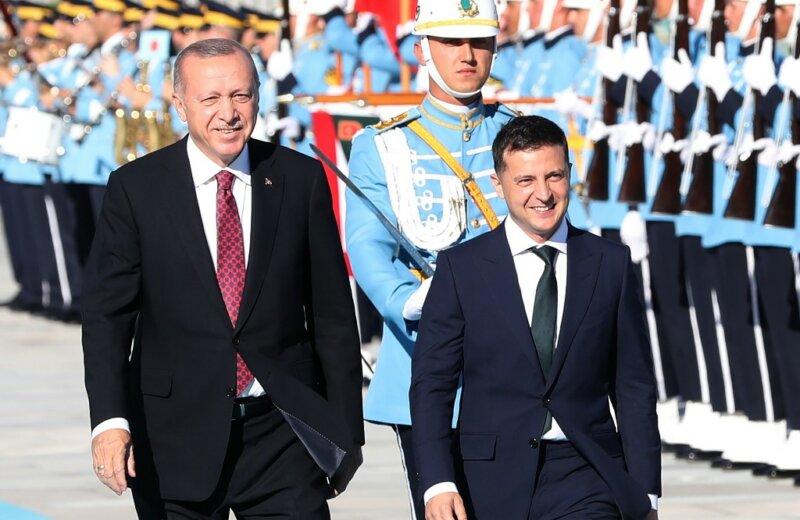
Ukrainian President Volodymyr Zelenskiy is visiting Turkey to meet with Turkish President Erdogan and sign an agreement for deeper military cooperation.
Based on a statement from the Ukrainian government, Zelenskiy will sign a bilateral military cooperation agreement during his visit. This agreement is expected to have a big impact on security and peace in the Black Sea region.
Defense relations between the two countries have developed rapidly, with military-technical cooperation between Ukraine and Turkey’s defense industries carrying various mutual benefits.
In early July, Ukraine’s National Defense Minister Andriy Taran voiced an interest in Turkish-made drones at a meeting with his Turkish counterpart Hulusi Akar in Kyiv.
Ukraine already purchased the combat drones Bayraktar Tactical Block 2 (TB2) unmanned aerial vehicles (UAVs) from Turkey last year. The agreement signed between the two countries allowed the purchase of a total of 12 UAVs. Along with the combat drones, which have been tested last March, Turkey will also provide 3 ground control station systems and various equipment. The agreement was signed between the Ukrspetsproject Company, which is part of Ukraine’s Ukrboronprom, and Turkish manufacturer Baykar Makina, the Country’s leading drone developer.

Today, Ukraine wants to purchase another 50 Bayraktar TB2 combat drones and plans to set up a large-scale assembly line for the unmanned aircraft.
"We have agreed on setting up of a large-scale assembly line for these drones in Ukraine. Currently, we are choosing a place for the production of drones," said Vadym Nozdr, CEO of Ukrainian State-owned Ukrspetsexport.
The official said that, after establishing a drone-production plant, Ukraine will begin exporting these drones to foreign markets (except those where Turkey is selling its production).
Military technological transfer
From the other side, Turkey is interested in technology transfer on missile engine technology with Ukraine, which could turn into a longer-term business deal involving aircraft production.
"Turkey wants to develop indigenous engine technology for various aerial platforms it has developed and plans to develop in the future. Technology transfer is a key to doing business with Ankara," said Ozgur Eksi, a defense expert with Istanbul-based media outlet C4Defence.
Ukrainian engine-maker SE Ivchenko-Progress is producing the AI-35 engine to power Turkey’s new indigenous Gezgin missile. Analysts have described the Gezgin as similar to the American-made Tomahawk. The Gezgin program was designed to develop conventional, long-range strike capabilities for naval platforms. This new missile is thought to have a range of approximately 1,000 kilometers. SE Ivchenko-Progress, a subsidiary of Ukraine’s Ukroboronprom defense giant, designs and manufactures engines that power 66 types of aircraft in more than 100 countries.
Geopolitical scenario of Turkey-Ukraine relationship
The technology transfer is the engagement ring of wider alliance between Turkey and Ukraine on foreign affairs issues. Recently, the president Zelensky officially supported Turkish diplomacy in the conflict between Armenia (backed by Russia) and Azerbaijan for the region of Nagorno-Karabakh, backing Azeri claims.
"We support Azerbaijan’s territorial integrity and sovereignty just as Azerbaijan always supports our territorial integrity and sovereignty," said Ukrainian President Zelensky.
This diplomatic and military alliance is a need for Ukraine, to defend the country from Russian aggression. But it is also an opportunity for Turkey to strengthen its ambitious policy of influence in the East (Azerbaijan, Georgia, Iraq, Turkmenistan) and in the Mediterranean (Cyprus, Israel, Libya, Syria), where Erdogan regularly steps on Putin’s toes.


 Latest news
Latest news
Latest newsThe United States Rapidly Expands Missile Production: Pentagon Accelerates Output of Tomahawks and Other Critical Weapons
24.Aug.2026
Record Supplies: Armenia Boosts Fish Exports to Georgia
23.Aug.2026
Political Battle During Wartime: Zelensky Opposes Elections
23.Aug.2026
Romania Approves Construction of One of the Largest Solar Power Plants in Europe
23.Aug.2026
Ex-Ukrainian Defence Minister Fails in Bid to Pressure Zelenskiy
22.Aug.2026
Upper Lars: Why Border Queues Have Become a Political Signal for Georgia and Russia
22.Aug.2026
Russia-Ukraine War: No Decisive Breakthrough on the Front and Intensifying Ukrainian Deep Strikes on Russia
21.Aug.2026
TRIPP, Peace, and a New Geopolitical Crossroads: How Armenia Has Changed One Year After Washington
20.Aug.2026
Tokayev Updates Kazakhstan Foreign Policy Concept: Astana Strengthens Its Strategic Multi Vector Approach
19.Aug.2026
Ukraine Turns Ground Robots into a New Tool in the Fight Against Russia
19.Aug.2026
Tehran Threatens a New Round of War After Talks With the US Collapse
18.Aug.2026
Drones Over Moldova: Accident or a New Threat to National Security?
17.Aug.2026
Spanish F-18 Fighter Jet Shoots Down Drone That Violated Romanian Airspace
17.Aug.2026
The Black Sea Becomes a Risk Zone: Can Turkiye Protect Key Trade Routes?
16.Aug.2026
Ukraine Intensifies Long-Range Strikes: Flamingo Missiles Hit a Rocket and Space Center and Airbase in Russia
15.Aug.2026