
 20 Sep 2026









PACE concerned about tension between two Armenian institutions
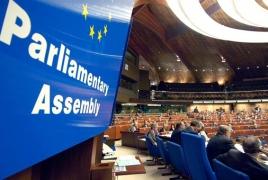
The Parliamentary Assembly of the Council of Europe (PACE) has expressed concern over "the high level of tension" between the Armenian Prime Minister’s Office and the Presidency of the Constitutional Court, reported PanArmenian.
“We are very concerned by the high level of tension between two State institutions in Armenia, the Prime Minister’s Office and the Presidency of the Constitutional Court,” said the co-rapporteurs of the Parliamentary Assembly of the Council of Europe for the monitoring of Armenia, Andrej Šircelj (Slovenia, EPP/CD) and Kimmo Kiljunen (Finland, SOC).
“Checks and balances are essential in any democratic system. This implies that all institutional powers must act according to the rule of law, and respect it in their deeds and words, including with regard to the principle of the presumption of innocence. If they fail to interact according to these principles, they undermine and damage each other. We are therefore worried about the long-term damage these tensions, that have reached an unprecedented level, could inflict on the judiciary as a whole, in which trust is already very low,” they said.
“So far, the Government and the Parliament have respected legal procedures to resolve the situation. Moreover, the authorities have requested the opinion of the Venice Commission on the mechanism for early retirement of judges of the Constitutional Court. According to European standards, the Venice Commission underlined that early retirements should be strictly voluntarily and that this principle needs to be observed. As co-rapporteurs, we will closely monitor that the Armenian authorities continue to act in this way, even if the objective of this mechanism, to uphold the spirit of the constitutional amendments of 2015, seems valid,” they added.
“We have already emphasised the need for political players to refrain from actions and statements that could be perceived as exerting pressure on the judiciary. In addition, we call on all parties to lower tension,” said the co-rapporteurs.
“Finally, these tensions should not overshadow the need for reforms in Armenia, whether it be those in preparation or those that have already been launched in many areas of interest for the Council of Europe,” they concluded.


 Latest news
Latest news
Latest newsUS Sanctions Target Russias Main Pillar as Moscow Faces New Pressure on Oil Revenues
19.Sep.2026
Russia Begins State Duma Elections Amid War in Ukraine
18.Sep.2026
Bulgaria Strengthens Protection of Strategic Infrastructure Against Drones and Other Threats
18.Sep.2026
Georgia and Enka: How the Namakhvani Dispute Could Affect the Investment Climate
17.Sep.2026
Una Aleksandra Bērziņa-Čerenkova: After Russia’s Invasion, Latvia Began Banning Russian-Language Media
17.Sep.2026
Rainer Saks: Russia сould lose its influence in Armenia, just as it did in the Baltics
16.Sep.2026
Russian Drones Violated Moldovan Airspace Twice During Zelenskys Trips
16.Sep.2026
Operation Vivaldi: Ukraine Reports Advances Near Lyman as Fighting Intensifies
16.Sep.2026
Kazakhstan and South Korea Elevate Ties to Comprehensive Strategic Partnership
16.Sep.2026
Armenia Energy Diversification: Testing the Limits of Dependence on Russian Gas
15.Sep.2026
Tbilisi Distances Itself from Brussels as Kobakhidze Intensifies Criticism of European Policy
14.Sep.2026
Russia Fuel Crisis Gives the US a New Diplomatic Leverage Tool
14.Sep.2026
Trump Calls on Zelenskyy to Stop Strikes on Russian Oil Infrastructure
13.Sep.2026
Ukraine Expands Pressure on Russia’s Shadow Fleet: Moscow’s Oil Logistics Under Threat
13.Sep.2026
The Riga Conference: Europe Prepares for Long-Term Confrontation with Russia and Reshapes Its Security Architecture
12.Sep.2026