
 20 Sep 2026









Nobody wants Nagorno-Karabakh crisis to escalate further - Putin
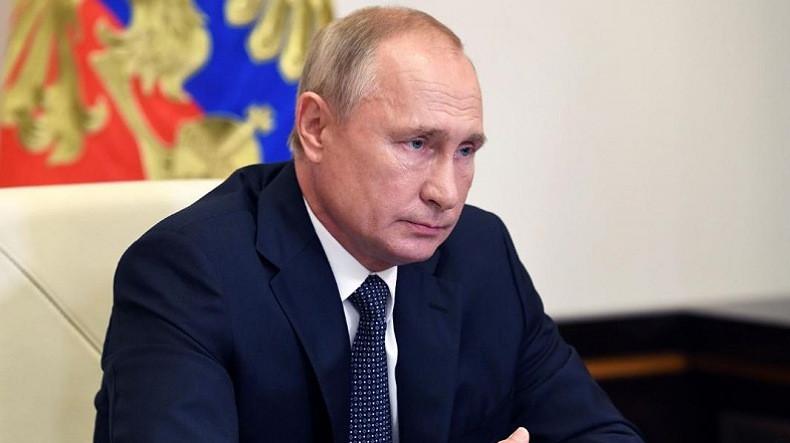
Russian President Vladimir Putin has said that no parties to the Nagorno-Karabakh crisis want it to escalate further. The Russian president's remarks came during his annual Q&A session, known as the Direct Line, TASS news agency reported.
"Russia played a certain role in settling the very serious crisis [in Nagorno-Karabakh]. And nobody wants it to develop further, not Azerbaijan or Armenia or even more so residents of Nagorno-Karabakh," he said .
"If we all live peacefully and amicably then we will create conditions to improve people’s lives, not just in the security sphere but also in current conditions. I mean normal existence of families, economic and social development, which people living in Karabakh urgently need. Because it is impossible to live always worrying about the resumption of an armed conflict, we understand it perfectly well. Leaders of Armenia and Azerbaijan also realize that," the president said.
Putin noted that the region had many problems. "There are issues linked to the restoration of normal infrastructure, demarcation of borders so that the relevant work could be carried out on the state border between Armenia and Azerbaijan especially in places that never had a state border and only had administrative lines between union republics," the president explained.
He underlined that the process aiming to address these issues was already underway with a special trilateral group (Russia, Azerbaijan, Armenia) established to achieve that. "We will do everything possible to restore normal relations in the region. Residents of Nagorno-Karabakh should definitely benefit from it. I want to believe that it will be like that despite all the difficulties that have been accumulating for decades," Putin stressed.


 Latest news
Latest news
Latest newsUS Sanctions Target Russias Main Pillar as Moscow Faces New Pressure on Oil Revenues
19.Sep.2026
Russia Begins State Duma Elections Amid War in Ukraine
18.Sep.2026
Bulgaria Strengthens Protection of Strategic Infrastructure Against Drones and Other Threats
18.Sep.2026
Georgia and Enka: How the Namakhvani Dispute Could Affect the Investment Climate
17.Sep.2026
Una Aleksandra Bērziņa-Čerenkova: After Russia’s Invasion, Latvia Began Banning Russian-Language Media
17.Sep.2026
Rainer Saks: Russia сould lose its influence in Armenia, just as it did in the Baltics
16.Sep.2026
Russian Drones Violated Moldovan Airspace Twice During Zelenskys Trips
16.Sep.2026
Operation Vivaldi: Ukraine Reports Advances Near Lyman as Fighting Intensifies
16.Sep.2026
Kazakhstan and South Korea Elevate Ties to Comprehensive Strategic Partnership
16.Sep.2026
Armenia Energy Diversification: Testing the Limits of Dependence on Russian Gas
15.Sep.2026
Tbilisi Distances Itself from Brussels as Kobakhidze Intensifies Criticism of European Policy
14.Sep.2026
Russia Fuel Crisis Gives the US a New Diplomatic Leverage Tool
14.Sep.2026
Trump Calls on Zelenskyy to Stop Strikes on Russian Oil Infrastructure
13.Sep.2026
Ukraine Expands Pressure on Russia’s Shadow Fleet: Moscow’s Oil Logistics Under Threat
13.Sep.2026
The Riga Conference: Europe Prepares for Long-Term Confrontation with Russia and Reshapes Its Security Architecture
12.Sep.2026