
 20 Sep 2026









U.S. Suspends Section 907: A New Stage in Relations with Azerbaijan
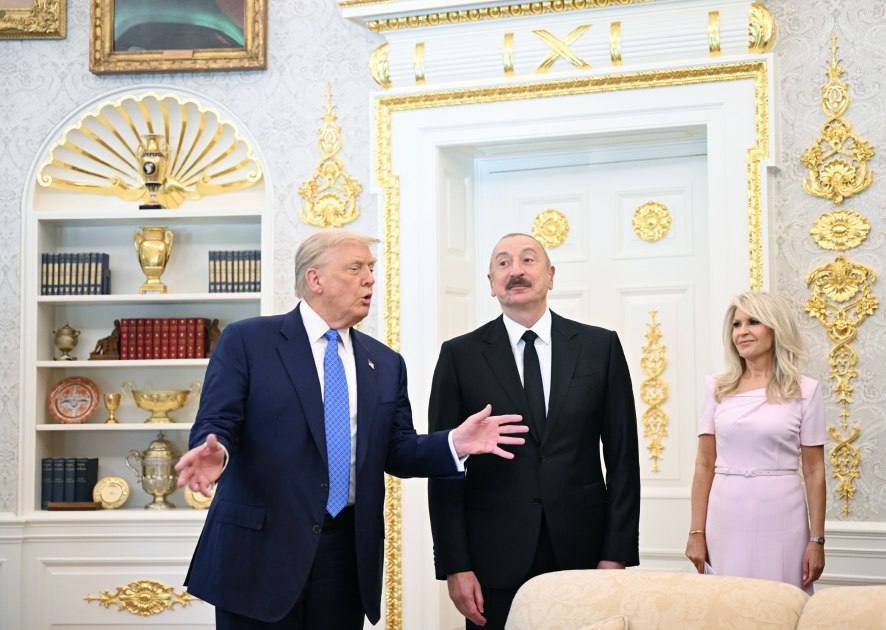
The United States has officially signed a document suspending the implementation of Section 907 with regard to Azerbaijan. The decision has been described as a historic step that opens a new chapter in bilateral relations.
Azerbaijani President Ilham Aliyev welcomed the move, calling it “fair and timely”. According to him, lifting the restrictions creates a foundation for strategic partnership in the fields of energy, investment, infrastructure, technology, and artificial intelligence.
It should be noted that this amendment was adopted by the U.S. Congress in 1992. It prohibited direct government assistance to Azerbaijan as long as Baku was “maintaining a blockade of Armenia and Nagorno-Karabakh”. For decades, the law remained a serious political barrier in relations between the two countries.
Although since 2001 its provisions had been periodically waived by presidential decrees on the grounds of U.S. national security, the current suspension is the first to be framed as a long-term political gesture.
Against the backdrop of Azerbaijan’s growing role as an energy and transit hub, the U.S. decision demonstrates Washington’s intention to strengthen cooperation in the Caspian region, reducing Europe’s dependence on Russian energy supplies. For the United States, this move opens the door to deeper partnerships in energy, infrastructure, and new technologies, including green energy and digitalization. For the region, it signals that the South Caucasus is becoming an arena of active U.S. policy, while Russia’s and Iran’s influence is diminishing.
Thus, the suspension of Section 907 has become a turning point in U.S.–Azerbaijani relations. This step consolidates the strategic partnership and positions Baku as one of the key players in the new geopolitics of the South Caucasus.


 Latest news
Latest news
Latest newsUS Sanctions Target Russias Main Pillar as Moscow Faces New Pressure on Oil Revenues
19.Sep.2026
Russia Begins State Duma Elections Amid War in Ukraine
18.Sep.2026
Bulgaria Strengthens Protection of Strategic Infrastructure Against Drones and Other Threats
18.Sep.2026
Georgia and Enka: How the Namakhvani Dispute Could Affect the Investment Climate
17.Sep.2026
Una Aleksandra Bērziņa-Čerenkova: After Russia’s Invasion, Latvia Began Banning Russian-Language Media
17.Sep.2026
Rainer Saks: Russia сould lose its influence in Armenia, just as it did in the Baltics
16.Sep.2026
Russian Drones Violated Moldovan Airspace Twice During Zelenskys Trips
16.Sep.2026
Operation Vivaldi: Ukraine Reports Advances Near Lyman as Fighting Intensifies
16.Sep.2026
Kazakhstan and South Korea Elevate Ties to Comprehensive Strategic Partnership
16.Sep.2026
Armenia Energy Diversification: Testing the Limits of Dependence on Russian Gas
15.Sep.2026
Tbilisi Distances Itself from Brussels as Kobakhidze Intensifies Criticism of European Policy
14.Sep.2026
Russia Fuel Crisis Gives the US a New Diplomatic Leverage Tool
14.Sep.2026
Trump Calls on Zelenskyy to Stop Strikes on Russian Oil Infrastructure
13.Sep.2026
Ukraine Expands Pressure on Russia’s Shadow Fleet: Moscow’s Oil Logistics Under Threat
13.Sep.2026
The Riga Conference: Europe Prepares for Long-Term Confrontation with Russia and Reshapes Its Security Architecture
12.Sep.2026