
 24 Jun 2026









Chinese Parade: Russia Is Losing the Post-Soviet Space
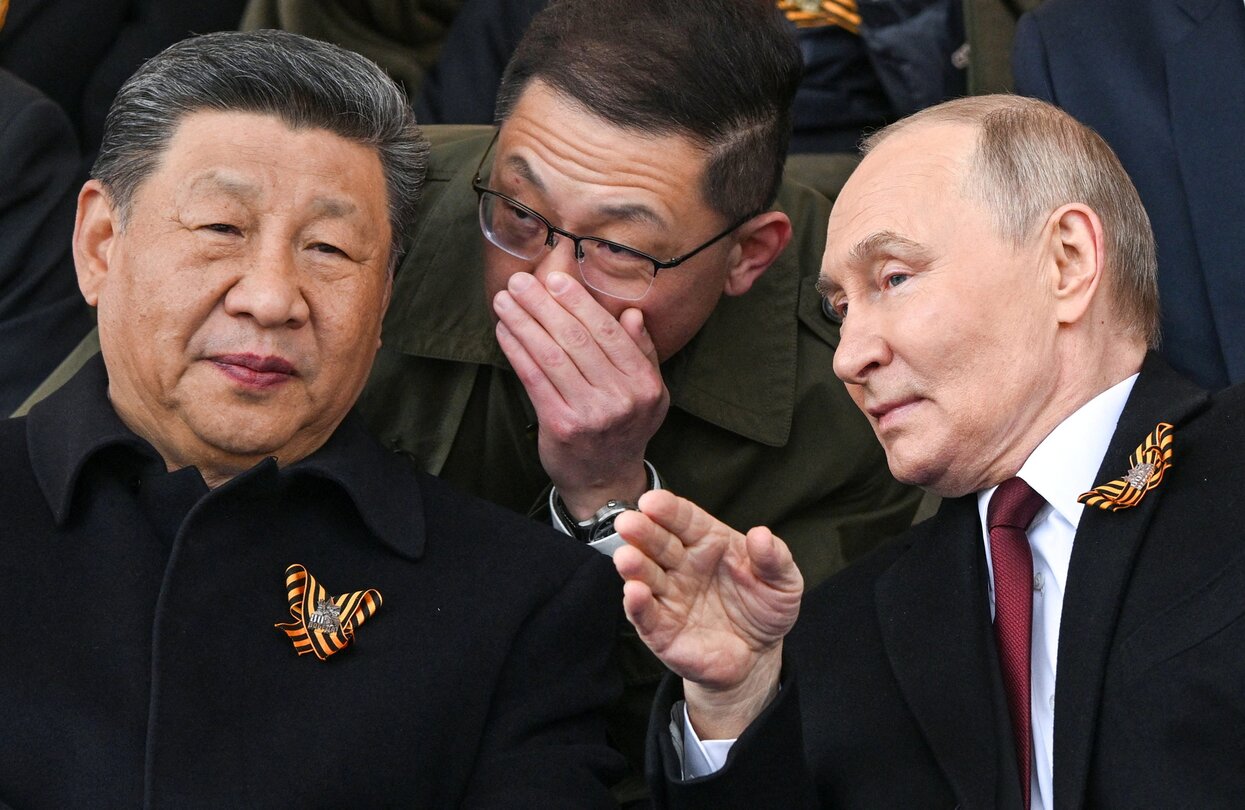
Vladimir Putin’s visit to China, contrary to the loud rhetoric of Russian state media, turned out to be a series of humiliating episodes rather than a triumphant demonstration of allied power. At the SCO summit, the Russian president looked like a “wedding general” – a mere decoration at the political rapprochement of India and China. And at the military parade in Beijing, he played the role of a “faithful vassal”, demonstrating his readiness to submit to the role of junior partner.
Formally, Putin stood in the front ranks alongside Xi Jinping and Kim Jong Un, but the political meaning of his presence was far less significant. Russia was not setting the agenda but rather openly confirming its dependence on the “ruler of the Middle Kingdom”.
The main blow to Russia’s prestige was not even that Putin found himself in a secondary role, but that former allies of Russia clearly showed they had come to China not for the Kremlin, but for Beijing.
Azerbaijani leader Ilham Aliyev, according to Putin himself, exchanged only a couple of polite words with him – and immediately went to Xi. The same can be said of the leaders of Central Asia: they dutifully arrived in Beijing, but their strategic interests are now tied not to Moscow, but to China.
Armenia, traditionally considered Russia’s closest ally, has effectively fallen out of Moscow’s orbit after the Kremlin refused to support it in the Nagorno-Karabakh conflict. Azerbaijan, despite Moscow’s favor, has turned to Turkey and China. Even Belarus, whose Lukashenko regime largely survives thanks to Russian backing, increasingly balances between Moscow and Beijing, seeking to strengthen its own autonomy.
Putin’s policy in the South Caucasus looks particularly disastrous. For decades, Moscow maintained a balance between Baku and Yerevan, using the Nagorno-Karabakh conflict as a tool of influence. But Putin’s personal animosity toward Pashinyan destroyed the system: Armenia turned away, Azerbaijan never became an ally, and the key arbiters in the region are increasingly Turkey and now China.
Parallel processes are unfolding in Central Asia. The economies, infrastructure, and transport projects of these states are increasingly tied to Beijing. China’s “One Belt, One Road” initiative carries far more weight here than any Russian promises. Even the symbolic trilateral meeting of Xi, Putin, and Mongolia’s president underscored that Russia is no longer the guarantor of Mongolian sovereignty, but merely the third participant in talks.
A distinctive feature of Putin’s foreign policy in recent years is that it has become blatantly subjective. Soviet and even Yeltsin-era “realpolitik” has been replaced by a personal diplomacy driven by animosities and an obsessive fixation on the war in Ukraine. Everything else has been neglected and abandoned.
Instead of expanding its zones of influence, the Kremlin now gives them away – like discounts on oil for India or gas for China. The parade in Beijing became a symbol: Putin did not strengthen Russia’s position but publicly confirmed the shift of the post-Soviet space into China’s sphere of attraction.
Russian propaganda calls Putin’s visit to China a “breakthrough of international isolation”. In reality, it is a demonstration of decline.
Moscow is rapidly losing the Caucasus, Central Asia, and gradually Eastern Europe. Even allies within the CSTO behave as independent players for whom relations with Beijing are far more important than ties with the Kremlin.
Instead of a “multipolar world”, Russia faces a reality in which its role is vassal-like, and its leader is a mere extra at someone else’s celebration. And if for Xi Jinping the parade was a showcase of power and global leadership ambitions, for Putin it became a symbol of the collapse of his own “empire of influence”.
Source: vot-tak.tv


 Latest news
Latest news
Latest newsUkraine’s Battlefield Experience Opens New Opportunities in Asia’s Drone Market
19.Jun.2026
Azerbaijan’s Oil Trap: Why the Economy Is Standing Still
18.Jun.2026
Motorcycle Noise Seen as Obstacle to Air Defense Operations in Crimea
17.Jun.2026
Rising Wages and Euro Integration: Bulgaria Enters a New Economic Era
17.Jun.2026
Armenia After June 7: Pashinyan Remains in Power, Moscow Unhappy
17.Jun.2026
$300 Billion Deal: Iran Poised to Receive the Largest Investment Package in Modern Middle Eastern History
16.Jun.2026
Infrastructure Pressure: Putin Acknowledges the Economic Impact of Ukrainian Attacks
15.Jun.2026
Kyiv and Moscow Trade Blame After Damage Reported at Kyiv Pechersk Lavra
15.Jun.2026
IMF Raises Georgia’s Economic Growth Forecast to 6.5% for 2026
15.Jun.2026
EU Opens the Door to Ukraine and Moldova as First Membership Talks Begin
14.Jun.2026