
 24 Jun 2026









A Shot in the Rear: The Attempt on Russia’s GRU Deputy Chief
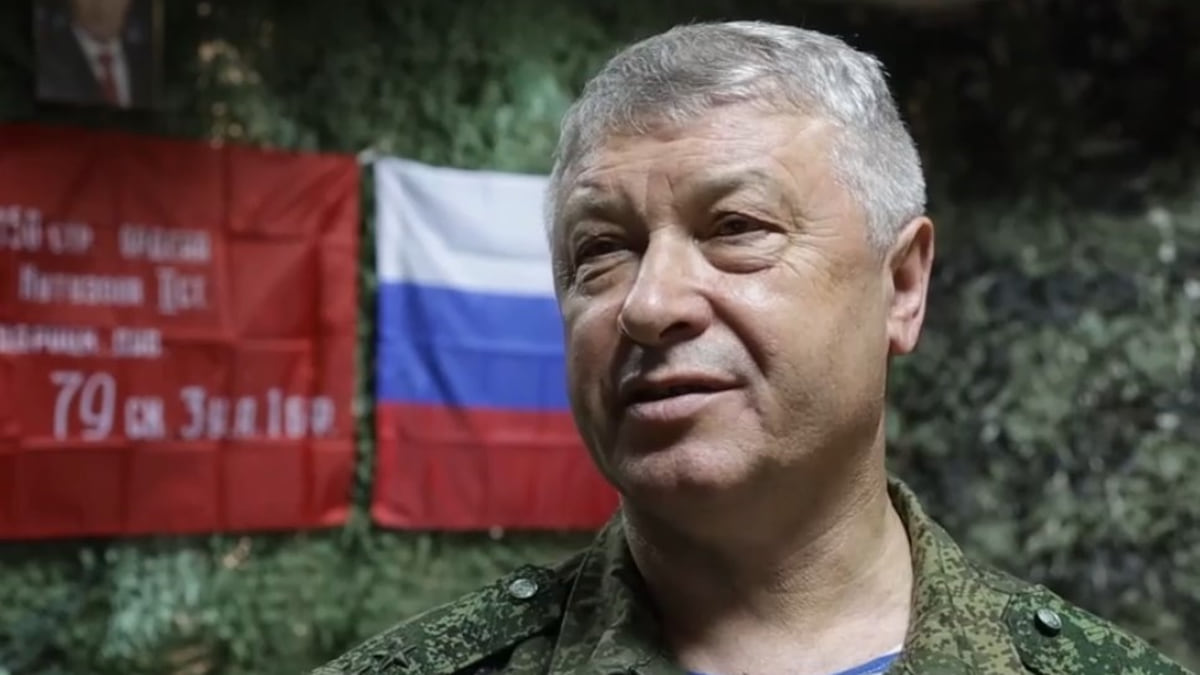
On February 6, an attempt was made
in Moscow on the life of one of the most senior figures in Russian military
intelligence — Lieutenant General Vladimir Alekseyev, Deputy Chief of the Main
Directorate of the General Staff of the Armed Forces of the Russian Federation
(GRU). According to sources within the security services, he sustained gunshot
wounds near his residence and was urgently hospitalized. His condition is
reported to be serious. Investigative authorities have opened a criminal case
on charges of attempted murder. The assailant fled the scene, and as of the
time of publication, there is no official information regarding any arrests.
The very fact of such an incident in
the Russian capital — particularly involving a figure of this rank — goes far
beyond ordinary criminal news. This was not merely an attack on a general, but
rather a symptom of a deeper and more troubling transformation within Russia’s
internal security environment. Vladimir Alekseyev is not a public political
figure, but a representative of the closed security establishment — a man whose
work traditionally remains in the shadows and is accompanied by heightened
protection measures. An attempt on his life in a residential area points either
to a serious failure in the security apparatus or to a qualitatively higher
level of preparation on the part of the perpetrators.
The broader context lends additional
gravity to the incident. Alekseyev is under Western sanctions and has been
mentioned in investigations related to some of the most sensitive overseas operations
attributed to Russian intelligence. This significantly broadens the range of
possible motives — from an external dimension to internal conflicts linked to
the redistribution of influence, responsibility, and resources within the
security bloc. Official accusations directed at Ukraine, voiced shortly after
the attack, appear politically predictable; however, in the absence of publicly
presented evidence, they serve more of a mobilizing and propagandistic function
than one aimed at genuinely clarifying the circumstances of the attack.
The incident also fits into a wider
trend that has become increasingly visible in recent years: the war is
progressively “returning inward” to Russia itself. Whereas previously attacks
and assassinations of senior military figures were associated primarily with
the combat zone, individuals deep in the rear are now proving vulnerable. This
undermines the perception of control over the situation and creates a dual
challenge for the authorities — the need to project strength while
simultaneously concealing the true scale of emerging threats.
From a political perspective, the
attempt may have several consequences. First, it will almost inevitably lead to
tighter security measures for senior military leadership and further consolidation
of internal control mechanisms. Second, such attacks heighten anxiety within
the elite, where tensions are already mounting due to the protracted conflict,
sustained sanctions pressure, and increasingly uncertain strategic prospects.
Third, each such episode raises the risk of an escalation logic, in which both
external and internal challenges are increasingly interpreted as elements of a
single hostile conspiracy.
In this sense, the attempt on Vladimir Alekseyev demonstrates that even the most closed and heavily protected segments of the Russian state apparatus are no longer absolutely secure, and that the boundary between the front line and the rear is becoming increasingly blurred. In the long term, this may prove to be a factor no less significant for the stability of Russia’s political system than developments unfolding directly on the battlefield.


 Latest news
Latest news
Latest newsUkraine’s Battlefield Experience Opens New Opportunities in Asia’s Drone Market
19.Jun.2026
Azerbaijan’s Oil Trap: Why the Economy Is Standing Still
18.Jun.2026
Motorcycle Noise Seen as Obstacle to Air Defense Operations in Crimea
17.Jun.2026
Rising Wages and Euro Integration: Bulgaria Enters a New Economic Era
17.Jun.2026
Armenia After June 7: Pashinyan Remains in Power, Moscow Unhappy
17.Jun.2026
$300 Billion Deal: Iran Poised to Receive the Largest Investment Package in Modern Middle Eastern History
16.Jun.2026
Infrastructure Pressure: Putin Acknowledges the Economic Impact of Ukrainian Attacks
15.Jun.2026
Kyiv and Moscow Trade Blame After Damage Reported at Kyiv Pechersk Lavra
15.Jun.2026
IMF Raises Georgia’s Economic Growth Forecast to 6.5% for 2026
15.Jun.2026
EU Opens the Door to Ukraine and Moldova as First Membership Talks Begin
14.Jun.2026