
 24 Aug 2026









The Kremlin Tightens the Screws on Public Dissent
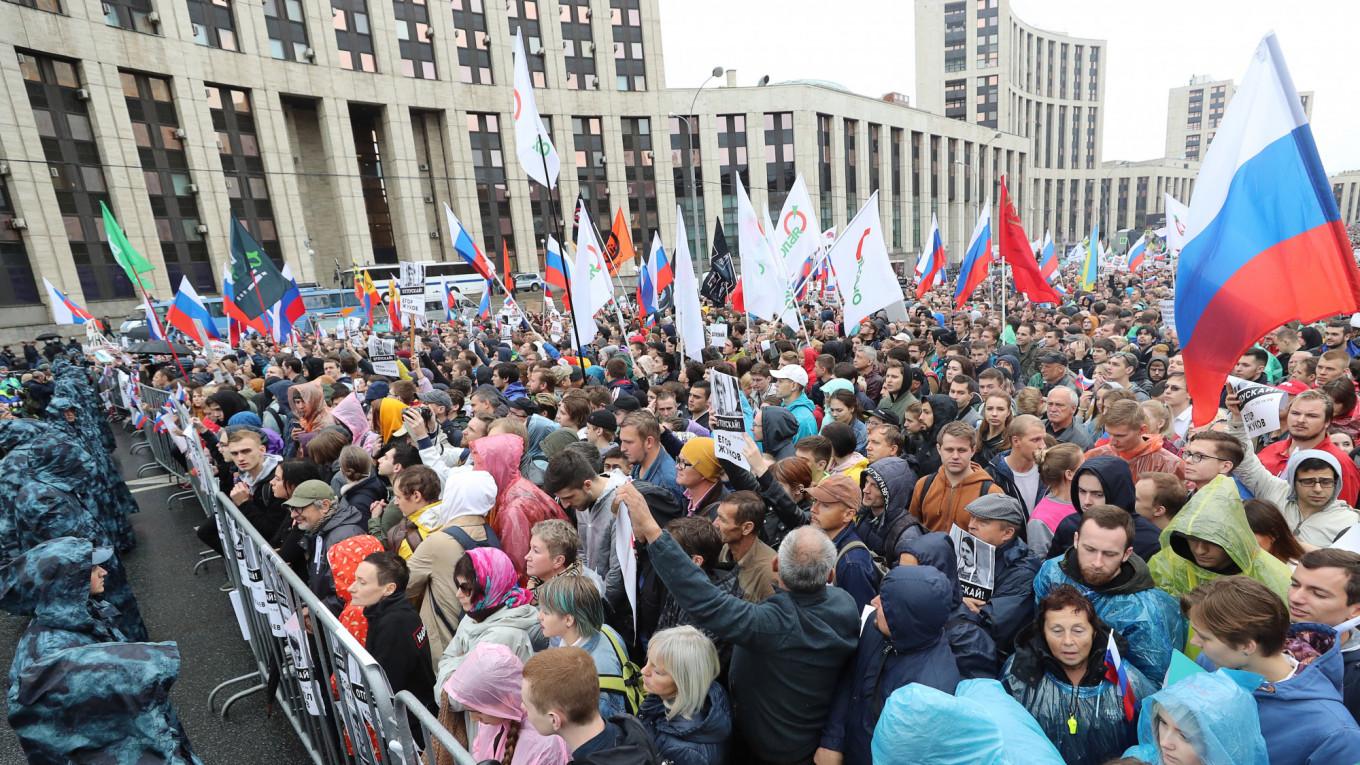
In Russia’s staid parliament, the dying days of 2020 were marked by unusually frenzied lawmaking activity, most of it centering on civil rights.
Over the course of a few days in late December, the State Duma passed a flurry of bills introducing sweeping new restrictions on political protests, legalizing censorship of social media and cementing broad new guidelines under which the government can designate individuals as “foreign agents.” They have already been signed into law by President Vladimir Putin.
To many observers of Russia’s political scene, the new legislation — coming on the heels of the August poisoning of opposition activist Alexei Navalny — represents a pronounced hardening of Russia’s authoritarian system ahead of parliamentary elections in the fall.
“The state is waging war on civil society,” said Andrei Kolesnikov, senior fellow in Russian domestic politics and political institutions at the Carnegie Moscow Center. “This is the natural evolution of authoritarianism.”
The laws are a mixed bag, some tightening long-standing screws on opposition activity, while others respond to newer threats.
New restrictions banning public demonstrations near law enforcement premises, defining single-person pickets — the traditional means of avoiding restrictions on mass gatherings — as protests, and prohibiting support of rallies by foreign individuals or organizations are the latest moves in a years-long tightening of laws on mass demonstrations.
Likewise, a law allowing individuals to be categorized as “foreign agents,” a legal term critics see as redolent of Soviet-era purges, comes after several years of the label being applied to organizations ranging from human rights groups to independent pollsters.
Other provisions, including those allowing the state to ban social media networks that censor Russian state media are new. One bill criminalizing the spread of libel online is aimed partly — according to its author, United Russia deputy Dmitry Vyatkin — at popular channels on the messaging app Telegram, which many Russians turn to for news and political gossip.
In particular, a law banning the disclosure of security service employees’ personal data has been linked by the BBC’s Russian Service to a recent Bellingcat investigation that used telephone and flight records to unmask the FSB officers behind the attempt on Alexei Navalny’s life.
More broadly however, the new restrictions are seen by political analysts as the Russian state girding itself for a difficult year in which the pro-Kremlin United Russia bloc will have to defend its supermajority in the State Duma amid a spirited opposition challenge and low approval ratings for the ruling party.
“These laws are a hedge against all possible scenarios,” said Carnegie’s Kolesnikov. “Including those related to the elections.”


 Latest news
Latest news
Latest newsThe United States Rapidly Expands Missile Production: Pentagon Accelerates Output of Tomahawks and Other Critical Weapons
24.Aug.2026
Record Supplies: Armenia Boosts Fish Exports to Georgia
23.Aug.2026
Political Battle During Wartime: Zelensky Opposes Elections
23.Aug.2026
Romania Approves Construction of One of the Largest Solar Power Plants in Europe
23.Aug.2026
Ex-Ukrainian Defence Minister Fails in Bid to Pressure Zelenskiy
22.Aug.2026
Upper Lars: Why Border Queues Have Become a Political Signal for Georgia and Russia
22.Aug.2026
Russia-Ukraine War: No Decisive Breakthrough on the Front and Intensifying Ukrainian Deep Strikes on Russia
21.Aug.2026
TRIPP, Peace, and a New Geopolitical Crossroads: How Armenia Has Changed One Year After Washington
20.Aug.2026
Tokayev Updates Kazakhstan Foreign Policy Concept: Astana Strengthens Its Strategic Multi Vector Approach
19.Aug.2026
Ukraine Turns Ground Robots into a New Tool in the Fight Against Russia
19.Aug.2026
Tehran Threatens a New Round of War After Talks With the US Collapse
18.Aug.2026
Drones Over Moldova: Accident or a New Threat to National Security?
17.Aug.2026
Spanish F-18 Fighter Jet Shoots Down Drone That Violated Romanian Airspace
17.Aug.2026
The Black Sea Becomes a Risk Zone: Can Turkiye Protect Key Trade Routes?
16.Aug.2026
Ukraine Intensifies Long-Range Strikes: Flamingo Missiles Hit a Rocket and Space Center and Airbase in Russia
15.Aug.2026