
 28 Nov 2026









Will Iran be able to catch on the departing train?
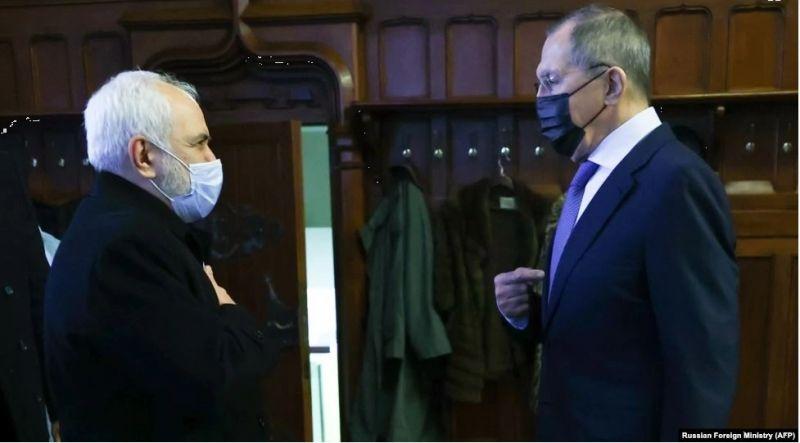
On January 29, the Iranian Foreign Minister Mohammad Javad Zarif completed a five-day diplomatic tour Baku-Moscow-Yerevan-Tbilisi-Istanbul aimed at probing the possibility of implementing the "Six-Party Cooperation Format in the Caucasus”, the project put forward by Azerbaijani President Ilham Aliyev after the end of the Armenian Azerbaijani war on November 10, 2020.
On January 25, welcoming in Baku the proposal of Azerbaijani President Ilham Aliyev, entitled “Six-Party Format of Cooperation in the Caucasus,” Iranian Foreign Minister Zarif announced the readiness of the Islamic Republic of Iran to assist and cooperate in all areas that contribute to peace, stability and tranquility in the region, reported IRNA.
The initiative of regional cooperation and stability, including the format of the three countries of the South Caucasus (Azerbaijan, Armenia and Georgia), as well as neighboring powers (Iran, Russia and Turkey), was put forward by the presidents of Azerbaijan and Turkey at the Victory Parade in Baku on December 10 last year. Regional powers, except Armenia and Georgia, welcomed it. Armenia is not ready today to fraternize with the Azerbaijani-Turkish tandem, while Georgia has turned its gaze to the West and looks with apprehension at the geopolitical format with the participation of Russia, from which it is gradually distancing. In Tbilisi, Georgian Foreign Minister David Zalkaliani avoided a direct meeting with Zarif due to COVID disease. The parties talked over the phone.
Scant reports from the meetings held by Zarif in the platform countries do not allow putting together the puzzle of the picture of disagreements or coincidences of positions on the initiative of 3 + 3. This is because Zarif really spoke about the platform only in Azerbaijan.
The press statements made in Moscow addressed issues of bilateral relations, as well as strategically sensitive issues for Iran, such as establishing working relations with the new Joe Biden administration and returning the situation around Iran's nuclear program to the agreements of 2015, when an agreement was reached under President Obama allowing the development of Iran's peaceful nuclear program. Subsequently, President Trump froze the agreement, tightening the sanctions noose around Iran's neck.
From this point of view, the Moscow meeting of Foreign Minister Sergei Lavrov on January 26 was important for Zarif.
"Regional events, in particular Karabakh, the nuclear deal, bilateral relations and international issues, including Syria, Afghanistan and Yemen, will be discussed at a meeting with the Russian Foreign Minister," said the Iranian Foreign Minister.
A special place in this list was given to the nuclear program, of which Russia is a member. At the final press conference, Zarif emphasized the desire to reach an understanding with the White House. In Moscow, in an interview to “Russia Today”, he advanced Tehran's expectations about a revision of the US policy on the nuclear program and, most importantly, an end to the US anti-Iranian sanctions war. The interview was published while Zarif arrived in Istanbul for talks with his colleague Mevlut Cavusoglu on January 29. It was supposed to strengthen Iran's expectations of Ankara's possible mediating role in the dialogue with Washington.
“I hope the Biden administration will return to the terms of the nuclear deal with Iran. Thus, the sanctions against brotherly Iran will be lifted,” assured his Iranian counterpart Cavusoglu after the talks.
In Istanbul, the Iranian diplomat was most interested in further plans for the expansion of NATO Turkey within the borders of the former Ottoman Empire and in the Caucasus, which Iran, after Russia, considers a zone of its historical interests. In particular, the talk is about Azerbaijan, where Turkish domination clearly manifested itself during the Armenian-Azerbaijani war and its results expanded the influence of Sunni Turkey in Shiite Azerbaijan, and at the same time weakened the influence and weight of Shiite Iran here.
The war in the South Caucasus ultimately strengthened the presence of the two powers in the region - Russia and Turkey, pushing Iran to the sidelines of the South Caucasus in the political sense. The attempt to balance between Armenia and Azerbaijan before and after the war can be seen as a miscalculation of Iranian diplomacy as opposed to the pro-Azerbaijani policy of Turkey and Russia, and the far West so hated by Tehran, which played a much more significant pro-Azerbaijani role in this game than regional powers.
With all this, in exchange for Turkish assistance in weakening the American sanctions loop, Tehran agreed to tolerate Turkey's actions in the South Caucasus.
“Cooperation between Iran and Turkey in the Caucasus will definitely benefit the region,” Zarif said in response in Istanbul.
The only thing that Iran could offer to all five countries by hopping on the departing train is to support regional transport and energy projects West-East and North-South. It is no accident that the communicative theme was present at all the meetings of the Iranian Foreign Minister during his five-day tour. Iran is ready to play an active role in unblocking communications, first, based on its own interests. Using its geographical position at the junction of South Asia and the Indian Ocean, the country can strengthen its mission as a transport and energy hub for the South Caucasus, which in turn is a connecting communication hub of the North-South + East-West intersection. Transit opportunities of Iran can ensure the transit of this country into strong regional and geopolitical relations, which will provide a more favorable political and economic climate for its future. Tehran understands this.
Mehman Aliyev


 Latest news
Bulgaria Intercepts Boat Carrying 35 Migrants in the Black Sea
27.Nov.2026
Pro-European Protests Continue in Georgia as Opposition Calls for Large-Scale March in Tbilisi on November 28
27.Nov.2026
Bulgaria Strengthens Its Air Defence: Sofia to Acquire Five Additional IRIS-T SLM Systems for €925.9 Million
26.Nov.2026
Armenia Seeks to Assume Full Responsibility for Border Security as Yerevan Strengthens National Sovereignty
26.Nov.2026
Russian State Duma Approves Increase in Defence Spending for 2027: One in Every Three Rubles to Go Towards the War
25.Nov.2026
Armenia Revises Its Constitution: Pashinyan Proposes a New Stage of State Development and a Peace Agenda
25.Nov.2026
EU Presents 22nd Sanctions Package Against Russia: Restrictions to Target Banks, Shadow Fleet and Participation in European Sports
24.Nov.2026
Latvia and Armenia: Cautious Support for a European Path
24.Nov.2026
Two Commercial Vessels Attacked in the Black Sea off Bulgaria
23.Nov.2026
EU Allocates Another €1 Billion to Ukraine: European Military Support Takes on a Long-Term Dimension
22.Nov.2026
Europe Prepares a Military Mission for Ukraine: 2800 Troops Rehearse Post-War Deployment Scenarios
21.Nov.2026
Russian Missiles and a Drone Fall on Polish Territory: NATO Faces New Threats on Its Eastern Flank
21.Nov.2026
Russia Strikes Kyiv Bridges Following Ukraine’s Attack on the Crimean Bridge: Transport Infrastructure Becomes a New Front in the Escalation
20.Nov.2026
The "Coalition of the Willing" Discusses Security Guarantees and Continued Support for Kyiv
19.Nov.2026
Tanker Sinks off Bulgaria After Being Hit Four Times: All 19 Crew Members Rescued
18.Nov.2026