
 28 Nov 2026









Latvia and Armenia: Cautious Support for a European Path
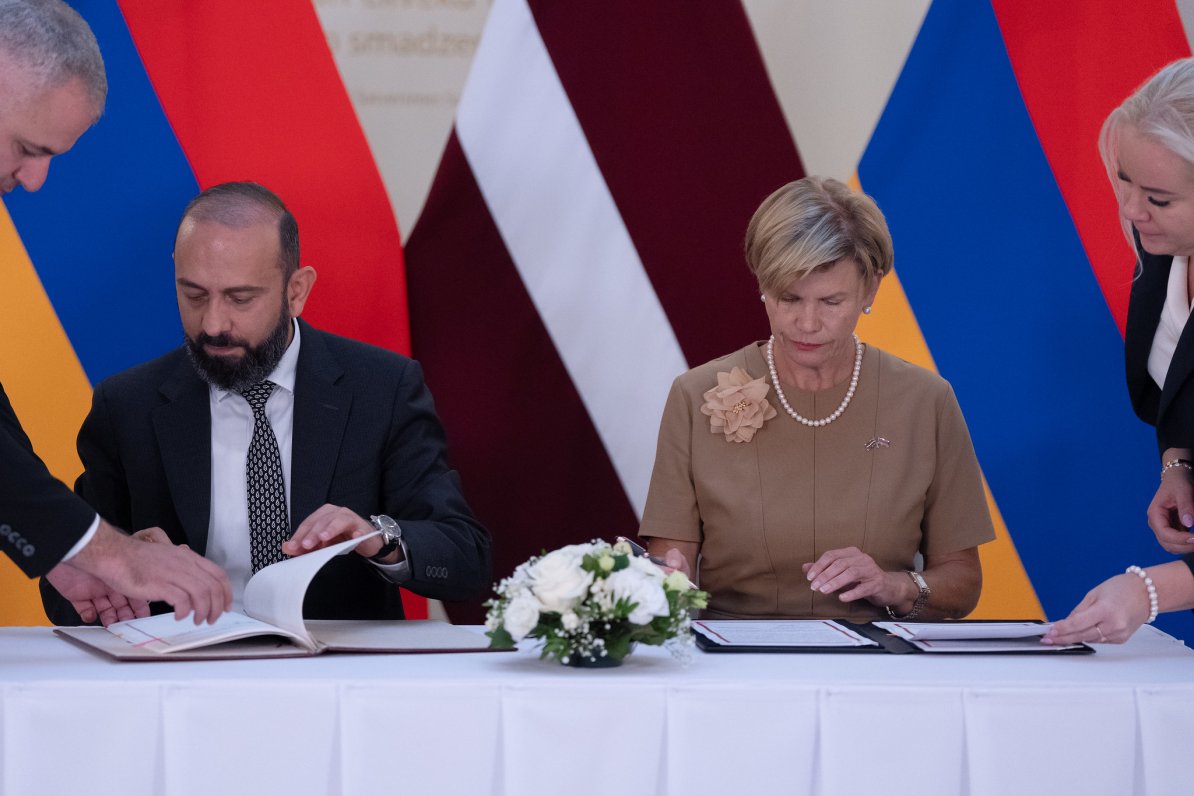
During Armenian Foreign Minister Ararat Mirzoyan’s visit to Riga on September 7, 2026, Latvian President Edgars Rinkēvičs supported Armenia’s aspirations for closer ties with the European Union and expressed an interest in expanding political dialogue and practical cooperation. Behind this diplomatic language, however, lies a more specific question: what role is Latvia prepared to play in supporting Armenia’s European aspirations, and what does it expect from Yerevan?
Their shared past as part of the Soviet Union and the widespread use of Russian in Latvia and Armenia might at first seem to offer a basis for bringing the two countries closer together. In practice, the opposite has been true: after restoring its independence, Latvia sought to distance itself both from the Soviet legacy and from countries that preferred to remain among Russia’s allies. Throughout the post-Soviet period, appeals to a shared history therefore caused more irritation in Latvia than they created common ground for dialogue: these appeals sought a basis for closer ties in a past that Riga views as a period of Soviet occupation and from which it continues to distance itself. Support for Armenia’s European path creates a new basis for bilateral relations.
The Limits of Closer Ties
Riga is interested in Armenia’s closer ties with Europe, but this interest should not automatically be understood as Latvia’s willingness to become one of the main political champions of that process. The role of a supporting partner appears more natural for Latvia: supporting European initiatives, sharing its experience, and developing specific areas of cooperation while maintaining a realistic assessment of regional risks and its own capabilities. Latvia’s approach can be described as cautious support, with the expectation that Yerevan will take the initiative.
This caution rests primarily on an assessment of whether Armenia’s chosen foreign policy course will endure. Closer ties with the EU and reduced dependence on Russia are related but distinct processes. Developing relations with Europe does not in itself mean that Moscow has entirely ceased to influence decisions made in Yerevan.
This contradiction was also apparent during Mirzoyan’s visit: at the press conference in Riga, he emphasized that Armenia seeks to develop relations with the European Union and the United States but does not intend to sever ties with Russia. Responding to a question about the Russian military base, the minister said that Yerevan saw no need for its continued presence, but that Armenia had not initiated talks on closing the base. This suggests a search for a new balance rather than a completed geopolitical transition.
To assess the prospects for Armenia’s European path, it is essential to understand how durable this balance will be. The current government’s desire to expand cooperation with the EU is an important condition, but it does not guarantee that the chosen course will be maintained. The EU’s experience with Georgia raises a question: to what extent can a stated commitment to closer ties with Europe take root in state institutions, and can that course endure changes in domestic politics? Armenia’s European prospects are also affected by differences in political perceptions within the EU: while European capitals unequivocally view Ukraine and Moldova as European countries, there is no comparable consensus about Armenia or Georgia.
The Priority Is Regional Stability
Conversations with representatives of Latvia’s Foreign Ministry suggest that Latvia’s main interest in the South Caucasus is stability and the preservation of peace. At her September meeting with Mirzoyan, Latvian Foreign Minister Baiba Braže linked lasting peace in the region to opportunities for developing transportation links, trade, and the energy sector.
Latvia’s interest in regional stability is reflected in more than diplomatic support for a peace treaty. According to Latvia’s Ministry of the Interior, three Latvian experts were serving with the EU’s civilian mission in Armenia as of September 2026. The mission monitors the situation in border areas, contributes to civilian safety, and helps build trust between Armenia and Azerbaijan. At the EU level, this civilian presence is complemented by assistance to Armenia’s armed forces: by the May summit, €30 million had been allocated through the European Peace Facility to strengthen their logistical capabilities, including to help protect civilians in crises and emergencies.
It is from this perspective that Riga supports the normalization of relations between Armenia and Azerbaijan, including by raising the issue in its dialogue with Baku. At a strategic dialogue meeting between the Latvian and Azerbaijani foreign ministries on June 18, 2026, Latvia expressed hope that a peace treaty would soon be signed. Latvia’s interest in regional stability also shapes its pragmatic approach to dialogue with Azerbaijan: Riga does not express approval of Baku’s political model, but continues political and economic cooperation with Azerbaijan. This approach entails working with the current authorities to pursue specific security and economic objectives, without making democratization a prerequisite for such engagement.
Choosing Europe Means Meeting Higher Standards
On November 3, 2026, at the Euronews EU Enlargement Summit in Brussels, Nikol Pashinyan said it was realistic for Armenia to apply to join the Union as early as 2027, while also leaving open the possibility of 2028. He emphasized that democratic development was a strategic choice for the country, rather than a consequence of current circumstances.
However, Armenia’s deliberate choice to move toward the EU also means that the demands placed on it will increase as this process advances. Yerevan will be expected not only to move closer to the EU in its foreign policy, but also to meet requirements concerning democratization, the rule of law, and the protection of human rights. Distancing itself from Moscow will not remove the need for domestic reforms.
The difference in expectations stems from the nature of the relationship: cooperation with an external partner allows the EU to deliberately limit the agenda, whereas moving toward membership requires a political and legal system that complies with the Union’s rules and, above all, alignment with its core values. Higher requirements for Armenia than for, say, Azerbaijan or the countries of Central Asia should therefore be understood primarily in the context of the goals that Yerevan itself will set out.
This is already reflected in the bilateral dialogue: in the joint statement issued by the presidents of Latvia and Armenia in May 2026, support for cooperation was accompanied by an emphasis on democracy, judicial reform, and combating corruption. Latvia expressed its willingness to help with these reforms by sharing its own experience. One concrete outcome of the September visit to Riga was the signing of an implementing protocol to the readmission agreement between Armenia and the European Union.
Mirzoyan’s September visit to Riga was preceded by two other important meetings in Yerevan: the European Political Community summit on May 4 and the first Armenia–EU summit on May 5. The arrival of European leaders ahead of the parliamentary elections allowed Pashinyan to demonstrate European partners’ support for his foreign policy course. Latvia contributed to this diplomatic success by backing Yerevan’s bid to host the European Political Community summit.
Economic Support and Its Limits
European assistance to Armenia was evident not only in symbolic support, but also in the response to Russian economic pressure: ahead of the 2026 parliamentary elections, Russia restricted imports of Armenian products. In May and June, the restrictions affected agricultural products, wine, brandy, and mineral water, while obstacles to transit through Russian territory complicated access to other markets.
Under these circumstances, the EU offered financial aid and help for Armenian businesses seeking access to the European market. In June, the European Commission disbursed €34 million to Armenia to mitigate the impact of the restrictions and helped establish business contacts and arrange new shipments.
As part of this support, Latvia became one of the first destinations for shipments of Armenian flowers: as early as June 4, a shipment of 5,500 roses left Armenia with assistance from Latvian diplomats and the EU delegation. The shipment carried little economic weight but considerable symbolic significance: in response to the Russian restrictions, it was Riga that opened the doors of the European market to Armenian producers. Mirzoyan also underscored the political significance of this assistance: in a June 10 conversation with Latvia’s foreign minister, he specifically thanked Latvia for helping arrange several shipments of flowers that had already been dispatched.
Latvia has consistently supported this economic agenda at the political level as well: on November 12, its representatives took part in a meeting of the support group for Armenia on the sidelines of the European Political Community summit in Dublin. In a joint statement, participants reaffirmed their willingness to help diversify Armenia’s trade and energy ties, drawing in part on the EU’s decision to suspend tariffs.
These expressions of political support and symbolic steps, however, are taking place against a backdrop of modest bilateral ties. According to Armenia’s Foreign Ministry, trade in goods between the two countries totaled $16.7 million in 2025: even after growing by roughly a quarter over the previous year, trade with Latvia accounted for less than 0.1% of Armenia’s total foreign trade in goods. Support for Yerevan’s European course therefore still occupies a more prominent place in the relationship than their bilateral economic agenda. The gap between their stated desire for closer ties and the development of bilateral relations is also apparent in the question of a permanent diplomatic presence.
During the foreign policy debates in the Saeima in January 2026, Speaker Daiga Mieriņa described opening a Latvian embassy in Armenia as a logical step toward developing people-to-people and business ties. However, this call has yet to be followed by practical action: neither country has an embassy in the other’s capital. Armenia’s ambassador to Latvia is based in Vilnius, while Latvia’s ambassador to Armenia is based in Riga.
Moreover, Latvia’s ambassador previously handled relations with Armenia from Tbilisi, but in 2026, amid deteriorating relations with the Georgian authorities, Latvia’s embassy in Georgia came under the leadership of a chargée d’affaires ad interim. Latvia did not expand its diplomatic presence in Yerevan: relations with Armenia continued to be managed from Riga. Together with the modest volume of trade, this gives reason to regard the bilateral agenda as limited: political support for Armenia’s European aspirations has yet to be accompanied by comparable development of direct ties between Riga and Yerevan.
Realizing the potential for closer ties requires action from both sides. Yerevan will need to anchor its European choice in the workings of state institutions, ensuring that it endures through changes of government. For Riga, deepening the relationship will mean being willing to devote diplomatic resources to Armenia and support both bilateral cooperation and dialogue at the EU level. The role of a supporting partner is entirely compatible with a more active bilateral policy. At the same time, conversations with representatives of Latvia’s Foreign Ministry make clear that shaping this agenda will depend primarily on Yerevan’s initiative, while Riga will be ready to support all European initiatives. The future of these relations therefore depends not only on how consistently Armenia pursues its European course at home, but also on Yerevan’s own interest in actively developing cooperation with Latvia.
Researcher at the Latvian Institute of International Affairs
Sergejs POTAPKINS


 Latest news
Bulgaria Intercepts Boat Carrying 35 Migrants in the Black Sea
27.Nov.2026
Pro-European Protests Continue in Georgia as Opposition Calls for Large-Scale March in Tbilisi on November 28
27.Nov.2026
Bulgaria Strengthens Its Air Defence: Sofia to Acquire Five Additional IRIS-T SLM Systems for €925.9 Million
26.Nov.2026
Armenia Seeks to Assume Full Responsibility for Border Security as Yerevan Strengthens National Sovereignty
26.Nov.2026
Russian State Duma Approves Increase in Defence Spending for 2027: One in Every Three Rubles to Go Towards the War
25.Nov.2026
Armenia Revises Its Constitution: Pashinyan Proposes a New Stage of State Development and a Peace Agenda
25.Nov.2026
EU Presents 22nd Sanctions Package Against Russia: Restrictions to Target Banks, Shadow Fleet and Participation in European Sports
24.Nov.2026
Latvia and Armenia: Cautious Support for a European Path
24.Nov.2026
Two Commercial Vessels Attacked in the Black Sea off Bulgaria
23.Nov.2026
EU Allocates Another €1 Billion to Ukraine: European Military Support Takes on a Long-Term Dimension
22.Nov.2026
Europe Prepares a Military Mission for Ukraine: 2800 Troops Rehearse Post-War Deployment Scenarios
21.Nov.2026
Russian Missiles and a Drone Fall on Polish Territory: NATO Faces New Threats on Its Eastern Flank
21.Nov.2026
Russia Strikes Kyiv Bridges Following Ukraine’s Attack on the Crimean Bridge: Transport Infrastructure Becomes a New Front in the Escalation
20.Nov.2026
The "Coalition of the Willing" Discusses Security Guarantees and Continued Support for Kyiv
19.Nov.2026
Tanker Sinks off Bulgaria After Being Hit Four Times: All 19 Crew Members Rescued
18.Nov.2026