
 28 Nov 2026









Pro-European Protests Continue in Georgia as Opposition Calls for Large-Scale March in Tbilisi on November 28
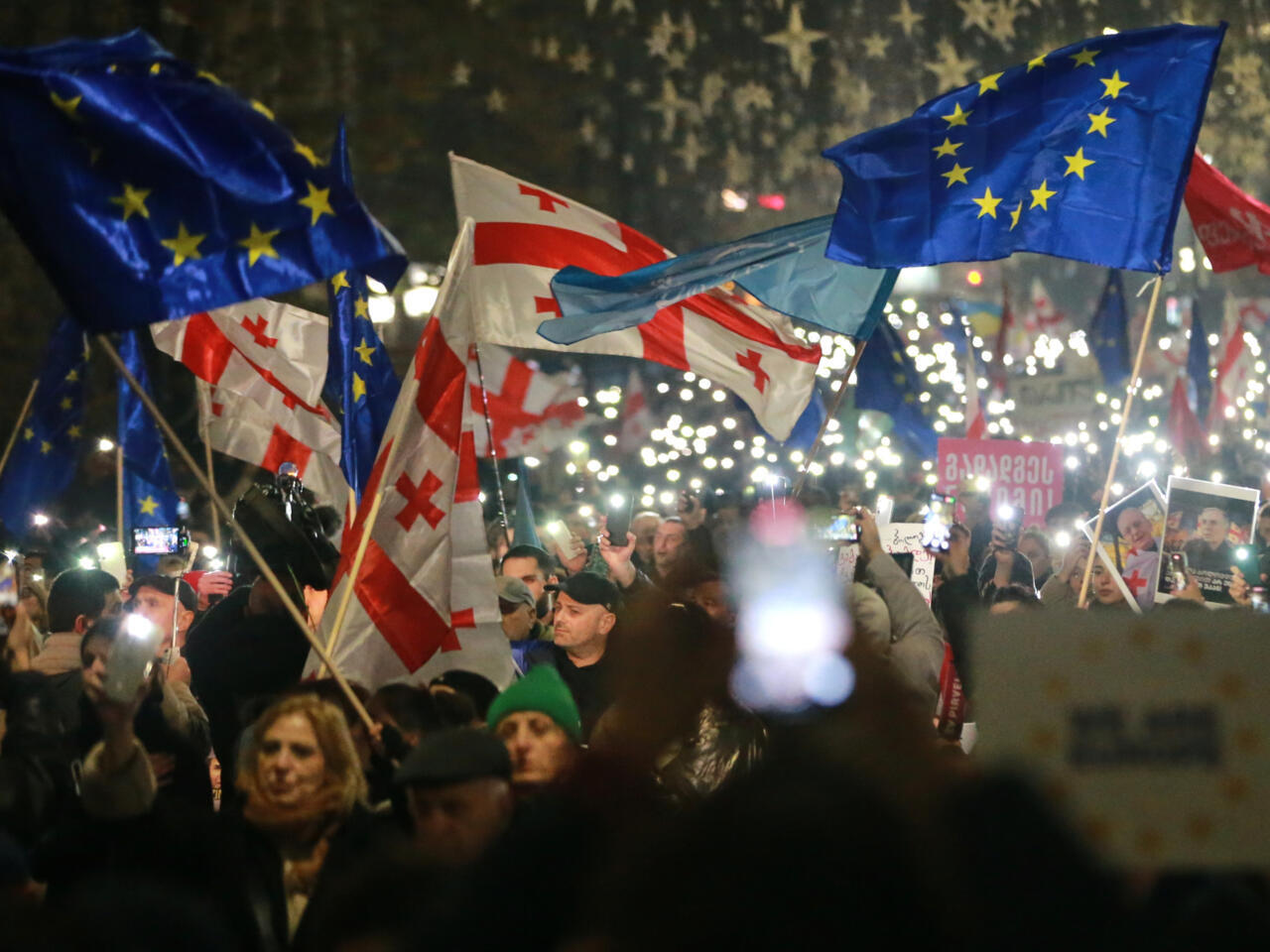
Anti-government demonstrations
are continuing in Georgia, with protesters calling for the country to maintain
its European foreign policy orientation and urging the authorities to reverse
their decision to effectively suspend progress towards opening accession
negotiations with the European Union. On November 26, 2026, supporters of European
integration held another rally in central Tbilisi, calling on citizens to join
a large-scale march scheduled for November 28. The date marks the second
anniversary of the government’s announcement that it would halt efforts to
advance towards the opening of EU accession negotiations.
On the evening of November 26,
protesters gathered outside the Georgian Parliament and the Tbilisi City Hall,
continuing a series of daily demonstrations that began in November 2024.
Demonstrators carried Georgian national flags and European Union flags, as well
as placards urging citizens to take part in the upcoming march. According to
Georgian and regional media outlets, the demonstrations had by then continued
for 729 consecutive days.
Organizers of the protest
movement called on citizens to take to the streets on November 28, stressing
the importance of preserving Georgia’s European prospects and defending
democratic institutions. The main march, organized by the movement known as the
“Saturday March,” is scheduled to begin at 19:00 near Avlabari metro station
and proceed towards Freedom Square. Meanwhile, representatives of the
opposition alliance plan to gather outside the first building of Tbilisi State
University before joining the main demonstration.
The protesters’ main demands
include the release of individuals whom the opposition considers political
prisoners, the repeal of restrictive legislation, the holding of free and fair
parliamentary elections, and the restoration of Georgia’s European and
Euro-Atlantic foreign policy orientation.
The current wave of protests
began on November 28, 2024, following a statement by Prime Minister Irakli
Kobakhidze that the government would not place the issue of opening EU
accession negotiations on its agenda before the end of 2028. The announcement
sparked widespread discontent among supporters of European integration, civil
society representatives and opposition political forces.
The demonstrations that
followed were met with forceful police responses, arrests of protesters and the
use of special crowd-control measures. The situation prompted concern among
European institutions and international human rights organizations, which
repeatedly raised questions about the state of democratic freedoms and the
protection of civil rights in Georgia.
The prolonged nature of the
protest movement reflects the persistence of deep political divisions within
the country. According to CCBS data, between November 28, 2024, and November
19, 2026, a total of 1,371 protest events were recorded in Georgia, compared
with 552 during the corresponding two-year period preceding the current wave of
demonstrations. Of these, 1,286 were classified as peaceful.
Against this backdrop, the
march scheduled for November 28 carries particular political significance, as
it is expected to demonstrate whether the pro-European movement can sustain
public mobilization two years after the crisis began. The scale of
participation could serve as an important indicator of the future trajectory of
Georgia’s domestic political situation and the level of public support for the
country’s European aspirations.


 Latest news
Bulgaria Intercepts Boat Carrying 35 Migrants in the Black Sea
27.Nov.2026
Pro-European Protests Continue in Georgia as Opposition Calls for Large-Scale March in Tbilisi on November 28
27.Nov.2026
Bulgaria Strengthens Its Air Defence: Sofia to Acquire Five Additional IRIS-T SLM Systems for €925.9 Million
26.Nov.2026
Armenia Seeks to Assume Full Responsibility for Border Security as Yerevan Strengthens National Sovereignty
26.Nov.2026
Russian State Duma Approves Increase in Defence Spending for 2027: One in Every Three Rubles to Go Towards the War
25.Nov.2026
Armenia Revises Its Constitution: Pashinyan Proposes a New Stage of State Development and a Peace Agenda
25.Nov.2026
EU Presents 22nd Sanctions Package Against Russia: Restrictions to Target Banks, Shadow Fleet and Participation in European Sports
24.Nov.2026
Latvia and Armenia: Cautious Support for a European Path
24.Nov.2026
Two Commercial Vessels Attacked in the Black Sea off Bulgaria
23.Nov.2026
EU Allocates Another €1 Billion to Ukraine: European Military Support Takes on a Long-Term Dimension
22.Nov.2026
Europe Prepares a Military Mission for Ukraine: 2800 Troops Rehearse Post-War Deployment Scenarios
21.Nov.2026
Russian Missiles and a Drone Fall on Polish Territory: NATO Faces New Threats on Its Eastern Flank
21.Nov.2026
Russia Strikes Kyiv Bridges Following Ukraine’s Attack on the Crimean Bridge: Transport Infrastructure Becomes a New Front in the Escalation
20.Nov.2026
The "Coalition of the Willing" Discusses Security Guarantees and Continued Support for Kyiv
19.Nov.2026
Tanker Sinks off Bulgaria After Being Hit Four Times: All 19 Crew Members Rescued
18.Nov.2026