
 28 Nov 2026








The EU is facing the most serious crises in its history
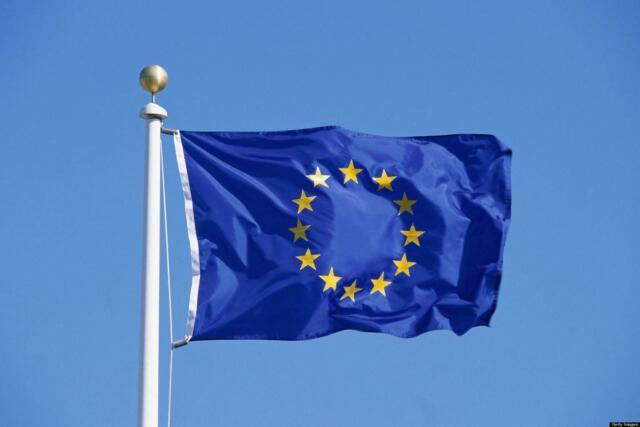
While the EU is no stranger to crises, the past few weeks have thrown up issues that highlight the chasm between the grand ambition of Brussels and its capability. Things have been so bad that two of the bloc's most senior officials have been called on to resign, CNN reports.
The most immediate problem is a Covid-19 vaccines scandal. Earlier in the pandemic, Brussels realized that a rush for vaccines could lead to wealthy member states buying huge supplies and poorer nations relying on their charity. It stepped in and secured deals with manufacturers at a better price than individual countries could negotiate.
Most member states were happy with this situation -- until the United Kingdom started vaccinating at a faster rate than the EU. The Commission decided to address this by announcing a policy that threatened creating a border on the island of Ireland, risking the return of sectarian violence. Member states -- not least EU member Ireland -- were furious at not being consulted.
Indeed, earlier this week Commission President Ursula von der Leyen was dragged before the European Parliament to explain herself and told to resign multiple times. She admitted to MEPs that the EU had made errors in its procurement of vaccines, saying that they had been "late with the approval" and were "too optimistic on mass production." She also expressed deep regret for raising concerns over stability in Northern Ireland.
Adding to her pain, her foreign affairs chief, Josep Borrell, also faced calls to quit after a disastrous visit to Moscow in which the EU was humiliated at a joint press conference with his opposite number, Sergey Lavrov. Borrell was clearly not prepared for Lavrov's masterful use of the media, using questions to call the EU an "unreliable partner," as Brussels' High Representative said nothing.
Also under fire is the Commission's claim to defend democracy within the bloc. On Tuesday, a Budapest court upheld a decision by Hungary's Media Council to take the country's last remaining independent radio station off the air. Members of the Media Council are elected by the Hungarian National Assembly, in which Prime Minister Viktor Orban's Fidesz party has a majority. The EU's Commissioner for Human Rights tweeted in horror at Orban's latest assault on democracy, though, as many have pointed out, tweets don't impel wannabe autocrats to reverse policy.
Blaming Brussels
A weak Commission invariably means a weak EU. But why is the Commission, which is on paper Europe's most powerful institution, all over the place? The precise role of the Commission is a constant source of controversy. Commissioners are put forward by the Council of 27 member states and are then approved by the EU Parliament. In theory, the Commission is a bureaucratic body that is supposed to be held to account by the Parliament. However, as the Commission has grown, it has become political.
"The arrogance of power is paralyzing. This Commission behaves like a government and works with governments of member states, while the Parliament fails to hold them to account," said Sophie in 't Veld, a Dutch MEP. "The fact Borrell and von der Leyen got away with these errors undermines the whole EU."
Another criticism of the von der Leyen Commission is that it's too close to German Chancellor Angela Merkel and French President Emmanuel Macron, Europe's two most influential leaders. "She served in Merkel's cabinet and was proposed for President by Macron, having not bothered campaigning for the job," said Kati Piri, a Dutch social democrat in the European Parliament. "She only won her approval by nine votes, relying on Orban's MEPs. How can she possibly be independent when it comes to France, Germany or Hungary?" While it might be harsh to lay all the blame on von der Leyen, it is true that her Commission is close to the Council, which is a problem for those who think Brussels should act independently in the EU's interest.
Rich nations rule the roost
The way power works inside the EU Council often perplexes outsiders. On most issues, wealthy nations call the shots. "When Greece needed bailing out, it was Germany who insisted on austerity. On foreign policy, it is the economic priorities of Germany and France that trump the concerns for human rights when striking deals with China," said Daniel Kelemen, Jean Monnet Chair in European Union Politics at Rutgers University.
The EU is a hybrid ecosystem that when working properly, has an executive branch that drives common policy in areas that make sense. The member states then shape that policy before the European Parliament scrutinizes and approves it.
However, critics believe that as different institutions have sought greater power, the Commission has drifted into a position where it has huge power in the Brussels bubble, but works at the behest of member states, while the Parliament is disrespected and undermined.
Many Europhiles are desperate for reform that makes Europe more fit for purpose. Viewed from the outside, the EU is often seen as a positive project built on an idea of unity after centuries of conflict. Yet many who have taken a closer look believe that as it stands, the EU is a bit of a basket case whose internal power struggles prevent it from being a true global power in the 21st century.
And as the continent tries to navigate pan-European crises at the most challenging moment in the bloc's history, it's hard to escape the feeling that no one is really in charge.
 Latest news
Bulgaria Intercepts Boat Carrying 35 Migrants in the Black Sea
27.Nov.2026
Pro-European Protests Continue in Georgia as Opposition Calls for Large-Scale March in Tbilisi on November 28
27.Nov.2026
Bulgaria Strengthens Its Air Defence: Sofia to Acquire Five Additional IRIS-T SLM Systems for €925.9 Million
26.Nov.2026
Armenia Seeks to Assume Full Responsibility for Border Security as Yerevan Strengthens National Sovereignty
26.Nov.2026
Russian State Duma Approves Increase in Defence Spending for 2027: One in Every Three Rubles to Go Towards the War
25.Nov.2026
Armenia Revises Its Constitution: Pashinyan Proposes a New Stage of State Development and a Peace Agenda
25.Nov.2026
EU Presents 22nd Sanctions Package Against Russia: Restrictions to Target Banks, Shadow Fleet and Participation in European Sports
24.Nov.2026
Latvia and Armenia: Cautious Support for a European Path
24.Nov.2026
Two Commercial Vessels Attacked in the Black Sea off Bulgaria
23.Nov.2026
EU Allocates Another €1 Billion to Ukraine: European Military Support Takes on a Long-Term Dimension
22.Nov.2026
Europe Prepares a Military Mission for Ukraine: 2800 Troops Rehearse Post-War Deployment Scenarios
21.Nov.2026
Russian Missiles and a Drone Fall on Polish Territory: NATO Faces New Threats on Its Eastern Flank
21.Nov.2026
Russia Strikes Kyiv Bridges Following Ukraine’s Attack on the Crimean Bridge: Transport Infrastructure Becomes a New Front in the Escalation
20.Nov.2026
The "Coalition of the Willing" Discusses Security Guarantees and Continued Support for Kyiv
19.Nov.2026
Tanker Sinks off Bulgaria After Being Hit Four Times: All 19 Crew Members Rescued
18.Nov.2026