
 24 Aug 2026









U.S. sanctions senior Russian officials over Navalny case
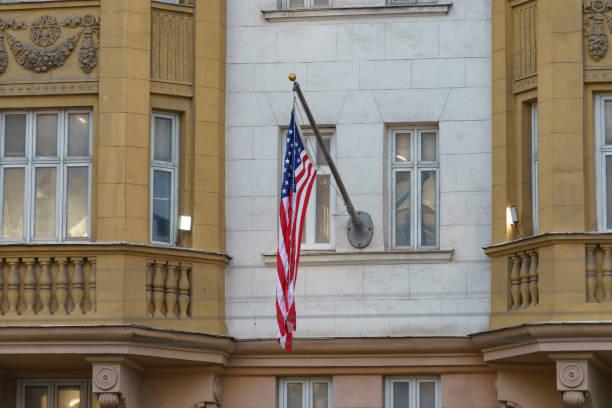
The U.S. Treasury Department has imposed sanctions against seven Russian officials over Alexey Navalny's case, the agency website informs.
Director of the Russian Federal Security Service (FSB) Alexander Bortnikov, First Deputy Chief of Staff of the Presidential Executive Office Sergei Kiriyenko, Chief of the Presidential Domestic Policy Directorate Andrei Yarin, Deputy Defense Ministers Alexei Krivoruchko and Pavel Popov, Federal Penitentiary Service director Alexander Kalashnikov and Prosecutor General Igor Krasnov were targeted by sanctions.
"We join the EU in condemning Alexei Navalny’s poisoning as well as his arrest and imprisonment by the Russian government," Secretary Janet L. Yellen stated.
The United States also blacklisted the 33rd Central Research Institute and the 27th Scientific Center of Russia’s Defense Ministry, and the State Research Institute of Organic Chemistry and Technology. In addition, the technical document includes the FSB and the Main Intelligence Directorate (currently called the Main Directorate of the General Staff of the Armed Forces), who were sanctioned earlier by Washington on other grounds, TASS reported.
Earlier, the European Union announced its own sanctions against Head of the Russian Investigative Committee Alexander Bastrykin, Director of the National Guard Viktor Zolotov, head of the Federal Penitentiary Service Alexander Kalashnikov and Prosecutor General Igor Krasnov over the Navalny case. They are all banned from entering the EU or hold assets in EU banks. These are first sanctions that were introduced against Russia as part of the mechanism that envisages responses to human rights violations. Previously, such restrictions were either imposed as part of general sanctions against separate countries or the so-called special mechanisms, for instance for using chemical weapons.
Navalny was rushed to a local hospital in the Siberian city of Omsk on August 20 after collapsing on a Moscow-bound flight from Tomsk. Later, he was airlifted to Berlin and admitted to the Charite hospital. On September 2, Berlin claimed that having examined Navalny’s test samples, German government toxicologists had come to the conclusion that the blogger had been affected by a toxic agent belonging to the Novichok family. On January 17, Navalny was detained at Moscow’s Sheremetyevo Airport upon arrival from Berlin.
On February 2, Moscow’s Simonovsky District Court replaced Alexey Navalny’s suspended sentence in the Yves Rocher embezzlement case with a three-and-a-half-year jail sentence in a medium-security prison.


 Latest news
Latest news
Latest newsPutin Authorizes Temporary State Management of Critical Infrastructure Vulnerable to Drone Attacks
24.Aug.2026
The United States Rapidly Expands Missile Production: Pentagon Accelerates Output of Tomahawks and Other Critical Weapons
24.Aug.2026
Record Supplies: Armenia Boosts Fish Exports to Georgia
23.Aug.2026
Political Battle During Wartime: Zelensky Opposes Elections
23.Aug.2026
Romania Approves Construction of One of the Largest Solar Power Plants in Europe
23.Aug.2026
Ex-Ukrainian Defence Minister Fails in Bid to Pressure Zelenskiy
22.Aug.2026
Upper Lars: Why Border Queues Have Become a Political Signal for Georgia and Russia
22.Aug.2026
Russia-Ukraine War: No Decisive Breakthrough on the Front and Intensifying Ukrainian Deep Strikes on Russia
21.Aug.2026
TRIPP, Peace, and a New Geopolitical Crossroads: How Armenia Has Changed One Year After Washington
20.Aug.2026
Tokayev Updates Kazakhstan Foreign Policy Concept: Astana Strengthens Its Strategic Multi Vector Approach
19.Aug.2026
Ukraine Turns Ground Robots into a New Tool in the Fight Against Russia
19.Aug.2026
Tehran Threatens a New Round of War After Talks With the US Collapse
18.Aug.2026
Drones Over Moldova: Accident or a New Threat to National Security?
17.Aug.2026
Spanish F-18 Fighter Jet Shoots Down Drone That Violated Romanian Airspace
17.Aug.2026
The Black Sea Becomes a Risk Zone: Can Turkiye Protect Key Trade Routes?
16.Aug.2026