
 14 Jul 2026









The 'Pivot to Asia' in Joe Biden style
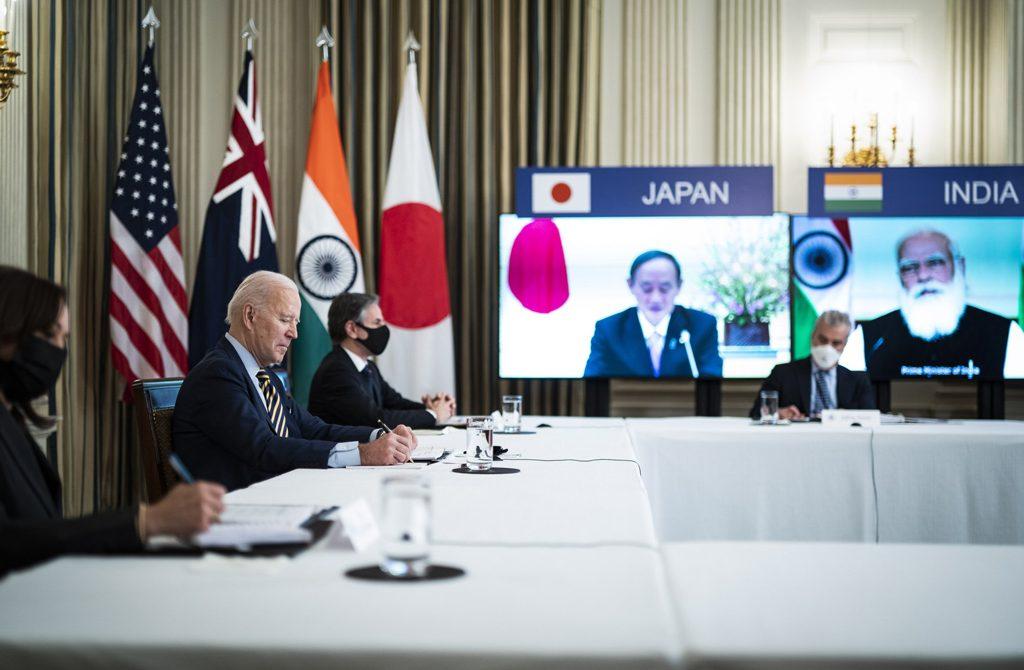
For almost two decades now, there have been debates about a conflict between China and the U.S. People from different fields, including hawkish foreign policy experts, realist international relations scholars and some journalists, have written about this “eventuality.” During the Barack Obama administration, then U.S. Secretary of State Hillary Clinton’s article in the Foreign Policy magazine was considered a major announcement of a new policy of “Asia Pivot.” The name of the policy later changed to “rebalancing” and, soon after Donald Trump's presidential inauguration, he found a new term for the rivalry, namely “trade war.” There were a lot of questions about the Joe Biden administration’s policy toward China. In the last one week, it became obvious that it will be as hawkish as Trump’s approach.
Daily Sabah reports that last week, Biden gathered a Quadrilateral Security Dialogue (Quad) summit, the first time ever, with the leaders of India, Japan and Australia. Although China was not mentioned in the joint statement, the high-level meeting was interpreted as the Biden administration’s willingness to shift the focus toward Asia and confront China in the region.
In the immediate aftermath of this summit, U.S. Secretary of State Antony Blinken and Defense Secretary Lloyd Austin made their first trip to Japan and met with their counterparts in Tokyo. The joint statement that was released following their two-day meetings was rather an unusual one. Unlike previous joint statements from the U.S.-Japan Security Consultative Committee meetings, this time in two pages, China was mentioned in multiple instances.
The statement called China a political, economic, military and technological challenge to the U.S.-Japan alliance and criticized China’s foreign policy in the region, including its policies in the South China Sea, East China Sea, Hong Kong and the Uyghur issue.
Following their meetings in Tokyo, the U.S. delegation went to South Korea's Seoul and had meetings with their counterparts. The joint statement following their meetings carried a lot of assurances about the strength of the alliance and partnership between the two countries.
This time, without mentioning China, the statement emphasized that both the U.S. and the Republic of Korea oppose “all activities that undermine and destabilize the rules-based international order.”
The busy Asia schedule of U.S. top diplomats and national security officials did not end with this. Following South Korea, Austin went to India for a three-day trip, while Blinken went to Alaska to meet with his Chinese counterpart. U.S. National Security Advisor Jake Sullivan also attended his first high-level in-person summit in Alaska with his Chinese counterpart. The clash of words before the launch of the meeting between the U.S. and Chinese officials already demonstrated the extent of the tension between the two countries. Following these meetings, there will be more substantial discussions in Washington about the opportunities and challenges for the U.S. in Asia.
The official meetings will continue at the highest level. Last week, it was reported that Japanese Prime Minister Yoshihide Suga will be Biden's first in-person visitor. After such busy Asia schedules and itineraries, it will be interesting to see the steps and policies adopted by the U.S. in its new Asia strategy. Both the observers in Washington and U.S. allies in the region are curious if these overreaching ambitions regarding the Asia Pacific will result in major policy change in Washington or not. We will probably figure out the true extent of this policy change in the next few months. Source - vestnikkavkaza.net


 Latest news
Latest news
Latest newsUS Ready to Lift Sanctions on Turkiye and Restore Its Participation in the F-35 Program
09.Jul.2026
Trump Announces Transfer of License to Ukraine for Patriot Interceptor Missile Production
09.Jul.2026
The NATO Summit in Ankara Marked a New Stage in the Alliance's Transformation
08.Jul.2026
The war in Ukraine - the “liberation of Novorossiya” is a mission impossible
07.Jul.2026
Ursula von der Leyen's Visits to Baku and Yerevan Signal Brussels' New Strategy
07.Jul.2026
Putin's Approval Ratings Decline as Russians Grow Increasingly Concerned About the Economy and the War
06.Jul.2026
Erdogan and Radev Discuss Black Sea Security and Defense Cooperation
06.Jul.2026
OPEC+ Accelerates Output Recovery as Kazakhstan Increases Oil Production from August
05.Jul.2026
Georgia and Uzbekistan Elevate Relations to Strategic Partnership
05.Jul.2026
Iran Turns Khamenei Funeral into a Show of Strength as Week-Long National Mourning Begins
04.Jul.2026