
 14 Jul 2026









US Ready to Lift Sanctions on Turkiye and Restore Its Participation in the F-35 Program
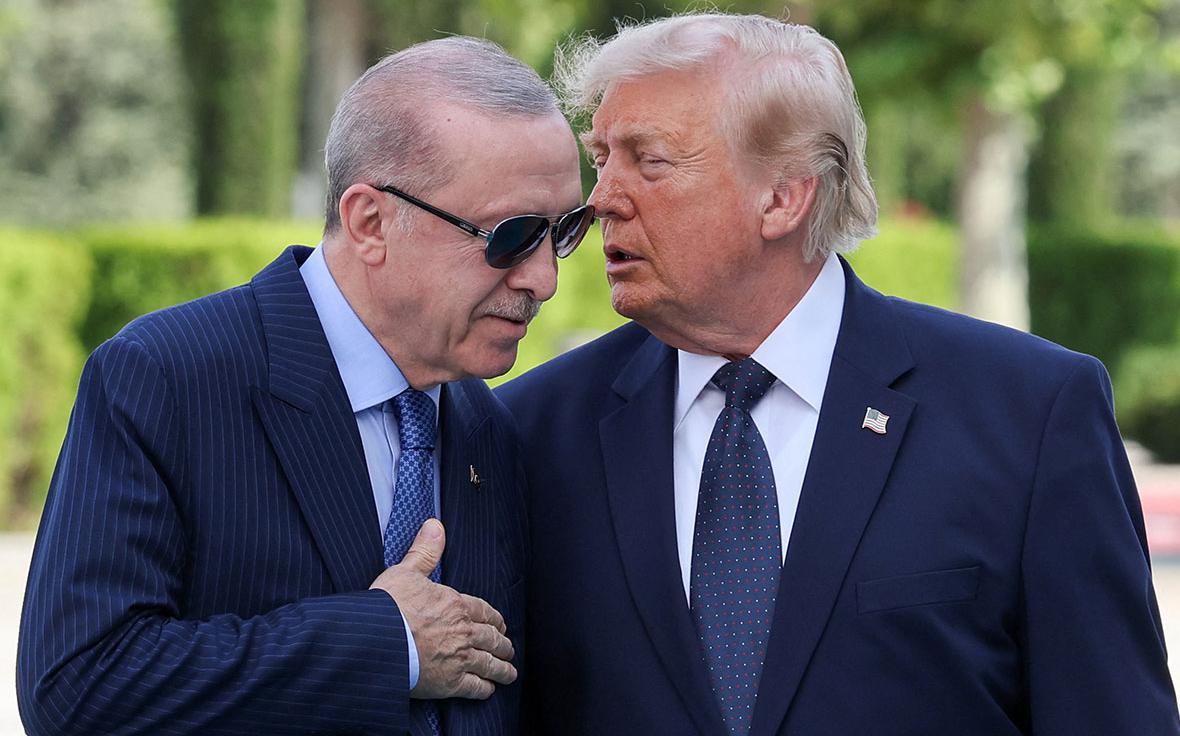
The administration of U.S. President Donald Trump is
prepared to reconsider one of the most contentious issues in U.S.-Turkiye
relations — the sanctions imposed on Ankara over its purchase of Russian S-400
air defense systems, as well as the possibility of bringing Turkiye back into
the F-35 fifth-generation fighter jet program. The statements were made on the
sidelines of the NATO Summit in Ankara following talks between President Donald
Trump and Turkish President Recep Tayyip Erdogan.
According to Trump, Washington intends to review the
sanctions imposed under the Countering America's Adversaries Through Sanctions
Act (CAATSA) and make a decision regarding the sale of F-35 fighter aircraft to
Turkiye. The U.S. president stressed that Turkiye remains an important NATO
ally and emphasized that his administration is considering restoring defense
cooperation with Ankara. President Erdogan, for his part, expressed hope for a
positive outcome, recalling that the United States had previously committed to
delivering five F-35 aircraft before Turkiye's participation in the program was
suspended following the imposition of sanctions.

The primary obstacle, however, remains Turkiye's possession
of the Russian-made S-400 air defense system. Under current U.S. legislation,
Turkiye cannot rejoin the F-35 program while the S-400 systems remain operational.
For several years, Washington has argued that the simultaneous deployment of
Russian air defense systems and advanced American stealth fighters poses a
serious security risk, as it could potentially enable Moscow to obtain
sensitive information about the F-35's stealth capabilities and electronic
systems.

Sources indicate that the U.S. administration is exploring
several options for resolving the S-400 issue. Although no official details
have been disclosed, previous media reports have discussed scenarios including
decommissioning the systems, placing them in long-term storage without
activation, or transferring them to international oversight. Only after
resolving the S-400 issue would the administration be able to seek the removal
of legal restrictions and restore Turkiye's participation in the F-35 program.
Any effort to return Ankara to the program is expected to
face significant resistance in the U.S. Congress. A bipartisan group of
lawmakers has already sent a letter to the White House urging the administration
not to approve the transfer of F-35 aircraft to Turkiye, citing both existing
legislation and continuing disagreements between Washington and Ankara over
regional policy, Turkiye's relations with Iran, and the Turkish government's
stance toward Israel. Several Republican senators have also expressed
skepticism.
Additional tensions emerged following Israel's reaction.
U.S. Secretary of Defense Pete Hegseth reportedly canceled a planned meeting
with Israeli Prime Minister Benjamin Netanyahu, where the potential sale of
F-35 fighter jets to Turkiye was expected to be one of the key topics. Israeli
officials fear that providing Ankara with America's most advanced fighter
aircraft could alter the regional military balance and negatively affect security
in the Middle East.
Turkiye
was removed from the F-35 program in 2019 after receiving the Russian S-400
systems, and in 2020 the country's Presidency of Defense Industries was
sanctioned under the CAATSA legislation. Despite this, Ankara has repeatedly
stated that it does not intend to abandon the Russian air defense systems while
simultaneously seeking to restore military-technical cooperation with the
United States. Trump's latest remarks indicate an attempt to reset bilateral
defense relations, but any final decision will depend not only on the White
House's position, but also on Turkiye's compliance with U.S. legal requirements
and Congress's willingness to approve such a move.


 Latest news
Latest news
Latest newsUS Ready to Lift Sanctions on Turkiye and Restore Its Participation in the F-35 Program
09.Jul.2026
Trump Announces Transfer of License to Ukraine for Patriot Interceptor Missile Production
09.Jul.2026
The NATO Summit in Ankara Marked a New Stage in the Alliance's Transformation
08.Jul.2026
The war in Ukraine - the “liberation of Novorossiya” is a mission impossible
07.Jul.2026
Ursula von der Leyen's Visits to Baku and Yerevan Signal Brussels' New Strategy
07.Jul.2026
Putin's Approval Ratings Decline as Russians Grow Increasingly Concerned About the Economy and the War
06.Jul.2026
Erdogan and Radev Discuss Black Sea Security and Defense Cooperation
06.Jul.2026
OPEC+ Accelerates Output Recovery as Kazakhstan Increases Oil Production from August
05.Jul.2026
Georgia and Uzbekistan Elevate Relations to Strategic Partnership
05.Jul.2026
Iran Turns Khamenei Funeral into a Show of Strength as Week-Long National Mourning Begins
04.Jul.2026