
 14 Jul 2026









Ursula von der Leyen's Visits to Baku and Yerevan Signal Brussels' New Strategy
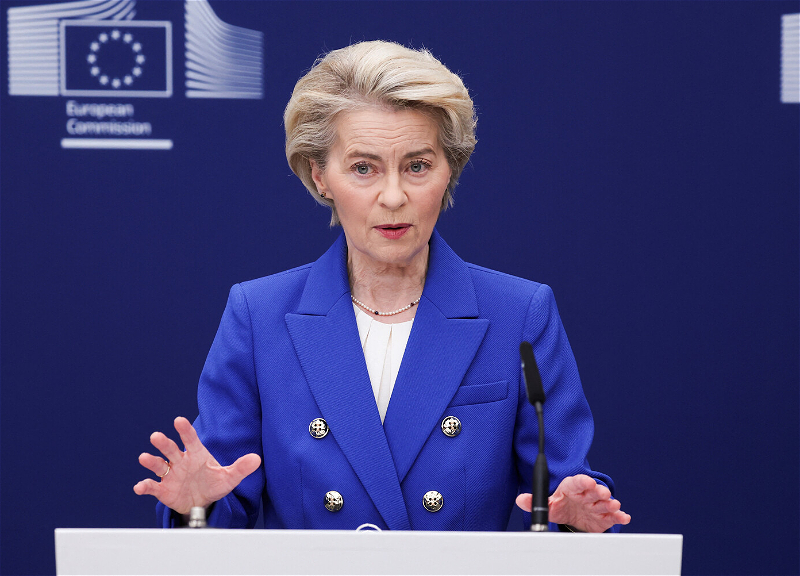
European Commission President Ursula von der Leyen's
consecutive visits to Azerbaijan and Armenia have become one of the most
significant diplomatic developments in the South Caucasus following the
conclusion of the peace agreement between Baku and Yerevan. The trip
demonstrated the European Union's intention not only to support the
normalization of relations between the two countries but also to establish a
long-term presence in the region through large-scale infrastructure, economic,
and energy initiatives.
The first stop of the visit was Baku, where von der Leyen
held talks with Azerbaijani President Ilham Aliyev. Following the meeting, the
European Commission unveiled the Peace
through Connectivity Package, allocating up to €200 million in grants to support the development of transport,
energy, and digital infrastructure across the South Caucasus. According to the
Commission, this funding is expected to leverage up to €2 billion in public and private investment aimed at modernizing
transport corridors, expanding logistics hubs, upgrading energy networks, and
improving digital connectivity. In addition, the EU announced €20 million for humanitarian projects,
including demining of liberated territories, reconstruction of social
infrastructure, support for small businesses, and confidence-building measures
among border communities. Brussels views these initiatives as a practical
contribution to consolidating the peace process and creating conditions for
long-term economic cooperation.
During the talks, particular attention was given to the
development of the Middle Corridor
(the Trans-Caspian International Transport Route), which is becoming
increasingly important for European trade with Central Asia and China. The
European Union seeks to reduce its dependence on traditional transport routes
passing through Russia, making the South Caucasus a crucial element of a new
transport architecture linking Europe and Asia. Energy cooperation was another
key topic. Since the signing of the Strategic Energy Partnership Memorandum in
2022, Azerbaijan has remained one of Europe's key natural gas suppliers while
also emerging as a promising partner for renewable electricity export projects
across the Black Sea.
During the meeting, Ursula von der Leyen welcomed the
signing of the peace agreement between Azerbaijan and Armenia, describing it as
a historic opportunity for the entire region. According to her, a lasting
settlement creates new opportunities to launch transport links, expand trade,
and attract investment that had been impossible during decades of conflict.
The following day, the President of the European Commission
traveled to Yerevan, where she met with Armenian Prime Minister Nikol
Pashinyan. Following their discussions, the European Union announced an
additional €18 million in
financial assistance as part of the existing €52 million support package. At the same time, Brussels announced
the removal of import duties on nearly 80%
of Armenian exports to the EU market. The European Commission stressed
that these measures are intended to support Armenia's economy amid increasing
external economic pressure and to facilitate the diversification of the
country's trade relations.
The talks also covered progress on the new EU-Armenia
Partnership Agenda, implementation of the Resilience and Growth Plan, and
prospects for expanding cooperation in digital economy, energy, public
administration reforms, and transport infrastructure. Special attention was
devoted to security cooperation, including continued support for the EU Mission
on the Armenia-Azerbaijan border and programs aimed at strengthening the
resilience of Armenia's state institutions.
Speaking in Yerevan, Ursula von der Leyen stated that the
European Union considers Armenia a reliable partner and intends to continue
supporting the country's reform agenda. She also reiterated that sustainable
peace between Armenia and Azerbaijan has the potential to reshape the economic
geography of the entire South Caucasus by creating new opportunities for trade,
investment, and regional cooperation.

According to
analysts, the back-to-back visits by the President of the European Commission
reflect the emergence of a new EU strategy for the South Caucasus. Whereas
European policy in the region previously focused primarily on energy security,
Brussels now seeks to position itself simultaneously as an investor, an
economic partner, and a political facilitator. The peace agreement between
Azerbaijan and Armenia is viewed within the EU as a unique opportunity to
launch major infrastructure projects capable of integrating the South Caucasus
more closely with European and Central Asian markets.
Experts also note
that the visits took place amid intensifying competition among external powers
seeking greater influence in the region. Alongside the European Union, Russia, Turkiye,
China, and Central Asian countries are all advancing their own regional
initiatives. Against this backdrop, Brussels aims to secure its presence not
only through political engagement but also through concrete financial
commitments, long-term investments, and strategic infrastructure projects. At
the same time, the EU continues to pursue a balanced approach toward both
countries: Azerbaijan is regarded as a strategic partner in energy and
transport connectivity, while Armenia receives substantial financial and
institutional support as part of its broader cooperation with the European
Union.
The outcome of the visits suggests that the European Union is moving beyond diplomatic support for the peace process toward the practical implementation of an economic agenda designed to transform the South Caucasus into one of the key hubs connecting Europe and Asia through new transport and energy networks. The success of this strategy will largely depend on the full implementation of the peace agreement between Azerbaijan and Armenia, the opening of regional transport links, and the ability of both countries to maintain the stability necessary to attract major international investors.
CCBS Expert Group


 Latest news
Latest news
Latest newsUS Ready to Lift Sanctions on Turkiye and Restore Its Participation in the F-35 Program
09.Jul.2026
Trump Announces Transfer of License to Ukraine for Patriot Interceptor Missile Production
09.Jul.2026
The NATO Summit in Ankara Marked a New Stage in the Alliance's Transformation
08.Jul.2026
The war in Ukraine - the “liberation of Novorossiya” is a mission impossible
07.Jul.2026
Ursula von der Leyen's Visits to Baku and Yerevan Signal Brussels' New Strategy
07.Jul.2026
Putin's Approval Ratings Decline as Russians Grow Increasingly Concerned About the Economy and the War
06.Jul.2026
Erdogan and Radev Discuss Black Sea Security and Defense Cooperation
06.Jul.2026
OPEC+ Accelerates Output Recovery as Kazakhstan Increases Oil Production from August
05.Jul.2026
Georgia and Uzbekistan Elevate Relations to Strategic Partnership
05.Jul.2026
Iran Turns Khamenei Funeral into a Show of Strength as Week-Long National Mourning Begins
04.Jul.2026