
 28 Nov 2026









Will Erdogan accept Biden's proposal?
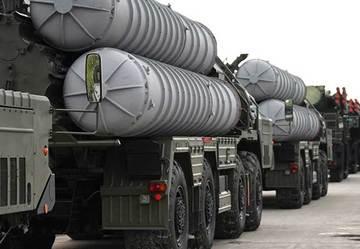
The current relationship between the United States and Turkey has been deteriorating. The most visible evidence of the two nations’ icy relationship is Turkey’s acquisition of Russia’s S-400 anti-missile defense system, amid resistance from the US and NATO. In this respect, the US hopes that Turkey would renounce its intention to acquire Russian weaponry, or else it would impose sanctions on Turkey, resulting in a standstill in the two nations’ relationship. Turkey was likewise booted out of the F-35 development deal by the United States.
What is noteworthy is that the US is now extending an olive branch to Turkey, urging it to pick an alternative to the Russian S-400, Modern Diplomacy writes. According to a May 29 article by Ahval News, US Deputy Secretary of State Wendy Ruth Sherman stated that Washington proposed to Ankara that the Russian S-400 air defense missile system be replaced, and that Turkey should know what steps to take. The US “Patriot” system is expected to be the US government’s alternative to Turkey.
This time, the US offered Turkey an alternate proposal, which was widely perceived as a concession made by the US to Turkey in order to alleviate tensions between the two nations. The modern United States has numerous adversaries all over the world and has began to do little. As a result, it must gain the support of certain friends. Turkey was previously a NATO member state, and Biden understandably did not want his allies to abandon him at a vital juncture in dealing with China and Russia. The plan to replace the Russian S-400 anti-missile system with a “Patriot” anti-missile system is a strong indicator that the US wants to move toward a constructive relationship with Russia.
It is worth mentioning, however, that during Trump’s administration, the US promised to send Patriots to replace the S-400, but Erdogan did not believe Trump’s story. In the end, the two countries were unable to strike an agreement. So, given that Biden is using the same processes and ideas, how does Erdogan choose? Will he take the US offer? According to the study, the Turkish government is more likely to select the S-400 than the Patriot. There are three causes for this:
The first is the price factor. The United States has no edge in this regard. The Patriot anti-missile system is significantly more costly than Russia’s S-400 system.
The second difficulty is the transfer of key technologies. The United States has long been well-versed in its own armaments sales. In general, the United States’ intended market for weaponry exports is its allies, and it also expects them to adopt its own worldwide agenda. The US will not share essential technology because it believes the knowledge would be leaked to China or Russia. Recently, there was a good example. Because China and the UAE’s relationship is strengthening, when the US Department of Defense sells F-35 fighters to the latter, the US intelligence agency also monitors direct transportation flights between China and the UAE for fear that “US defense technology” will be leaked to China or other countries.
The third point to consider is Turkey’s political direction and access to the US. Since Erdogan took power, Turkey’s ultimate ambition has been to restore the Ottoman Empire’s splendor. As a result, Turkey will not be willing to continue acting as the United States’ younger brother and following the United States’ strategic doctrine, which manifestly contradicts Turkey’s national interest.
In conclusion, Turkey is more likely to choose the Russian S-400 air defense missile system in the end. As a result of this, Turkey has began to commit itself to independent research and development of local fighter planes, and its enthusiasm for acquiring F-35 fighters has waned. The current Turkish government is keen to adopt the S-400 and has engaged with Russia to acquire the second batch.


 Latest news
Bulgaria Intercepts Boat Carrying 35 Migrants in the Black Sea
27.Nov.2026
Pro-European Protests Continue in Georgia as Opposition Calls for Large-Scale March in Tbilisi on November 28
27.Nov.2026
Bulgaria Strengthens Its Air Defence: Sofia to Acquire Five Additional IRIS-T SLM Systems for €925.9 Million
26.Nov.2026
Armenia Seeks to Assume Full Responsibility for Border Security as Yerevan Strengthens National Sovereignty
26.Nov.2026
Russian State Duma Approves Increase in Defence Spending for 2027: One in Every Three Rubles to Go Towards the War
25.Nov.2026
Armenia Revises Its Constitution: Pashinyan Proposes a New Stage of State Development and a Peace Agenda
25.Nov.2026
EU Presents 22nd Sanctions Package Against Russia: Restrictions to Target Banks, Shadow Fleet and Participation in European Sports
24.Nov.2026
Latvia and Armenia: Cautious Support for a European Path
24.Nov.2026
Two Commercial Vessels Attacked in the Black Sea off Bulgaria
23.Nov.2026
EU Allocates Another €1 Billion to Ukraine: European Military Support Takes on a Long-Term Dimension
22.Nov.2026
Europe Prepares a Military Mission for Ukraine: 2800 Troops Rehearse Post-War Deployment Scenarios
21.Nov.2026
Russian Missiles and a Drone Fall on Polish Territory: NATO Faces New Threats on Its Eastern Flank
21.Nov.2026
Russia Strikes Kyiv Bridges Following Ukraine’s Attack on the Crimean Bridge: Transport Infrastructure Becomes a New Front in the Escalation
20.Nov.2026
The "Coalition of the Willing" Discusses Security Guarantees and Continued Support for Kyiv
19.Nov.2026
Tanker Sinks off Bulgaria After Being Hit Four Times: All 19 Crew Members Rescued
18.Nov.2026