
 14 Jul 2026









Top U.S. officials on recent arrests in Azerbaijan, on Nagorno-Karabakh, and Russian disinformation campaign
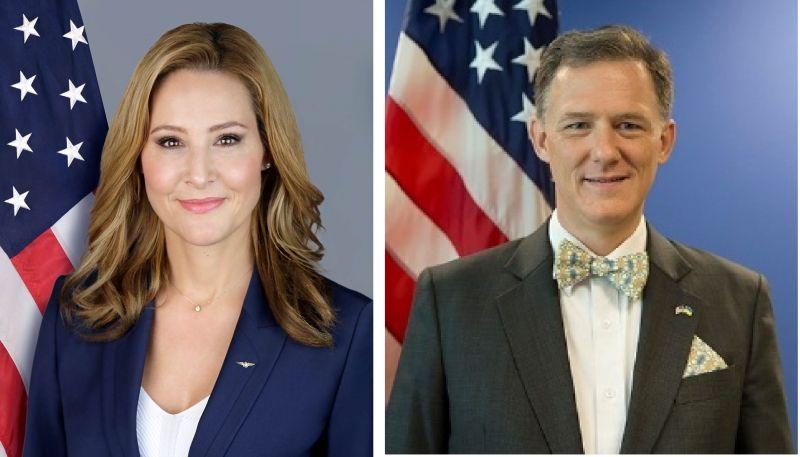
U.S. "comments positively" on Azerbaijan's recent pardoning of several prisoners of conscience and complying with the decision issued by the European Court of Human Rights towards REAL party functionary, and encourages Baku to "continue that approach on other cases as well," top State Department officials said on Wednesday, TURAN's Washington correspondent reports.
Speaking at a webinar organized by the German Marshall Fund on current political, economic, and security challenges in the Eastern Partnership countries, George Kent, Deputy Assistant Secretary in the European and Eurasian Bureau at the U.S. Department of State, touched upon the recent political developments in Azerbaijan, which, as he said, "has implemented a requirement for people to send an SMS to authorities when leaving their houses" to be able to track their movement.
On the one hand, he said, there has been some good news in the country, such as releasing journalist Afghan Mukhtarli, and pardoning several others, while on the other hand, "others have been taken into custody using the movement restrictions."
While Washington "gives credit where credit is due", it also encourages governments such as Azerbaijan, to "not use restrictions, which have a valid public health purpose, for potentially political purposes as well," he said, explaining that, "this is obviously, what we say publicly is only a part of what is our private dialogue with governments."
Kent also spoke about Washington's intention to actively support all Eastern Partnership countries as they seek to recover "not only from the health challenge that COVID has posed, but the COVID-induced economic downturn in 2020, which is going to affect every country in the world."
Apart from emergency macro financial assistance, which is largely provided by the IMF, to which the U.S. remained largest stakeholder contributor, what that means in practical terms is, as Kent depicted it, "implementing reforms aimed at strengthening rule of law and accountable effective institutions for these countries reducing promotion, promoting economic development including through energy security and through energy prices are much lower now."
"We will also continue to support vibrant civil society actors and independent media since both are key contributors to healthy and important societies," Kent said.
In the meantime, he added, fighting disinformation and malign influence "in this era" is a "shared challenge facing us all," reminding that one of the most pressing investment that the U.S. made in the Eastern Partnership countries 15 years ago was diagnostic laboratory infrastructure, known as "Lugar labs", which are now being targeted by Russian propaganda machine.
"If you look at the countries such as Georgia, Armenia, Ukraine and Azerbaijan, the lab infrastructure that is doing the testing and fighting COVID now, was built over decade ago with U.S, funds and with scientists we are training to be able to respond to just this sort of situation. It is unfortunate that, even as we are looking to find ways of cooperating internationally, that the traditional Russian disinformation efforts against the Lugar labs, Russian lies that they created disease instead of fighting diseases," he explained.
"It's equally unfortunate that the Chinese have picked up and amplified this Russian disinformation," he added.
Speaking at a State Department special briefing via telephone earlier in the day, Lea Gabrielle, U.S. special envoy and coordinator of the Global Engagement Center, also said that, Russian disinformation networks "have tried to advance Moscow's destabilizing foreign policy goals of creating confusion in our democratic societies, and that's just the last thing that any of us need right now."
"Based on what we've seen from the Russian disinformation ecosystem historically, there's a good chance that they're going to continue to do this as we see the situation with COVID developing. And just for example, if I could go all the way back to the Soviet Union, but even if we only just talk about the use of disinformation on health issues by the modern Russian Federation, their track record is clear," she told reporters.
Back at the Marshall Fund webinar, Kent was also asked about Russian Foreign Minister Sergei Lavrov's recent statements on Nagorno-Karabakh conflict, which he refused to comment, adding that Lavrov's comments "haven't been helpful on other issues as well".
Washington, he said, is trying to help Azerbaijan and Armenia as well as other Eastern Partnership countries, manage resolve conflicts "in order that they can move forward and pursue their destiny on their own terms."
The U.S., he said, is deeply involved into the Nagorno-Karabakh process and that both Baku and Yerevan "understand very well the role that we are playing and helping them trying to carry that conversation forward."
07.05.2020 11:17


 Latest news
Latest news
Latest newsUS Ready to Lift Sanctions on Turkiye and Restore Its Participation in the F-35 Program
09.Jul.2026
Trump Announces Transfer of License to Ukraine for Patriot Interceptor Missile Production
09.Jul.2026
The NATO Summit in Ankara Marked a New Stage in the Alliance's Transformation
08.Jul.2026
The war in Ukraine - the “liberation of Novorossiya” is a mission impossible
07.Jul.2026
Ursula von der Leyen's Visits to Baku and Yerevan Signal Brussels' New Strategy
07.Jul.2026
Putin's Approval Ratings Decline as Russians Grow Increasingly Concerned About the Economy and the War
06.Jul.2026
Erdogan and Radev Discuss Black Sea Security and Defense Cooperation
06.Jul.2026
OPEC+ Accelerates Output Recovery as Kazakhstan Increases Oil Production from August
05.Jul.2026
Georgia and Uzbekistan Elevate Relations to Strategic Partnership
05.Jul.2026
Iran Turns Khamenei Funeral into a Show of Strength as Week-Long National Mourning Begins
04.Jul.2026