
 10 Oct 2026









Trends in the Development of Relations between Armenia and the European Union
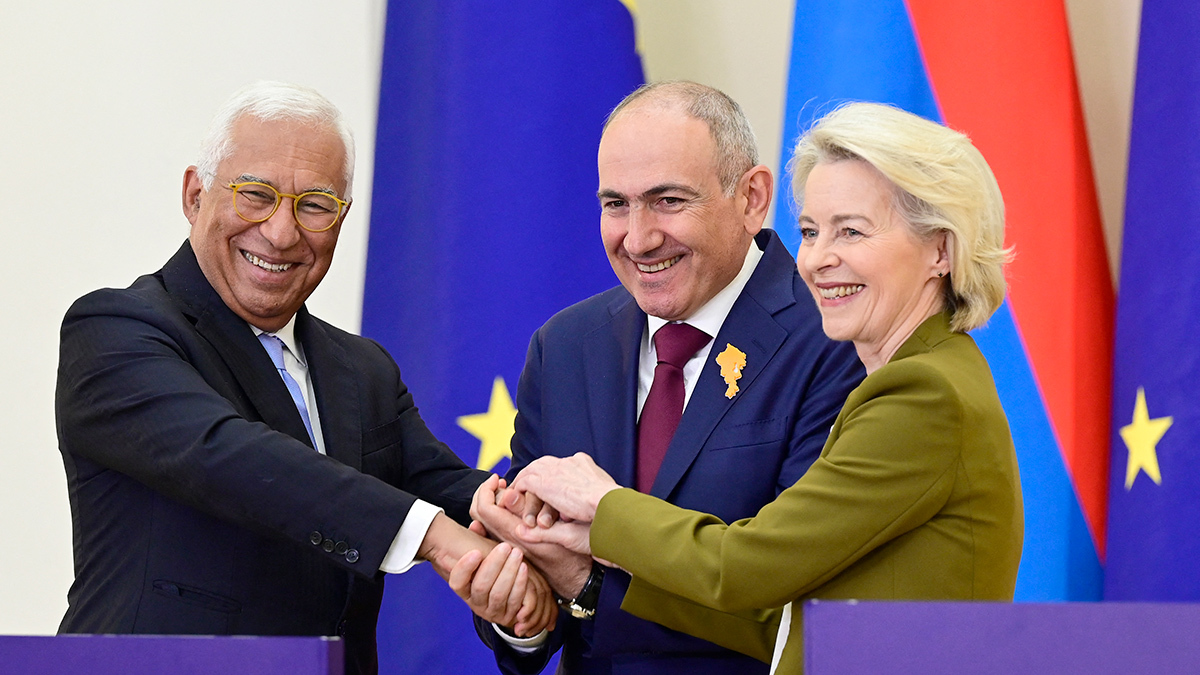
Relations between Armenia and the European Union have, in
recent months, entered the most active phase in the entire history of their
bilateral engagement. A series of major international events held in Yerevan
have demonstrated not only the Armenian leadership’s determination to deepen
its European foreign policy orientation but also the growing willingness of
European states to regard Armenia as an important element of the emerging
political and economic architecture of the South Caucasus.
The holding of the 8th Summit of the European Political
Community in the Armenian capital was a significant political signal for
Yerevan. For the first time, Armenia hosted a gathering of leaders from nearly
fifty countries, which in itself substantially strengthened its international
agency. Only a few years ago, Armenia was primarily viewed in European capitals
through the lens of conflict, regional instability, and heavy dependence on
Russia. Today, however, European rhetoric increasingly reflects the idea of a
transformation in Armenia’s regional role. Symbolic in this context was the
statement by the President of France, Emmanuel Macron, that eight years ago
many states perceived Armenia as a “satellite of Russia”, whereas the country’s
current international activity demonstrates a significant shift in its foreign
policy position.
A key milestone was the first-ever Armenia–EU summit. The
very establishment of such a format marks a qualitative transformation in
relations between the two sides. Whereas cooperation previously relied on
individual programs and agreements, a fully-fledged high-level political
dialogue mechanism is now taking shape. For Yerevan, this development is not
only symbolic but also strategic: the European Union is beginning to view
Armenia not merely as a neighboring Eastern Partnership country but as a
potential partner in the fields of security, transport, energy, and broader
regional connectivity.
Particular attention during the summit was given to economic
and infrastructure integration. The EU has effectively signaled its readiness
to participate in Armenia’s long-term economic development, including transport
and energy projects. The signing of a connectivity and partnership document,
the launch of an investment mechanism for European companies, and plans to
mobilize multi-billion-euro investments indicate an attempt to integrate
Armenia into a broader system of European and Eurasian logistics routes. This
is especially important for the Armenian leadership, as in recent years Yerevan
has actively promoted the concept of transforming the country from a
“geopolitical dead end” into a connecting hub between Europe, the South
Caucasus, and Central Asia.
Against this backdrop, the rhetoric of the Armenian
authorities is also noticeably shifting. Prime Minister Nikol Pashinyan
increasingly emphasizes that Armenia’s geographic location should be viewed not
as a constraint but as a strategic advantage. This approach is directly linked
to efforts to attract Western investment and integrate Armenia into new
transport and energy chains. However, economic expectations remain largely
political declarations. Despite announcements of potential multi-billion-euro
investments, the actual scale of European capital inflows will depend on
regional stability, the domestic legal environment, and the Armenian
authorities’ ability to ensure long-term predictability.
The EU is also paying significant attention to the energy
sector. For Europe, Armenia represents a potential platform for the development
of renewable energy and the diversification of regional energy systems. Support
for solar energy projects and energy storage facilities reflects the EU’s
intention to gradually strengthen Armenia’s energy resilience and reduce its
dependence on external suppliers.
Visa liberalization remains another highly important area.
The delivery of the first report to Yerevan on the implementation of the visa
liberalization action plan was a significant political signal from Brussels.
For Armenian society, visa-free travel to Europe has not only practical but
also symbolic importance, as it is seen as an indicator of closer integration
with the European space. However, the process remains complex and depends on
the fulfillment of a wide range of technical requirements — from border
management reforms to migration policy and document security.
At the same time, cooperation in the field of security is
deepening. The EU’s decision to deploy a new civilian mission in Armenia, aimed
at supporting democratic resilience and countering hybrid threats,
cyberattacks, and disinformation, reflects the expansion of European presence
in the region. Combined with European Parliament resolutions in support of reforms
and democratic processes in Armenia, this demonstrates the EU’s intention to
strengthen not only economic but also institutional influence in the country.
The current intensification of Armenia–EU relations is
closely linked to changes in the regional environment following progress in the
peace process between Armenia and Azerbaijan. European states are increasingly
viewing stability in the South Caucasus as a necessary condition for the
implementation of transport and energy projects. As a result, the peace agenda
is gradually becoming part of a broader EU strategy of regional connectivity.
For its part, Yerevan seeks to demonstrate tangible results of normalization —
ranging from transport links to limited economic cooperation.
At the same time, tensions surrounding the EU’s regional
role are increasing. The strong reaction of official Baku to European
Parliament resolutions shows that Armenia’s deepening relations with the EU are
perceived in Azerbaijan as part of broader geopolitical competition for
influence in the South Caucasus. This suggests that European engagement in the
region will inevitably be accompanied by growing diplomatic friction.
An additional factor shaping these developments is the
gradual normalization of relations between Armenia and Turkey. The symbolic
decision to restore the historic Ani Bridge and discussions on transport
connectivity indicate efforts to shape a new regional configuration. For
Armenia, opening communications with Turkey is of strategic importance, as it
is directly linked to its ambition to become a transit hub between East and
West.
A particularly important role in Armenia’s current
rapprochement with Europe is played by France. The visit of Emmanuel Macron and
the signing of a strategic partnership declaration marked key political signals
of support for Yerevan. Paris effectively acts not only as an EU member state
supporting Armenia but also as an independent center of power willing to engage
in deeper military, technological, and strategic cooperation. Agreements in the
fields of defense, cybersecurity, artificial intelligence, and infrastructure
demonstrate that cooperation extends far beyond symbolic diplomacy.
At the same time, Armenia is actively expanding its
relations with other European countries, including the United Kingdom,
Bulgaria, and Croatia. This reflects an effort to diversify foreign policy and
build a network of bilateral ties alongside institutional engagement with the
European Union.
Overall, recent developments indicate that Armenia–EU relations are moving from a limited partnership toward a more complex and multi-layered model of interaction. Armenia is gradually ceasing to be viewed solely as a country defined by conflict and regional vulnerability. Instead, it is increasingly being seen as a potential transport, energy, and political hub connecting different parts of Eurasia. However, the sustainability of this strategy is not guaranteed. Its success will depend on the progress of the peace process with Azerbaijan, the dynamics of Armenia–Turkey normalization, Yerevan’s ability to implement internal reforms, and its capacity to balance competing external power centers amid ongoing geopolitical competition in the South Caucasus.
Analyst,
Mariana Shafrazyan


 Latest news
Latest news
Latest newsMoldova Ready to Accept as Many Ukrainians as Necessary if Situation Worsens This Winter
09.Oct.2026
Turkmenistan Turns Avaza into a Regional Diplomatic Hub as Caspian, Central Asian and CIS Agendas Converge
08.Oct.2026
Romania Scrambles Spanish F-18s After Aerial Targets Detected Near Ukrainian Border
07.Oct.2026
Berlin Deepens Defence Partnership with Kyiv: Germany to Provide Ukraine with €1 Billion in Military Aid
07.Oct.2026
European Parliament Against Georgian Dream: EU Prepares New Response to Tbilisi
06.Oct.2026
Bulgarian Foreign Minister to Discuss European Security and International Law in the Netherlands
05.Oct.2026
Rheinmetall in Bulgaria: Sofia Emerges as a New NATO Defence-Industrial Hub in the Balkans
05.Oct.2026
The Cost of a Long War: Moscow Expands Spending Plans Through 2029
05.Oct.2026
Trump Steps Up Pressure on Iran: Washington Puts Tehran Before a Choice Between a Deal and Further Escalation
04.Oct.2026
Russia Warns Diplomats Amid New Wave of Strikes on Ukraine
04.Oct.2026
Turkiye Expands Defense Capabilities: Ankara Aligns European Cooperation with the Development of Its Domestic Defense Industry
04.Oct.2026
Azerbaijan Expands Defense Industry as Growing Production Increases Military Burden on the Economy
03.Oct.2026
Germany Scales Back Political Presence in Georgia as Konrad Adenauer Foundation Closes Tbilisi Office
03.Oct.2026
Russia Prepares to Ease Fuel Restrictions as Moscow Seeks Balance Between Gasoline Shortages and Diesel Exports
03.Oct.2026
Bulgaria and NIS2: A New Stage in Integration into the European Cybersecurity System
02.Oct.2026