
 14 Jul 2026









Strike on Oil Infrastructure: Ukraine Claims Attacks on Two Russian Refineries
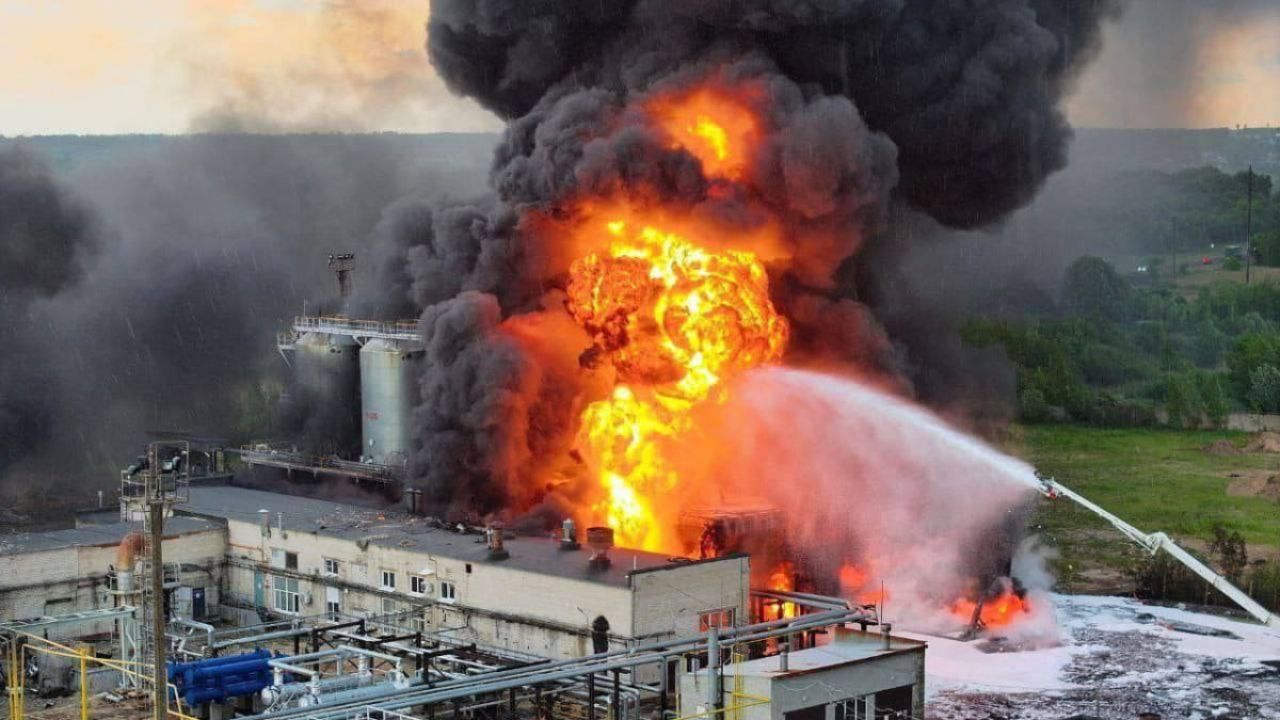
Ukraine has claimed responsibility for long-range strikes targeting two Russian oil refineries overnight on June 28, in the Krasnodar Territory and the Yaroslavl Region. Ukrainian President Volodymyr Zelenskyy said the operation was part of Kyiv’s strategy to weaken Russia’s military-industrial and energy capabilities. According to him, the targets were facilities supporting Russia’s fuel infrastructure.
Russian authorities confirmed that the Krasnodar Territory came under a drone attack. According to the regional governor, debris from intercepted unmanned aerial vehicles caused a fire at an oil refinery in the town of Slavyansk-on-Kuban. Officials also reported damage to a power line, a gas pipeline, and several residential buildings. One person was reported killed in the incident.
Russian officials initially made no public statement regarding the second reported target in the Yaroslavl Region. However, Ukrainian authorities said the strike hit one of the region’s largest oil-processing facilities. Several independent media outlets, citing open-source information, suggested that the facility may have been the Slavneft-YANOS refinery, although this has not been officially confirmed.
According to Russia’s Ministry of Defense, air defense systems repelled a large-scale drone attack across multiple regions during the night. Russian media reported that dozens of drones were intercepted and that temporary restrictions were introduced in several areas.
Strikes on oil refineries have become a central element of Ukraine’s long-range campaign against Russia’s energy infrastructure. Kyiv argues that targeting fuel production and refining facilities reduces Russia’s ability to supply its armed forces while increasing the economic costs of sustaining the war. Moscow, meanwhile, maintains that most attacks are successfully intercepted by air defense systems and that any resulting damage is limited and quickly repaired.
Military analysts say the latest operation demonstrates Ukraine’s continued focus on targets deep inside Russian territory. Particular attention has been drawn to the reported strike in the Yaroslavl Region, located roughly 700 kilometers (435 miles) from the Ukrainian border. If confirmed, it would provide further evidence of Ukraine’s expanding long-range strike capabilities.
Analysts also note that repeated attacks on Russia’s refining sector could temporarily reduce refining capacity, increase repair costs, and force energy companies to adjust fuel logistics. However, the overall impact on the domestic fuel market will depend on the extent of the damage, the speed of repair work, the availability of reserve processing capacity, and broader conditions within Russia’s energy sector.


 Latest news
Latest news
Latest newsUS Ready to Lift Sanctions on Turkiye and Restore Its Participation in the F-35 Program
09.Jul.2026
Trump Announces Transfer of License to Ukraine for Patriot Interceptor Missile Production
09.Jul.2026
The NATO Summit in Ankara Marked a New Stage in the Alliance's Transformation
08.Jul.2026
The war in Ukraine - the “liberation of Novorossiya” is a mission impossible
07.Jul.2026
Ursula von der Leyen's Visits to Baku and Yerevan Signal Brussels' New Strategy
07.Jul.2026
Putin's Approval Ratings Decline as Russians Grow Increasingly Concerned About the Economy and the War
06.Jul.2026
Erdogan and Radev Discuss Black Sea Security and Defense Cooperation
06.Jul.2026
OPEC+ Accelerates Output Recovery as Kazakhstan Increases Oil Production from August
05.Jul.2026
Georgia and Uzbekistan Elevate Relations to Strategic Partnership
05.Jul.2026
Iran Turns Khamenei Funeral into a Show of Strength as Week-Long National Mourning Begins
04.Jul.2026