
 14 Jul 2026









EU leads calls for Armenia and Azerbaijan to de-escalate border conflict
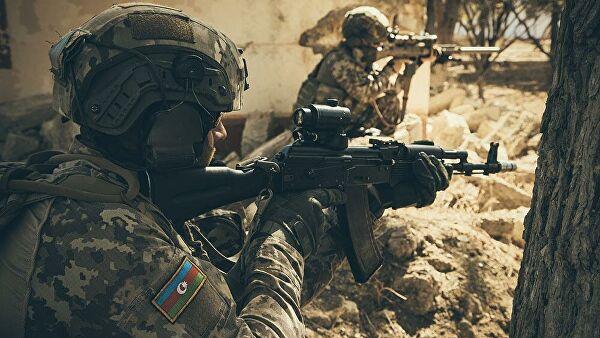
The European Union has called on Armenia and Azerbaijan to immediately de-escalate their deadly border spat following two days of armed clashes on their shared border, Emerging Europe reported.
Azerbaijan claims that four of its soldiers were killed and three others injured on July 12 when Armenian forces violated a ceasefire and targeted positions of Azerbaijan’s army in the northwestern Tovuz district. Armenia has blamed Azerbaijan for the conflict, citing “provocations”.
Azerbaijan says that its army launched counterattacks on July 13, targeting Armenian positions. According to a statement from the Azerbaijan defense ministry a military radar station, vehicle depot, tanks and armoured vehicles were hit, and that more than 20 Armenian army personnel were killed. Armenia however has said that just three of its soldiers and two police officers had been wounded.
“The EU urges both sides to stop the armed confrontation, refrain from action and rhetoric that provoke tension, and undertake immediate measures to prevent further escalation,” the European Union’s External Action unit said in a statement. “In this context, both sides should make use of their mechanism for direct communication, the established format led by the OSCE Minsk Group Co-Chairs, as well as the Personal Representative of the OSCE Chairperson-in-Office. This serious ceasefire violation highlights the urgency of resuming the OSCE monitoring on the ground, as soon as conditions allow.”
The EU called on both sides to strictly respect the ceasefire, devote energy and resources to fighting the coronavirus pandemic, meaningfully re-engage in substantive negotiations under the auspices of the OSCE Minsk Group Co-Chairs and prepare their populations for peace.
While the two countries have been locked in a conflict over Azerbaijan’s breakaway region of Nagorno-Karabakh for three decades, with skirmishes common, the recent clashes took place far from Nagorno-Karabakh and directly between the two nations, something occurs rarely.
Armenian Prime Minister Nikol Pashinyan told a cabinet meeting on July 13 that Azerbaijani “provocations will not be unanswered”.
Armenia’s Defence Minister David Tonoyan added that Yerevan “will be reacting to Azerbaijani actions, including by taking advantageous positions” in their territory.
He said Armenian forces “do not shell civilian targets in Azerbaijan and only target the engineering infrastructure and technical facilities of the Azerbaijani armed forces”.
Azerbaijani President Ilham Aliyev’s office meanwhile has blamed Yerevan for the incident, saying that Armenia’s “military adventure” was aimed at drawing the Collective Security Treaty Organisation (CSTO), a Russia-led military bloc, into the fighting.


 Latest news
Latest news
Latest newsUS Ready to Lift Sanctions on Turkiye and Restore Its Participation in the F-35 Program
09.Jul.2026
Trump Announces Transfer of License to Ukraine for Patriot Interceptor Missile Production
09.Jul.2026
The NATO Summit in Ankara Marked a New Stage in the Alliance's Transformation
08.Jul.2026
The war in Ukraine - the “liberation of Novorossiya” is a mission impossible
07.Jul.2026
Ursula von der Leyen's Visits to Baku and Yerevan Signal Brussels' New Strategy
07.Jul.2026
Putin's Approval Ratings Decline as Russians Grow Increasingly Concerned About the Economy and the War
06.Jul.2026
Erdogan and Radev Discuss Black Sea Security and Defense Cooperation
06.Jul.2026
OPEC+ Accelerates Output Recovery as Kazakhstan Increases Oil Production from August
05.Jul.2026
Georgia and Uzbekistan Elevate Relations to Strategic Partnership
05.Jul.2026
Iran Turns Khamenei Funeral into a Show of Strength as Week-Long National Mourning Begins
04.Jul.2026