
 23 Nov 2026









Turkiye and France Strengthen Military Dialogue Amid European Security Challenges
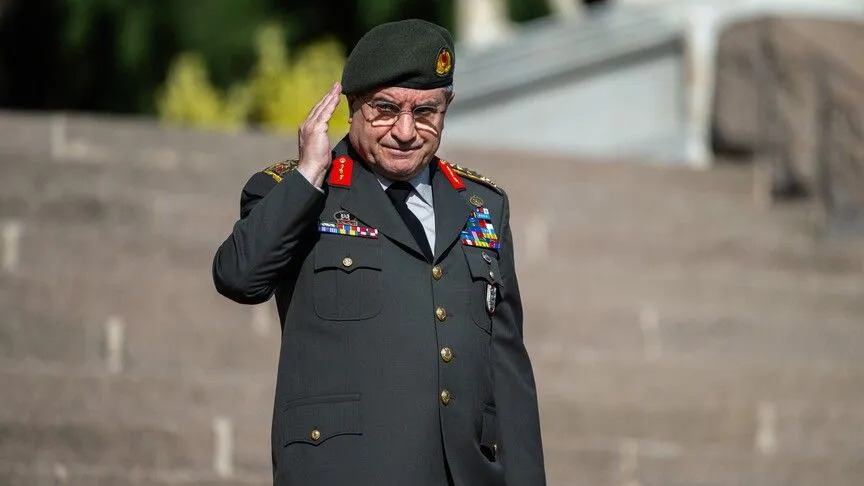
Turkiye’s Chief of the General Staff, Selchuk Bayraktaroglu, met with his French counterpart, Fabien Mandon, in France. The talks took place amid intensified bilateral defence cooperation and NATO’s efforts to strengthen security coordination.
On 19 October 2026, General Selchuk Bayraktaroglu, Chief of the General Staff of the Turkish Armed Forces, held talks with General Fabien Mandon, Chief of the French Armed Forces General Staff. The Turkish military chief’s visit took place at the official invitation of the French side.
Following an official welcoming ceremony, the two sides held bilateral talks, followed by a meeting involving both delegations. Details of the issues discussed and any specific agreements reached during the meeting have not been publicly disclosed.
Defence Cooperation Gains an Institutional Framework
The talks come amid efforts by Ankara and Paris to develop bilateral ties in the defence sector. In early October 2026, Turkiye and France signed a defence cooperation roadmap aimed at advancing strategic dialogue and strengthening cooperation between the military structures of the two countries.
The document envisages expanded cooperation in areas including air defence, intelligence sharing, countering hybrid threats, joint training and defence industry projects. The two sides also expressed an interest in holding regular security consultations.
The meeting between the chiefs of the general staffs therefore represents a continuation of a broader process of closer bilateral military engagement. However, the meeting itself does not indicate that new agreements have been reached; further official statements would be needed to assess its practical outcomes.
NATO and Regional Security
Turkiye and France play significant roles in NATO’s collective defence system, although their foreign policy priorities and approaches to certain regional crises do not always align. Military dialogue between Ankara and Paris is therefore important not only for bilateral relations but also for coordination within the Alliance.
 Maintaining working channels of communication with Ankara allows Paris to strengthen engagement with one of NATO’s key members, which possesses substantial military capabilities and has its own strategic interests in the Black Sea, the Eastern Mediterranean and the Middle East.
Nevertheless, deeper cooperation will depend on the two sides’ ability to align their priorities, address existing differences and translate political commitments into practical projects.
Defence Industry as a Separate Area of Cooperation
Potential cooperation in the defence industry is another important consideration. Turkiye has been consistently developing its domestic arms production and military technologies in an effort to expand national capabilities and reduce reliance on foreign suppliers. France, in turn, has an advanced defence industry and seeks to strengthen European defence capabilities.
Cooperation in this field could potentially include technology exchange, joint specialist training and the development of selected military technologies. However, no specific joint projects, implementation timelines or investment volumes were officially announced following the 19 October meeting.
The meeting between Bayraktaroglu and Mandon reflects the continuation of high-level military contacts between Turkiye and France. Its significance should be viewed in the context of the recently signed roadmap, which envisages more structured cooperation between the two countries in defence and security.


 Latest news
EU Allocates Another €1 Billion to Ukraine: European Military Support Takes on a Long-Term Dimension
22.Nov.2026
Europe Prepares a Military Mission for Ukraine: 2800 Troops Rehearse Post-War Deployment Scenarios
21.Nov.2026
Russian Missiles and a Drone Fall on Polish Territory: NATO Faces New Threats on Its Eastern Flank
21.Nov.2026
Russia Strikes Kyiv Bridges Following Ukraine’s Attack on the Crimean Bridge: Transport Infrastructure Becomes a New Front in the Escalation
20.Nov.2026
The "Coalition of the Willing" Discusses Security Guarantees and Continued Support for Kyiv
19.Nov.2026
Tanker Sinks off Bulgaria After Being Hit Four Times: All 19 Crew Members Rescued
18.Nov.2026
Europe Accelerates Defence Integration: EU Identifies 8 Priorities for Joint Weapons Development
17.Nov.2026
Bulgaria and North Macedonia Plan to Begin Construction of New Border Crossing in October 2027
17.Nov.2026
Central Asia Accelerates Digitalisation of the Trans-Caspian Transport Corridor
16.Nov.2026
Bulgaria, Romania and Turkiye Deploy Naval Assets in BETUL 8 Rescue Operation
16.Nov.2026
Armenia Becomes the EU’s Leading Partner in the South Caucasus: Georgia Loses Influence in Europe’s Regional Strategy
15.Nov.2026
Ukraine Expands Its Campaign Against Russia’s Strategic Infrastructure
15.Nov.2026
Defence Partnerships without a Common Strategy? Turkiye Expands Military Ties with Qatar, Saudi Arabia and Pakistan
14.Nov.2026
Kobakhidze Says Georgia is Ready to Restore Political Dialogue with the European Union
14.Nov.2026
European Leaders Warn of Growing Russian Pressure on Armenia and Pledge Support to Yerevan
14.Nov.2026