
 22 Nov 2026









Europe Prepares a Military Mission for Ukraine: 2800 Troops Rehearse Post-War Deployment Scenarios
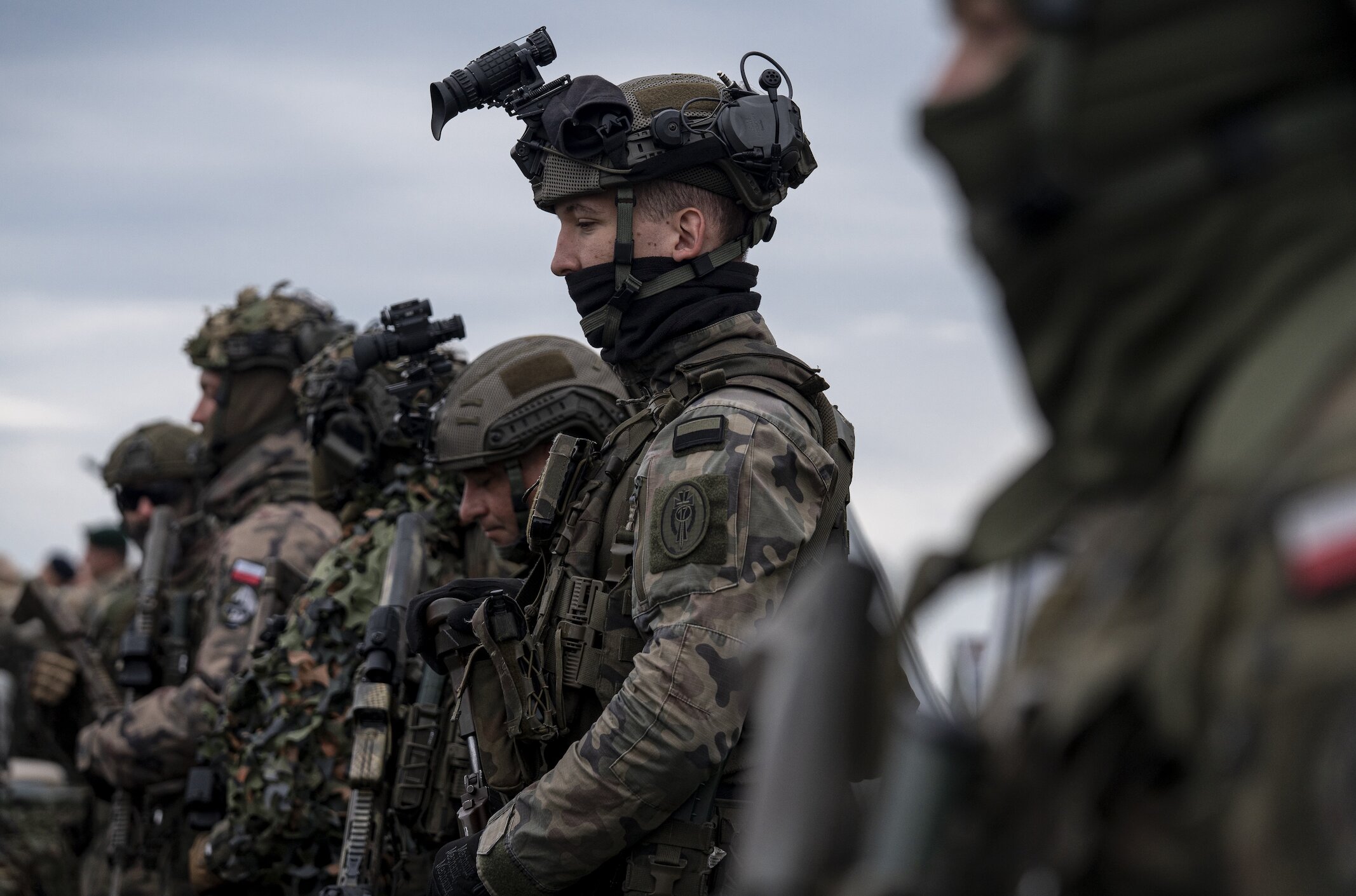
European states are moving beyond political discussions on security guarantees for Ukraine and towards practical preparations for a potential military presence in the country. Large-scale exercises in Poland, led by France and the United Kingdom, demonstrate the determination of European allies to establish an independent mechanism for ensuring Ukraine's security following the cessation of hostilities. The formation of multinational forces also reflects European capitals' intention to strengthen their role in shaping the future European security architecture.
European countries are conducting large-scale military exercises, KOALICJA 26.2, aimed at rehearsing scenarios for the potential deployment of multinational forces in Ukraine following the end of the Russian-Ukrainian war. The exercises are taking place in Poland from 9 to 22 November under the joint leadership of France and the United Kingdom as part of the Coalition of the Willing initiative.
Approximately 2800 military personnel from 11 countries are participating in the exercises. The participating countries include Belgium, Estonia, France, Germany, Lithuania, the Netherlands, Spain, Sweden, Turkiye and the United Kingdom. Poland is providing logistical support for the operation, while the Turkish side is participating in the maritime component from Istanbul.
The military exercises are being conducted within the framework of the Multinational Force – Ukraine (MNF-U), established as the military component of the Coalition of the Willing. Their primary objective is to assess the ability of European countries to rapidly deploy troops, establish joint command structures, provide logistical support and coordinate the activities of different military units.
Particular attention is being paid to countering unmanned aerial vehicles, protecting military personnel, coordinating land and air units, and organising military logistics. Participants are rehearsing the movement of troops and equipment across European territory, the deployment of reconnaissance drones, responses to aerial threats and operations under conditions resembling those of a combat environment.
The proposed MNF-U mission envisages several principal areas of activity. In the event of a ceasefire and following a request from Kyiv, multinational forces could deploy military instructors to help rebuild and strengthen the Armed Forces of Ukraine, contribute to ensuring the security of Ukrainian airspace, and assist with demining operations in the Black Sea and the restoration of safe commercial shipping.
Importantly, the proposed mission is not being presented as a conventional peacekeeping operation. According to statements by the MNF-U military leadership, its responsibilities will not include directly monitoring the ceasefire line or overseeing compliance with a peace agreement. Instead, the primary focus is expected to be on providing military support to Ukraine, restoring its defence capabilities and establishing additional deterrence mechanisms against the risk of renewed escalation.
France and the United Kingdom are acting as the principal coordinators of the initiative. Paris is considering the participation of land, air and naval units, while London is providing joint military leadership. Turkiye, in turn, is involved in preparing the maritime component, including rehearsing mine-clearance operations and measures to ensure the security of shipping in the Black Sea. This division of responsibilities demonstrates the European states' intention to establish a comprehensive military presence covering several operational domains.
Poland's participation also gives the exercises additional significance. Despite ruling out the deployment of its own troops directly to Ukrainian territory, Warsaw is playing an important role in providing logistical support and facilitating the movement of forces. Poland's geographical position makes it one of the key transit hubs for the potential deployment of a European military contingent.
An official statement issued by the French Ministry of the Armed Forces on 3 November confirms that the MNF-U is being prepared as a force ready for deployment at the request of the Ukrainian government, in accordance with the Paris Declaration of 6 January 2026.
The exercises are taking place against the backdrop of continuing disagreements over the future security framework for Ukraine. European countries are seeking to establish a mechanism that would enable Kyiv to maintain its defence capabilities even in the event of a reduction in US military assistance or a shift in Washington's priorities. However, questions concerning potential US security guarantees, the framework for cooperation with NATO and the level of participation by individual European countries remain unresolved.
A major obstacle to implementing the initiative remains Moscow's position. The Russian leadership has previously warned that foreign military units deployed on Ukrainian territory could be regarded as legitimate military targets. Consequently, even if an agreement on a ceasefire is reached, the deployment of a European contingent could become an additional source of military and political tension between Russia and European states.
The preparation of KOALICJA 26.2 indicates that European policy towards Ukraine is entering a more practical phase. France and the United Kingdom are seeking to establish military infrastructure that would enable European countries to participate in ensuring Ukraine's post-war security without necessarily integrating this structure into NATO's command framework.
The geographical scope of the proposed mission is particularly significant: a land-based presence, air security measures and maritime demining form the basis for long-term military and strategic support for Ukraine. At the same time, Turkiye's participation in the maritime component gives the initiative additional significance in the context of Black Sea security.


 Latest news
Europe Prepares a Military Mission for Ukraine: 2800 Troops Rehearse Post-War Deployment Scenarios
22.Nov.2026
Russian Missiles and a Drone Fall on Polish Territory: NATO Faces New Threats on Its Eastern Flank
21.Nov.2026
Russia Strikes Kyiv Bridges Following Ukraine’s Attack on the Crimean Bridge: Transport Infrastructure Becomes a New Front in the Escalation
20.Nov.2026
The "Coalition of the Willing" Discusses Security Guarantees and Continued Support for Kyiv
19.Nov.2026
Tanker Sinks off Bulgaria After Being Hit Four Times: All 19 Crew Members Rescued
18.Nov.2026
Europe Accelerates Defence Integration: EU Identifies 8 Priorities for Joint Weapons Development
17.Nov.2026
Bulgaria and North Macedonia Plan to Begin Construction of New Border Crossing in October 2027
17.Nov.2026
Central Asia Accelerates Digitalisation of the Trans-Caspian Transport Corridor
16.Nov.2026
Bulgaria, Romania and Turkiye Deploy Naval Assets in BETUL 8 Rescue Operation
16.Nov.2026
Armenia Becomes the EU’s Leading Partner in the South Caucasus: Georgia Loses Influence in Europe’s Regional Strategy
15.Nov.2026
Ukraine Expands Its Campaign Against Russia’s Strategic Infrastructure
15.Nov.2026
Defence Partnerships without a Common Strategy? Turkiye Expands Military Ties with Qatar, Saudi Arabia and Pakistan
14.Nov.2026
Kobakhidze Says Georgia is Ready to Restore Political Dialogue with the European Union
14.Nov.2026
European Leaders Warn of Growing Russian Pressure on Armenia and Pledge Support to Yerevan
14.Nov.2026
Beyond Washington and Moscow: Europe Seeks a Seat at the Ukraine Negotiating Table
13.Nov.2026