
 22 Nov 2026









Armenia Becomes the EU’s Leading Partner in the South Caucasus: Georgia Loses Influence in Europe’s Regional Strategy
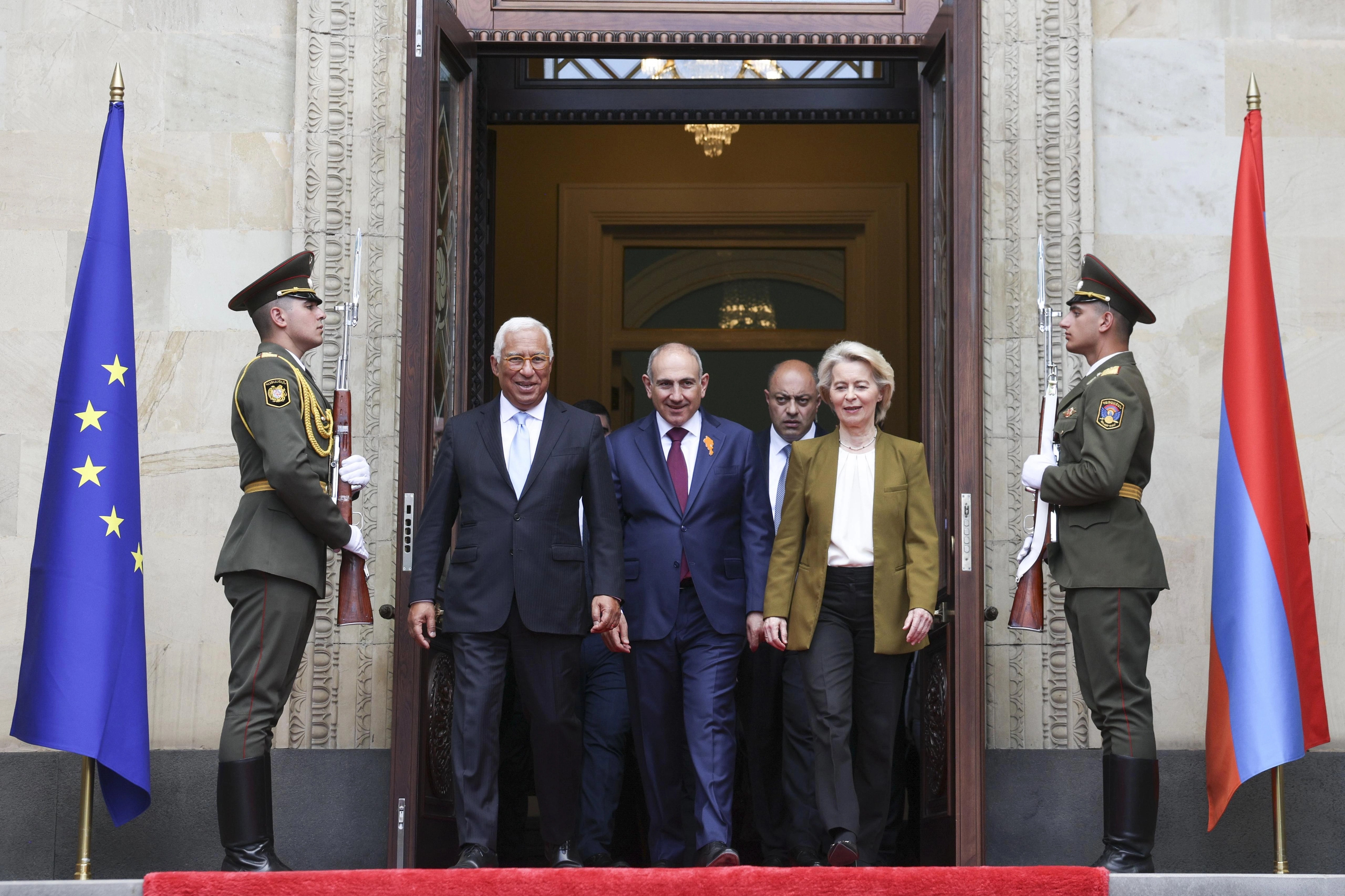
The geopolitical realignment of the South Caucasus is becoming increasingly pronounced. Armenia is strengthening its political and economic ties with the European Union, while relations between Brussels and Tbilisi are experiencing their most serious crisis in recent years.
According to the Dutch think tank Clingendael’s study, “Realignment and Competition: The 2026 Geopolitical Map of the South Caucasus”, Armenia’s relations with the European Union received a score of 8.47 out of 10. This was the third-highest score among the 51 bilateral relationships examined in the study. The assessment is based on the opinions of 41 regional experts and reflects perceptions of political relations between states rather than a formal ranking of international cooperation.
The comparison with Georgia–EU relations is particularly revealing. Tbilisi’s relations with Brussels received just 2.57 points, falling below Georgia’s relations with Russia, which scored 3.71. These findings suggest that the previous model of European engagement in the South Caucasus, in which Georgia was regarded as the EU’s most promising partner in the region, is gradually giving way to a new configuration increasingly focused on Armenia.
The shift becomes even more significant when compared with the situation in 2023. At that time, Clingendael characterised Georgia’s relations with the European Union as good, while its ties with Moscow were assessed as poor. The latest findings point to an almost complete reversal of that dynamic.
However, it is important to emphasise that these assessments primarily concern the political dimension of bilateral relations. Georgia’s economic ties with the European Union remain relatively resilient, and the European market continues to play an important role in Georgian foreign trade. Consequently, the decline in political trust between Brussels and Tbilisi does not yet signify a complete breakdown in economic cooperation.
Armenia: European Integration as an Instrument of Foreign Policy Diversification
The strengthening of relations between Yerevan and Brussels is the result of a gradual reassessment of Armenia’s foreign policy strategy. For decades, Armenia’s security arrangements, energy sector and a substantial part of its economic relations were closely linked to Russia. However, developments in recent years have exposed the limitations of this traditional model of dependence.
The events surrounding Nagorno-Karabakh between 2020 and 2023 had a particularly significant impact on Armenia’s foreign policy outlook. The failure of Russian security structures and the Collective Security Treaty Organisation (CSTO) to provide the level of support expected by Yerevan prompted the Armenian leadership to reconsider the reliability of its traditional security arrangements.
Against this background, Prime Minister Nikol Pashinyan’s government intensified cooperation with European countries and the United States. Armenia began expanding its engagement in defence policy, border security, institutional reforms and economic diversification.
The development of relations with France has become an additional factor in this process. According to the Clingendael study, Armenian-French political relations received 9.27 points, ranking second in the regional assessment only to Azerbaijan–Turkiye relations, which scored 9.31 points. Armenia’s relations with the United States received 7.87 points, while its relations with Russia scored 3.80.
The Comprehensive and Enhanced Partnership Agreement (CEPA), which entered into force in 2021, remains an important institutional instrument of Armenia’s rapprochement with Europe. The agreement provides for cooperation in public administration, the rule of law, economic modernisation, energy and the strengthening of democratic institutions.
Another milestone was the adoption by the Armenian parliament, in March 2025, of a law initiating the process of Armenia’s accession to the European Union. Although this legislation does not automatically grant candidate status or initiate formal membership negotiations, it established European integration as one of the country’s declared policy objectives.
On 3 November 2026, Prime Minister Nikol Pashinyan stated that Armenia could submit an official application for EU membership in 2027 or 2028. Such statements indicate that the European direction is gradually evolving from an instrument of diplomatic diversification into a long-term strategic objective for Yerevan.
Nevertheless, this course entails substantial economic and political commitments. Armenia will need to align its legislation with European standards, modernise state institutions and gradually reduce its dependence on external centres of influence.
 The Economic Factor: A Gradual Shift in Yerevan’s Trade Priorities
Armenia’s geopolitical realignment is accompanied by changes in the structure of its foreign economic relations. According to official statistical data cited in the Clingendael study, Armenia’s trade turnover with Russia declined by 19.2% year-on-year between January and August 2026, reaching $3.59 billion. Meanwhile, trade with the European Union increased by 53.9%, reaching $2.43 billion.
This trend indicates the gradual expansion of Armenia’s economic engagement with Europe, although Russia remains one of the country’s most important trading partners.
In July 2026, the European Union announced an additional support package for Armenia worth €52 million, including measures to facilitate access for Armenian products to the European market. Brussels also allocated up to €200 million for the development of regional transport, energy and digital infrastructure connecting the countries of the South Caucasus with European markets.
The energy dimension is particularly important. Armenia’s dependence on Russian gas supplies and existing infrastructure remains one of the main constraints on its foreign policy autonomy. Consequently, diversifying energy routes, developing alternative supply sources and expanding cooperation with European partners have become strategic objectives alongside their economic importance.
Nevertheless, a rapid withdrawal from economic and energy ties with Russia appears unlikely. Armenia remains a member of the Eurasian Economic Union, while a significant part of its trade and infrastructure system continues to operate within established economic networks linked to Russia.
Thus, Yerevan’s European integration is currently progressing through the gradual expansion of alternative opportunities rather than a complete break with its traditional economic partners.
Georgia: A Crisis of Trust Between Tbilisi and Brussels
Unlike Armenia, Georgia is experiencing a deterioration in its relations with European institutions. Political tensions between the ruling Georgian Dream party and Western partners have intensified amid domestic political developments, restrictions affecting civil society and disagreements over democratic standards.
Of particular significance were legislative initiatives introduced by the Georgian authorities concerning the transparency of foreign funding, as well as the government’s decision to suspend the process of opening EU accession negotiations until 2028. These steps triggered strong reactions from European institutions and raised further doubts about Georgia’s continued progress towards European integration.
As a result, relations between Brussels and Tbilisi have gradually shifted from strategic partnership towards a more complicated model of political engagement characterised by mutual distrust.
According to the Clingendael study, the European Union ranked last among the 16 bilateral relationships involving Georgia examined by experts. By comparison, Tbilisi’s relations with the United Kingdom received 3.43 points, Ukraine 3.64, and Russia 3.71. Relations with the United States scored 4.43 points.
At the same time, Georgia continues to develop cooperation with other international partners. Its highest scores were recorded in relations with Turkiye (7.64), Azerbaijan (7.63), the United Arab Emirates (7.43) and China (7.00).
However, the expansion of these partnerships has not yet compensated for the political and institutional advantages Georgia traditionally derived from its cooperation with European structures.
Significantly, economic relations with the EU remain considerably more resilient than political ties. Trade turnover between Georgia and the European Union reached a record $5.6 billion in 2025. The intensity of economic cooperation with the EU received a score of 5.14 in the study, matching the assessment of Georgia’s economic relations with Russia.
Consequently, the current crisis should primarily be understood as political and institutional rather than as a complete breakdown in economic cooperation between European and Georgian businesses.
Nevertheless, further deterioration in relations with Brussels could limit Tbilisi’s opportunities to attract European investment, implement infrastructure projects and access EU financial support mechanisms.
The South Caucasus as an Arena of Competition Between External Powers
The changing relationship between Armenia, Georgia and the European Union is taking place against the backdrop of a broader transformation of the region’s geopolitical landscape. The South Caucasus is gradually ceasing to be viewed exclusively as an arena of traditional confrontation between Russia and the West. The influence of the United States, Turkiye, China and the countries of the Persian Gulf is also increasing.
Transport infrastructure is becoming particularly important. The development of the Middle Corridor, the expansion of railway and road connections, and the prospects for new routes between Europe and Asia are increasing the region’s strategic significance.
In this context, Armenia has an opportunity to use its rapprochement with Europe to expand its role in the regional transport and economic system. The TRIPP project (Trump Route for International Peace and Prosperity) is particularly significant. It envisages the establishment of a transport connection through the southern part of Armenia. Its implementation could reshape the region’s logistics landscape and create additional opportunities for international economic cooperation.
According to the Clingendael study, Washington played an important role in reaching agreements between Armenia and Azerbaijan in August 2025. The authors argue that the United States possesses considerable diplomatic leverage to advance the peace process, as it maintains working relations with both parties.
At the same time, the European Union is advised to focus on the practical implementation of the agreements reached, including border delimitation, customs cooperation, monitoring mechanisms and infrastructure development.
 The Azerbaijan Factor: A New Configuration of the Regional Balance
The shift in European priorities in the South Caucasus directly affects Azerbaijan’s interests. Baku remains an important partner for European energy security, transport connectivity and regional stability.
According to the Clingendael study, Azerbaijan’s closest political relationship is with Turkiye, which received a score of 9.31 points. Meanwhile, Baku’s relations with the United States were assessed at 6.77 points, while its relations with the European Union received 5.62 points.
At the same time, the rapprochement between the EU and Armenia should not automatically be interpreted as the emergence of an anti-Azerbaijani political orientation. Europe’s regional strategy is largely driven by its ambition to expand its presence, support the peace process and secure additional opportunities for economic engagement.
The Peace Process with Azerbaijan: The Main Test of Europe’s Strategy in Armenia
Despite its rapprochement with European institutions, Armenia continues to face a number of domestic and foreign policy constraints. One of the most significant remains the finalisation of a peace agreement with Azerbaijan.
The agreement, initialled in Washington in August 2025, has not yet been signed. Baku insists on the removal from the Armenian Constitution of provisions that, in Azerbaijan’s assessment, contain indirect territorial claims against Azerbaijan.
This issue carries particular political significance for Pashinyan’s government, as constitutional amendments require broad domestic support and must pass through the procedures established by Armenian law.
Another important factor is the need to rebuild trust between the two countries, develop economic contacts and establish sustainable mechanisms for regional cooperation.
In this context, European diplomacy has an opportunity to strengthen its involvement in the peace process. However, its effectiveness will depend not on the number of political statements issued, but on its ability to facilitate the implementation of concrete agreements.
Particularly important areas could include border security, the development of transport connections, customs cooperation and the establishment of mechanisms for economic interdependence.
On 12 November 2026, representatives of several European countries and EU institutions, during a meeting with Nikol Pashinyan, reaffirmed their support for Armenia’s sovereignty and territorial integrity, economic diversification and European integration ambitions. European partners also emphasised the importance of continuing the peace process between Yerevan and Baku.
This indicates that Brussels views Armenia not only as a promising partner in European integration but also as an important component of the future security architecture of the South Caucasus.
Strategic Prospects: Armenia’s Emerging Role and Uncertainty Surrounding Georgia
The findings of the Clingendael study demonstrate a significant shift in the political configuration of the South Caucasus. Armenia is gradually strengthening its position within Europe’s regional strategy, while Georgia is facing a decline in political trust from Brussels.
However, Armenia’s emergence as the EU’s leading political partner in the region does not automatically mean that it will obtain candidate status or guaranteed EU membership. Geographical, economic, energy-related and institutional constraints will continue to determine the pace of the country’s European integration.
More broadly, the South Caucasus is entering a period in which the foreign policy orientation of its states is becoming less dependent on traditional alliances and increasingly determined by their ability to ensure economic resilience, security and access to international transport and energy routes.
Ultimately, Armenia’s rapprochement with the EU and the deterioration of relations between Brussels and Tbilisi reflect a redistribution of Western political influence in the South Caucasus. However, the long-term effectiveness of this new strategy will depend on Brussels’ ability not only to support Yerevan’s European integration ambitions, but also to promote sustainable peace between Armenia and Azerbaijan while maintaining constructive relations with Georgia.
CCBS Research Desk


 Latest news
Europe Prepares a Military Mission for Ukraine: 2800 Troops Rehearse Post-War Deployment Scenarios
22.Nov.2026
Russian Missiles and a Drone Fall on Polish Territory: NATO Faces New Threats on Its Eastern Flank
21.Nov.2026
Russia Strikes Kyiv Bridges Following Ukraine’s Attack on the Crimean Bridge: Transport Infrastructure Becomes a New Front in the Escalation
20.Nov.2026
The "Coalition of the Willing" Discusses Security Guarantees and Continued Support for Kyiv
19.Nov.2026
Tanker Sinks off Bulgaria After Being Hit Four Times: All 19 Crew Members Rescued
18.Nov.2026
Europe Accelerates Defence Integration: EU Identifies 8 Priorities for Joint Weapons Development
17.Nov.2026
Bulgaria and North Macedonia Plan to Begin Construction of New Border Crossing in October 2027
17.Nov.2026
Central Asia Accelerates Digitalisation of the Trans-Caspian Transport Corridor
16.Nov.2026
Bulgaria, Romania and Turkiye Deploy Naval Assets in BETUL 8 Rescue Operation
16.Nov.2026
Armenia Becomes the EU’s Leading Partner in the South Caucasus: Georgia Loses Influence in Europe’s Regional Strategy
15.Nov.2026
Ukraine Expands Its Campaign Against Russia’s Strategic Infrastructure
15.Nov.2026
Defence Partnerships without a Common Strategy? Turkiye Expands Military Ties with Qatar, Saudi Arabia and Pakistan
14.Nov.2026
Kobakhidze Says Georgia is Ready to Restore Political Dialogue with the European Union
14.Nov.2026
European Leaders Warn of Growing Russian Pressure on Armenia and Pledge Support to Yerevan
14.Nov.2026
Beyond Washington and Moscow: Europe Seeks a Seat at the Ukraine Negotiating Table
13.Nov.2026