
 22 Nov 2026









Ukraine Expands Its Campaign Against Russia’s Strategic Infrastructure
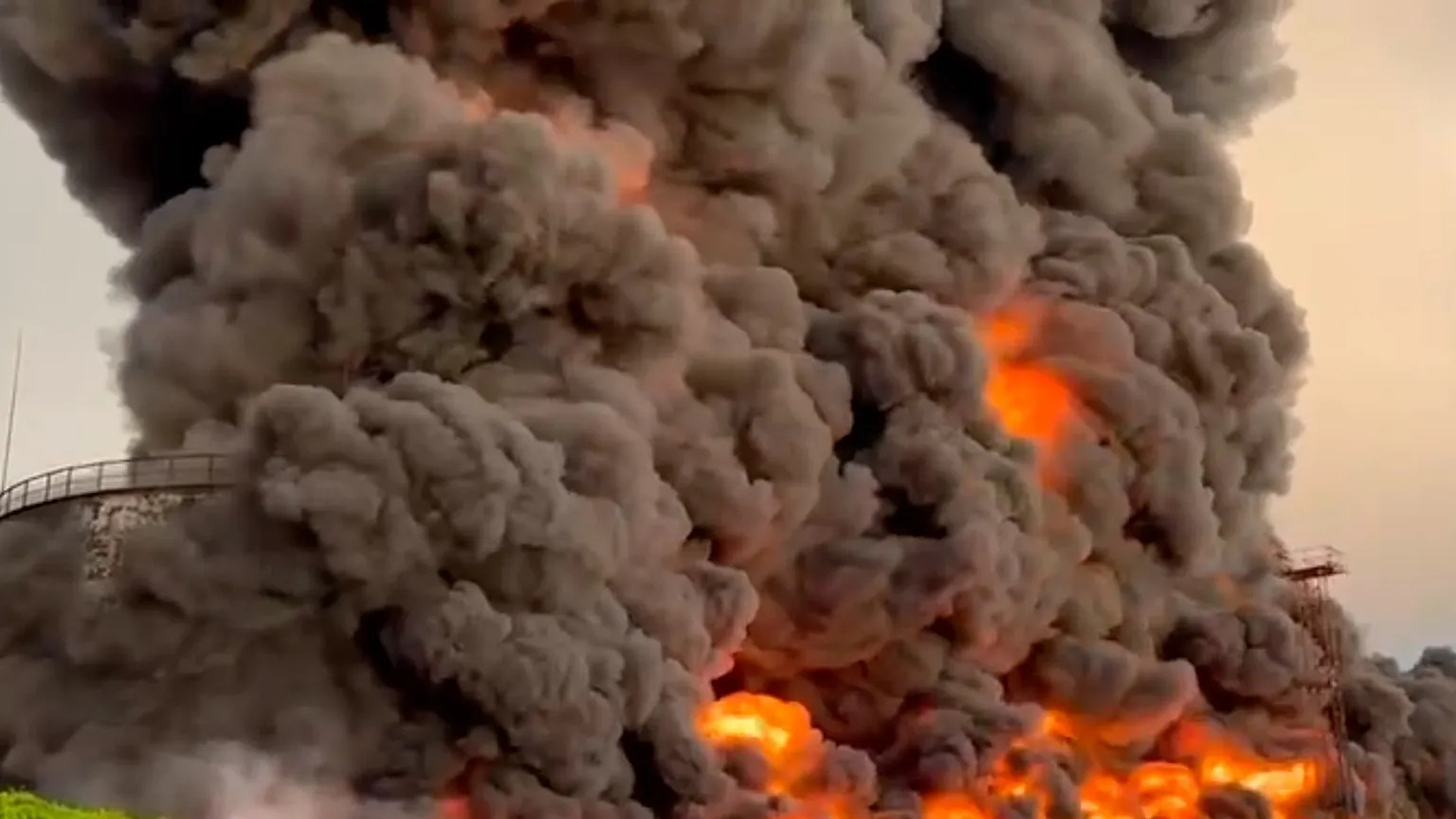
The massive Ukrainian drone attack on Russian territory during the night of 12–13 November demonstrated Ukraine’s expanding capabilities to strike targets deep inside Russia. Of particular significance was the reported strike on the Volgograd Oil Refinery, owned by Lukoil and regarded as one of Russia’s major oil-processing facilities. Sustained attacks on Russia’s refining capacity are placing increasing pressure on the country’s fuel sector and creating additional risks for domestic supplies and exports.
During the night of 12–13 November 2026, Ukraine carried out one of the largest drone attacks against Russian territory since the beginning of the full-scale invasion. According to the Russian Ministry of Defence, Russian air defence systems intercepted and destroyed 1,198 Ukrainian fixed-wing drones. The Russian military authorities reported that the drones had been detected over 16 Russian regions, the Moscow region, Crimea and the Black Sea. However, the reported number of intercepted and destroyed drones has not been independently verified.
According to Russian regional authorities, the attacks affected several regions of the Russian Federation. Seven people were reportedly killed and 17 injured across three regions. The most serious consequences were reported in Volgograd, where four people were killed and two others injured following a strike on an industrial area.
One of the main targets of the Ukrainian operation was the Volgograd Oil Refinery, operated by Lukoil-Volgogradneftepererabotka. Ukraine’s General Staff confirmed that the facility had been targeted and that a fire had broken out on its premises. According to information released by the Ukrainian side, several primary oil-processing units, a hydrotreating unit, petroleum product storage tanks and elements of the loading infrastructure were damaged.
The Volgograd Oil Refinery has a designed processing capacity of approximately 14 million tonnes of crude oil per year, making it a significant component of Russia’s oil-refining industry. The facility produces gasoline, diesel fuel and other petroleum products. Consequently, prolonged disruptions to its operations could place additional pressure on regional fuel supplies.
The attack is particularly significant against the backdrop of Ukraine’s ongoing campaign against Russian oil-refining infrastructure. According to Reuters on 10 November, operations at nine of Russia’s 35 major oil refineries had been disrupted as a result of previous attacks. Industry sources cited by the agency estimated that Russian oil-refining capacity had declined by approximately 30%. These figures reflect the situation at the time of publication and do not mean that all affected facilities had completely ceased operations.
Successive strikes against oil refineries indicate Kyiv’s intention to increase economic and logistical pressure on Russia’s military-industrial capabilities. Unlike attacks directed exclusively at military installations, strikes against oil refineries generate broader consequences, affecting fuel production, transport logistics, industrial supply chains and export capacity.
The oil-refining sector is particularly important to the Russian economy, as it supports not only the domestic market but also the transport system and a substantial part of the country’s industrial sector. Prolonged damage to individual facilities could make the restoration of production capacity a costly and technically demanding process, particularly when specialised equipment needs to be replaced.
Another important factor is the geographical reach of the attacks. The Volgograd Oil Refinery is located at a considerable distance from the front line, highlighting the ability of Ukrainian drone systems to reach industrial facilities deep inside Russian territory. Such operations compel the Russian leadership to redistribute air defence assets and strengthen the protection of energy and industrial infrastructure.
Sustained disruptions to Russian oil refineries could further widen the gap between production, domestic consumption and exports of petroleum products. However, the actual scale of the impact will depend on the duration of refinery shutdowns, the ability to redistribute processing volumes among other facilities and the speed at which damaged equipment can be repaired or replaced.
Ukraine’s campaign against Russian oil-refining infrastructure is gradually evolving into a long-term military and economic confrontation. Its outcome will be determined not by the number of individual attacks, but by Ukraine’s ability to repeatedly disrupt critical production facilities and limit Russia’s capacity to restore them in a timely manner.
According to the CCBS assessment, the expanding geographical reach of Ukrainian drone operations and repeated strikes against major oil-refining facilities demonstrate the growing importance of energy infrastructure in Ukraine’s strategy of economically weakening Russia. The Volgograd incident illustrates that even industrial facilities located far from the front line remain vulnerable to long-range drone attacks. In the longer term, this could increase pressure on Russia’s air defence network, raise the costs of protecting critical infrastructure and create additional risks to the stability of the domestic fuel market.


 Latest news
Europe Prepares a Military Mission for Ukraine: 2800 Troops Rehearse Post-War Deployment Scenarios
22.Nov.2026
Russian Missiles and a Drone Fall on Polish Territory: NATO Faces New Threats on Its Eastern Flank
21.Nov.2026
Russia Strikes Kyiv Bridges Following Ukraine’s Attack on the Crimean Bridge: Transport Infrastructure Becomes a New Front in the Escalation
20.Nov.2026
The "Coalition of the Willing" Discusses Security Guarantees and Continued Support for Kyiv
19.Nov.2026
Tanker Sinks off Bulgaria After Being Hit Four Times: All 19 Crew Members Rescued
18.Nov.2026
Europe Accelerates Defence Integration: EU Identifies 8 Priorities for Joint Weapons Development
17.Nov.2026
Bulgaria and North Macedonia Plan to Begin Construction of New Border Crossing in October 2027
17.Nov.2026
Central Asia Accelerates Digitalisation of the Trans-Caspian Transport Corridor
16.Nov.2026
Bulgaria, Romania and Turkiye Deploy Naval Assets in BETUL 8 Rescue Operation
16.Nov.2026
Armenia Becomes the EU’s Leading Partner in the South Caucasus: Georgia Loses Influence in Europe’s Regional Strategy
15.Nov.2026
Ukraine Expands Its Campaign Against Russia’s Strategic Infrastructure
15.Nov.2026
Defence Partnerships without a Common Strategy? Turkiye Expands Military Ties with Qatar, Saudi Arabia and Pakistan
14.Nov.2026
Kobakhidze Says Georgia is Ready to Restore Political Dialogue with the European Union
14.Nov.2026
European Leaders Warn of Growing Russian Pressure on Armenia and Pledge Support to Yerevan
14.Nov.2026
Beyond Washington and Moscow: Europe Seeks a Seat at the Ukraine Negotiating Table
13.Nov.2026