
 22 Nov 2026









Russian Missiles and a Drone Fall on Polish Territory: NATO Faces New Threats on Its Eastern Flank
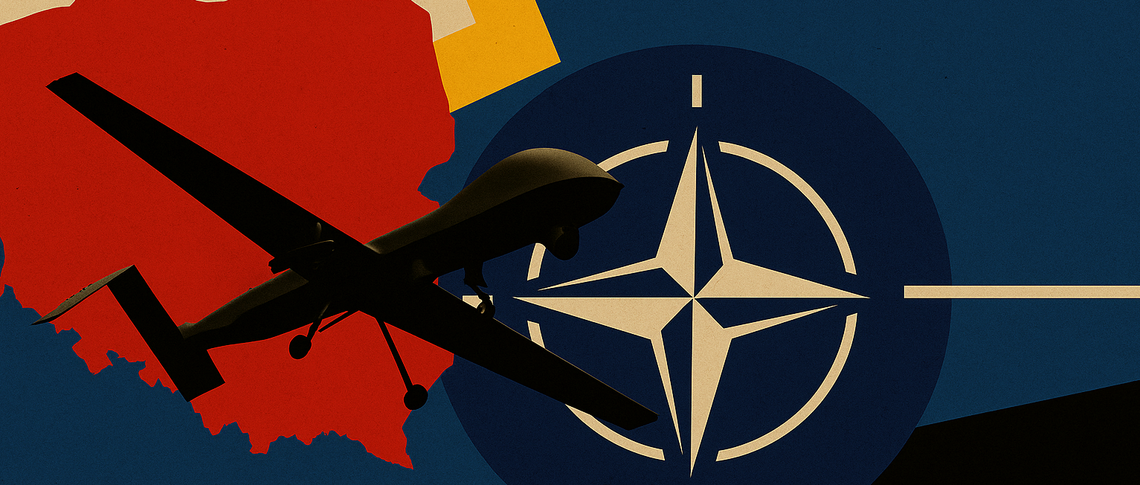
The incident involving Russian missiles and a drone falling on Polish territory on November 20, 2026, has highlighted the growing risk of the Russian-Ukrainian war spilling over into NATO member states. The violation of Polish airspace occurred amid one of Russia's large-scale combined attacks on Ukraine and coincided with military exercises conducted by European coalition forces in Poland. Warsaw views the incident as a possible deliberate provocation by Moscow and is seeking additional reinforcement of NATO's air defence capabilities.
On November 20, 2026, during a large-scale Russian attack on Ukraine, three aerial objects fell on Polish territory. According to Polish Minister of National Defence Władysław Kosiniak-Kamysz, the incident involved two missiles and one jet-powered drone that entered Polish airspace. One of the objects was identified as a Kh-101 cruise missile, while the second was also believed to be a missile and the third a jet-powered drone.
Debris was discovered in the localities of Nowy Lipowiec, Rudnik nad Sanem and Mołodycz, in eastern and south-eastern Poland. According to preliminary information from the Polish authorities, no casualties were reported, and no significant damage to critical infrastructure was recorded.
The Polish military command reported that up to 11 aerial objects posed a potential threat to the country's airspace during the Russian attack. Air defence systems were placed on heightened alert, while Polish and allied aircraft were deployed to monitor the airspace and protect Polish territory.
Polish Prime Minister Donald Tusk convened an emergency meeting involving government officials, military commanders and representatives of the security services. He stated that it was difficult to regard the incident as a coincidence. Warsaw considers the incident a possible deliberate provocation by Russia, although any definitive conclusions will depend on the findings of the investigation.
The incident is particularly significant because it coincided with the military exercise Exercise Koalicja, conducted in Poland as part of the activities of the Coalition of the Willing. Military personnel from several European countries are participating in the manoeuvres, which focus on the deployment of multinational forces, command coordination, counter-drone operations and potential arrangements for ensuring Ukraine's security following the cessation of hostilities.
In response to the incident, Warsaw called for increased military support from NATO. Defence Minister Władysław Kosiniak-Kamysz stated that additional Airborne Warning and Control System (AWACS) aircraft and F-35 fighter jets were needed. Poland also intends to seek additional resources for Eastern Sentry, an operation aimed at strengthening the Alliance's eastern flank.
During the response to the aerial threat, Polish F-16 fighters, Swedish JAS 39 Gripen aircraft and a Dutch A330 MRTT aerial refuelling aircraft were deployed. Ground-based radar systems and NATO air defence assets were also activated. NATO Secretary General Mark Rutte condemned the incident and reaffirmed the Alliance's solidarity with Poland.
The November 20 incident demonstrates the further expansion of the geographical scope of risks associated with the Russian-Ukrainian war. The violation of Polish airspace places additional pressure on NATO's collective security framework and highlights the need to reassess the Alliance's response mechanisms to threats posed by Russian missiles and unmanned aerial vehicles.
Particular concern centres on the potential vulnerability of NATO's eastern flank to combined aerial attacks. Even in the absence of casualties or significant material damage, the incident retains considerable military and political significance. Such developments increase the risk of misinterpreting the intentions of the parties, unintended escalation and a direct confrontation between Russia and NATO member states.
Another important factor is the need for closer coordination between national air defence systems and NATO's integrated air and missile defence architecture. In particular, European states will need to address the conditions under which Russian aerial objects posing a potential threat to NATO territory can be intercepted before crossing national borders.
In a broader context, the incident reinforces Poland's strategic importance as one of the key military and logistical hubs supporting Ukraine, as well as a frontline component of NATO's defence infrastructure in Eastern Europe.
According to the CCBS assessment, the violation of Polish airspace may have been linked to Moscow's attempt to exert pressure on European states involved in preparations for a potential international mission in Ukraine, while also testing NATO's response to incidents of this nature.


 Latest news
Europe Prepares a Military Mission for Ukraine: 2800 Troops Rehearse Post-War Deployment Scenarios
22.Nov.2026
Russian Missiles and a Drone Fall on Polish Territory: NATO Faces New Threats on Its Eastern Flank
21.Nov.2026
Russia Strikes Kyiv Bridges Following Ukraine’s Attack on the Crimean Bridge: Transport Infrastructure Becomes a New Front in the Escalation
20.Nov.2026
The "Coalition of the Willing" Discusses Security Guarantees and Continued Support for Kyiv
19.Nov.2026
Tanker Sinks off Bulgaria After Being Hit Four Times: All 19 Crew Members Rescued
18.Nov.2026
Europe Accelerates Defence Integration: EU Identifies 8 Priorities for Joint Weapons Development
17.Nov.2026
Bulgaria and North Macedonia Plan to Begin Construction of New Border Crossing in October 2027
17.Nov.2026
Central Asia Accelerates Digitalisation of the Trans-Caspian Transport Corridor
16.Nov.2026
Bulgaria, Romania and Turkiye Deploy Naval Assets in BETUL 8 Rescue Operation
16.Nov.2026
Armenia Becomes the EU’s Leading Partner in the South Caucasus: Georgia Loses Influence in Europe’s Regional Strategy
15.Nov.2026
Ukraine Expands Its Campaign Against Russia’s Strategic Infrastructure
15.Nov.2026
Defence Partnerships without a Common Strategy? Turkiye Expands Military Ties with Qatar, Saudi Arabia and Pakistan
14.Nov.2026
Kobakhidze Says Georgia is Ready to Restore Political Dialogue with the European Union
14.Nov.2026
European Leaders Warn of Growing Russian Pressure on Armenia and Pledge Support to Yerevan
14.Nov.2026
Beyond Washington and Moscow: Europe Seeks a Seat at the Ukraine Negotiating Table
13.Nov.2026