
 23 Nov 2026









Starlink as a Factor in Ukraine’s Military Resilience: Dependence on Private Technology Becomes a Strategic Risk
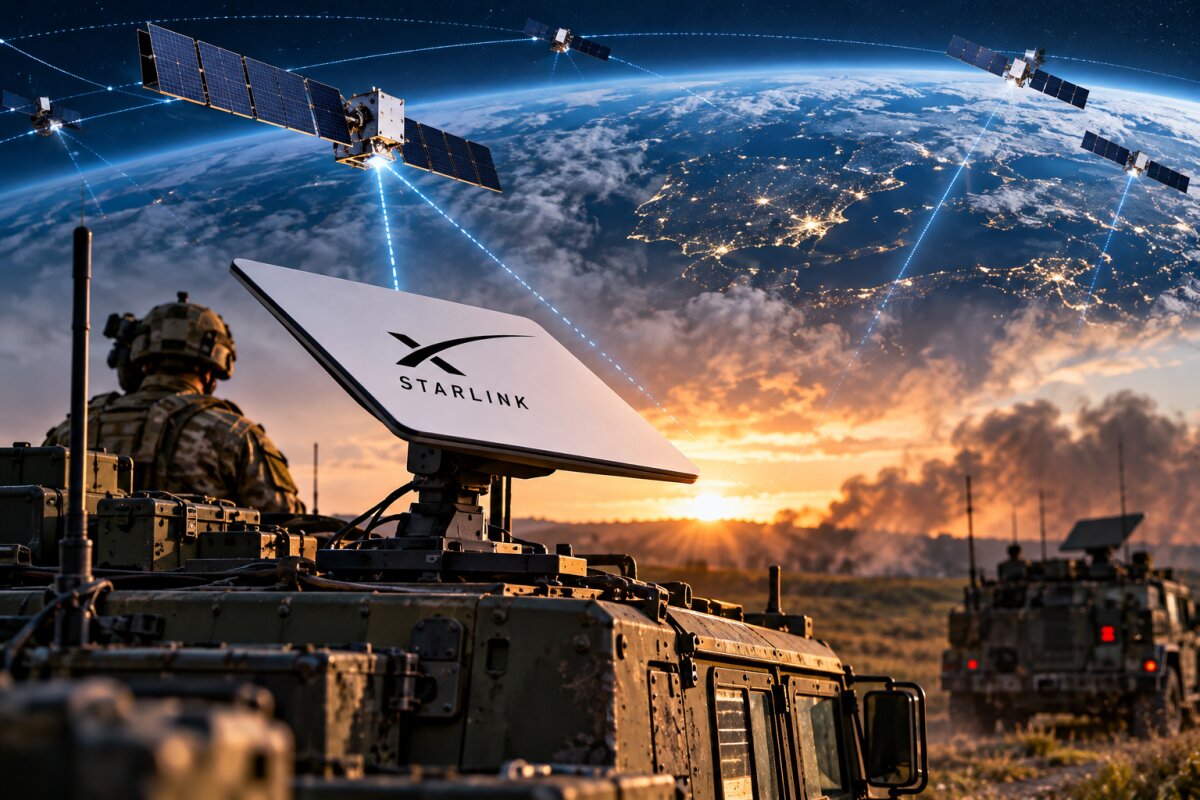
The dispute surrounding the Starlink satellite system has once again exposed one of the key vulnerabilities of modern warfare: a state may possess a well-trained military and Western weapons, yet remain dependent on technological infrastructure beyond the control of its own institutions. In the context of the Russian-Ukrainian conflict, this issue has acquired significance extending beyond the technical sphere into the realm of military strategy.
In modern warfare, superiority is determined not solely by the number of artillery systems, missile range, or personnel strength. Equally important is an army’s ability to receive information promptly, transmit orders, and coordinate the actions of its units in a rapidly changing operational environment.
Starlink, the satellite communications system developed by SpaceX, has become a significant component of Ukraine’s communications infrastructure. Its use provides internet access in areas where terrestrial networks have been damaged, operate unreliably, or fail to provide adequate coverage. The military value of such solutions lies primarily in maintaining information exchange between units and command structures.
This infrastructure has become particularly important amid the widespread use of unmanned aerial vehicles, digital command-and-control systems, and reconnaissance assets. Data transmission speed directly affects decision-making, while communications disruptions can complicate the coordination of operations at the tactical level.
Nevertheless, Starlink is not a universal military communications solution and does not replace all other communications systems. Its significance depends on the specific tasks involved, the architecture of military command, and the availability of alternative channels for information transmission.
Private Companies as a Factor in Military Uncertainty
The debate surrounding Starlink intensified following public statements by Elon Musk concerning compliance with the system’s terms of use by Ukrainian military personnel. The Ukrainian side disputed his claims. The situation has once again raised questions about the resilience of military infrastructure when its most important components depend on decisions made by a commercial operator.
This creates a fundamental contradiction. A state uses a technological resource in the interests of national security but does not exercise full control over its operation, service provision policies, or technical restrictions. As a result, corporate decisions, commercial terms, and political disagreements can acquire significance far beyond ordinary relations between a service provider and its customer.
Such dependence does not mean that a private company will necessarily restrict access to its system or that every disagreement will disrupt military command. However, the possibility of such a scenario constitutes an additional risk that military planners must anticipate.
Ukraine’s experience is instructive in this regard. The war has accelerated the integration of commercial technologies into the defence sector while demonstrating that technological superiority does not necessarily translate into technological independence.
Potential Operational Consequences
One of the most significant consequences of serious satellite communications disruptions could be a reduction in the speed of information exchange between military units. Under conditions of intense combat, even temporary restrictions can complicate coordination, impede the transmission of operational data, and increase the burden on backup communications channels.
This issue is particularly important in relation to unmanned systems, which are widely used for reconnaissance, surveillance, and artillery fire correction. Their effectiveness depends not only on the capabilities of the platforms themselves but also on the reliability of the entire information transmission chain. Disruption to one of its components may reduce the effectiveness of individual operations, although the scale of the consequences will depend on the specific communications architecture and available redundancy.
At the same time, it would be a mistake to automatically equate restrictions on Starlink with the loss of command and control over Ukrainian forces. The military can employ radio communications, other satellite solutions, and alternative data transmission channels. The actual level of vulnerability depends on how effectively these systems can compensate for potential disruptions.
The key question, therefore, is not whether Ukraine can completely abandon Starlink in the short term, but how quickly it can adapt its military communications architecture to restrictions affecting one of its technological resources.
Technological Dependence as a Strategic Planning Challenge
The situation surrounding Starlink reflects a broader transformation in the nature of armed conflict. Commercial companies operating satellite constellations, cloud services, and digital communications platforms have effectively become part of the infrastructure on which modern armed forces depend.
However, the commercial nature of these systems entails their own rules of use, restrictions, and decision-making mechanisms. These do not always align with the operational requirements of military institutions or the long-term interests of the states using the technologies.
In Ukraine’s case, this challenge is further complicated by dependence on external military and technical assistance. Western countries provide Kyiv with weapons, equipment, and other resources, but access to specific technological solutions may be governed by different suppliers and the terms under which their services are provided.
Consequently, defence resilience is determined not only by the volume of assistance received but also by a state’s ability to maintain control over critical elements of its own infrastructure. The greater the concentration of critical functions in the hands of a single provider, the more significant the potential consequences of its unavailability.
Reducing these risks requires the development of multiple independent communications channels, the establishment of backup systems, and pre-planned mechanisms for switching between different technological platforms. This does not necessarily require abandoning commercial solutions altogether. Rather, the objective is to prevent a failure in one component from developing into a systemic problem.
Strategic Assessment: The Limits of Technological Superiority
The Starlink case demonstrates that modern warfare is conducted not only on land, in the air, and at sea. Technological infrastructure supporting communications, data processing, and military command has become another critical domain of strategic competition.
Ukraine has gained significant advantages from using commercial satellite technologies. At the same time, this experience has exposed the limitations of a model in which critical military functions depend on an external operator. Such dependence does not diminish the usefulness of these technologies, but it requires a more cautious approach to their integration into national security systems.
In the long term, the decisive factor will be the ability to maintain military infrastructure under changing external conditions. Communications redundancy, supplier diversification, and the development of domestic technological capabilities are no longer merely supporting objectives; they have become integral elements of strategic planning.
The central conclusion is that technological superiority alone does not guarantee operational resilience. An army may effectively employ the most advanced communications systems, yet its freedom of action will remain constrained if critical components of that infrastructure are beyond its control. In a protracted conflict, the ability to maintain command and control amid technological disruptions and external restrictions becomes an independent measure of military resilience.


 Latest news
EU Allocates Another €1 Billion to Ukraine: European Military Support Takes on a Long-Term Dimension
22.Nov.2026
Europe Prepares a Military Mission for Ukraine: 2800 Troops Rehearse Post-War Deployment Scenarios
21.Nov.2026
Russian Missiles and a Drone Fall on Polish Territory: NATO Faces New Threats on Its Eastern Flank
21.Nov.2026
Russia Strikes Kyiv Bridges Following Ukraine’s Attack on the Crimean Bridge: Transport Infrastructure Becomes a New Front in the Escalation
20.Nov.2026
The "Coalition of the Willing" Discusses Security Guarantees and Continued Support for Kyiv
19.Nov.2026
Tanker Sinks off Bulgaria After Being Hit Four Times: All 19 Crew Members Rescued
18.Nov.2026
Europe Accelerates Defence Integration: EU Identifies 8 Priorities for Joint Weapons Development
17.Nov.2026
Bulgaria and North Macedonia Plan to Begin Construction of New Border Crossing in October 2027
17.Nov.2026
Central Asia Accelerates Digitalisation of the Trans-Caspian Transport Corridor
16.Nov.2026
Bulgaria, Romania and Turkiye Deploy Naval Assets in BETUL 8 Rescue Operation
16.Nov.2026
Armenia Becomes the EU’s Leading Partner in the South Caucasus: Georgia Loses Influence in Europe’s Regional Strategy
15.Nov.2026
Ukraine Expands Its Campaign Against Russia’s Strategic Infrastructure
15.Nov.2026
Defence Partnerships without a Common Strategy? Turkiye Expands Military Ties with Qatar, Saudi Arabia and Pakistan
14.Nov.2026
Kobakhidze Says Georgia is Ready to Restore Political Dialogue with the European Union
14.Nov.2026
European Leaders Warn of Growing Russian Pressure on Armenia and Pledge Support to Yerevan
14.Nov.2026