
 23 Nov 2026









- The growing role of
unmanned systems. These systems are used for intelligence
gathering, target detection, strikes, and operations affecting maritime
communications. Their effectiveness depends not only on the technical
characteristics of individual platforms but also on their integration with
command, intelligence, and data-transmission systems, as well as their ability
to operate under electronic warfare conditions.
- Air defence.
Threats may originate from combat aircraft and cruise missiles as well as
relatively inexpensive unmanned aerial vehicles. Air defence should therefore
be based on a layered approach combining radar surveillance, mobile sensors,
detection systems, and different interception capabilities. Using expensive
systems against relatively low-cost targets without considering
cost-effectiveness may result in the inefficient allocation of resources.
- Electronic warfare and
cyber resilience. Disruption of communication networks,
navigation, sensors, and digital command systems can significantly reduce the
effectiveness of military units. Consequently, modernisation should include not
only the introduction of new technologies but also the protection of
communication channels, backup systems, cyber incident response procedures, and
measures to ensure continuity of command and control.
- Logistics and the
sustainability of defence production. In a prolonged
conflict, combat readiness depends on the continuous supply of ammunition,
fuel, spare parts, and maintenance. Defence planning must therefore take into
account not only the initial procurement costs but also the long-term costs of
operating military equipment, the resilience of supply chains, and the ability
to restore damaged capabilities.
- Strengthening strategic
intelligence and early-warning capabilities;
- Developing airspace
surveillance and layered air defence;
- Developing the capacity to
deploy unmanned systems and counter adversarial ones;
- Enhancing cybersecurity and
electronic resilience;
- Strengthening maritime domain
awareness and critical infrastructure protection;
- Developing territorial defence
and civilian preparedness;
- Training and retaining
qualified personnel;
- Improving defence resource
management and performance assessment.
Georgia Reassesses Defence Priorities amid the Transformation of Black Sea Security
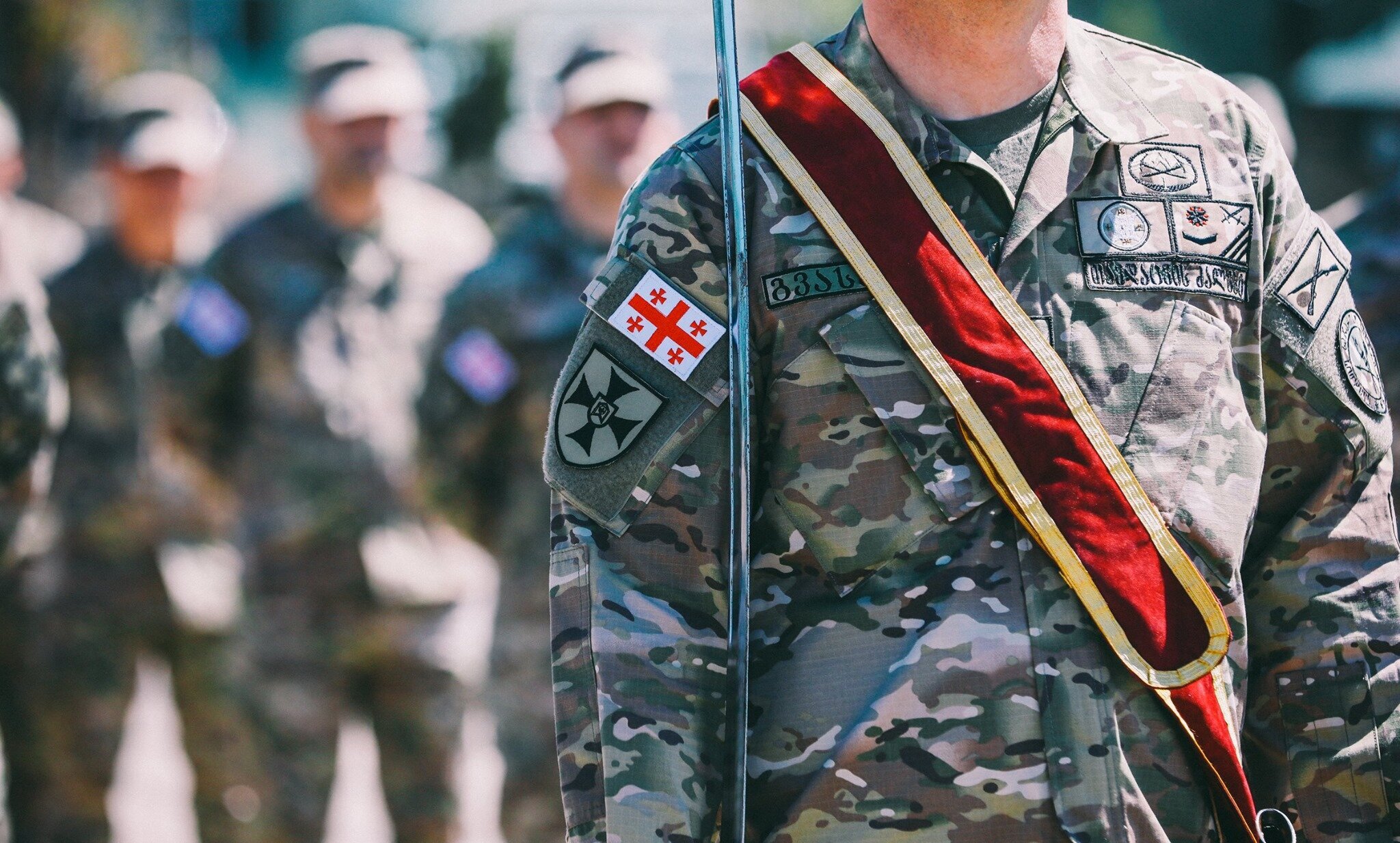
The expanding use of unmanned
systems, growing threats to critical infrastructure, and Russia’s continued
military presence in the occupied territories require Tbilisi to move from
traditional military planning towards a comprehensive defence system. Key
priorities include strategic intelligence, early warning, layered air defence,
and the resilience of state institutions.
The military environment in the Black Sea region is undergoing significant
changes that directly affect Georgia’s national security. Russia’s full-scale
war against Ukraine has demonstrated that modern military confrontation is no
longer limited to the use of conventional weapons and ground operations.
Unmanned aerial and maritime systems, precision-strike capabilities, electronic
warfare, cyber operations, intelligence systems, and the ability to process
information rapidly are playing an increasingly important role.
These developments are of
particular significance to Georgia due to its geographical position between the
Black Sea and the South Caucasus. The ports of Poti and Batumi, energy and
transport corridors, and transit routes connecting Europe and Asia underpin the
country’s strategic role. At the same time, the need to protect maritime
infrastructure, transport hubs, energy facilities, and communication networks
is growing. Geographical location alone does not guarantee security; rather, it
increases the strategic importance of infrastructure and, consequently, the
potential cost of its vulnerability.
One of the main factors
shaping Georgia’s military planning remains Russia’s military presence in
Abkhazia and the Tskhinvali region. The occupation, the so-called borderisation
process, illegal detentions, and incidents near the administrative boundary
lines exert constant pressure on the national security system. According to
data from the Council of Europe for 2026 cited in the study, the Georgian
authorities reported 21 incidents related to borderisation during the reporting
period. The document also noted unmanned aerial vehicle activity recorded by
the European Union Monitoring Mission (EUMM) beyond the administrative boundary
lines, including in areas associated with the mission’s patrols.
Thus, the range of threats
facing Georgia is not limited to the possibility of large-scale military
escalation. Prolonged pressure, localised incidents, provocations, security
violations, and the risks of gradual destabilisation are equally important.
These challenges require continuous situational monitoring, an effective
early-warning system, crisis communication, and coordination between military
and civilian institutions.
The security of the Black Sea
is becoming increasingly important. The experience of the Russian-Ukrainian war
has shown that unmanned maritime platforms and asymmetric coastal defence
capabilities can restrict the freedom of action of an adversary’s naval forces
and impose significant military and economic costs. Under current conditions,
maritime security encompasses not only the protection of territorial waters but
also shipping surveillance, port security, the monitoring of coastal
infrastructure, the protection of commercial vessels, and the resilience of
maritime communications.
In this context, the Interagency Maritime Security Council is an important institutional component of Georgia’s security system. On 5 March 2026, a meeting of the Council was held at the Joint Maritime Operations Centre, attended by representatives of the Ministries of Defence, Internal Affairs, and Foreign Affairs, as well as other relevant institutions. Discussions focused on the situation in the Black Sea, maritime security risks, and the Centre’s operational priorities. The existence of such a mechanism provides an institutional basis for coordination. However, its effectiveness should be assessed through practical outcomes: the speed of information exchange, the establishment of a common operational picture, coordination among agencies, and the ability to respond promptly to incidents.
The development of strategic
planning remains another important priority. The Georgian Ministry of Defence
document Vision 2030
sets out long-term institutional development objectives, while the Strategic
Defence Review 2021–2025 provided for an assessment of the operational
environment, the identification of military capability gaps, and the
determination of required resources and programme implementation timelines. As
the period covered by the latter document has ended, assessing the results
achieved and the extent to which emerging threats have been incorporated into
subsequent defence planning cycles is of particular importance in 2026.

According to the study, GEL
1.89 billion has been allocated to the Ministry of Defence in Georgia’s 2026
state budget (approximately
USD 729 million). However, the volume of funding alone is not a
sufficient indicator of military effectiveness. The distribution of resources
among combat training, weapons modernisation, logistics, maintenance,
infrastructure, specialist training, and the full life-cycle support of
military systems is of fundamental importance. The acquisition of modern
equipment does not guarantee the development of actual combat capabilities
without trained personnel, spare parts, technical support, reliable
communications, and the necessary logistical resources.
The experience of Ukraine
highlights several key lessons for Georgia’s defence policy:
Against this background, eight
priority areas for the modernisation of Georgia’s defence sector can be
identified:
Cooperation with NATO and
bilateral partners remains an important external resource for modernisation.
Practical cooperation, including through the Substantial NATO–Georgia Package
(SNGP), contributes to the development of military interoperability, military
education, institutional reforms, and national resilience. However, Georgia is
not a member of NATO and does not benefit from the collective defence
guarantees provided for under Article 5 of the North Atlantic Treaty.
International partnerships should therefore be regarded as a means of
strengthening the country’s own capabilities rather than a substitute for
national defence responsibilities.
Ultimately,
Tbilisi’s main challenge lies not merely in increasing defence expenditure or
acquiring new weapons systems. It concerns the development of an interconnected
defence architecture capable of identifying threats in a timely manner,
ensuring the resilience of command and control, protecting critical
infrastructure, and maintaining the functioning of the state during a crisis.


 Latest news
EU Allocates Another €1 Billion to Ukraine: European Military Support Takes on a Long-Term Dimension
22.Nov.2026
Europe Prepares a Military Mission for Ukraine: 2800 Troops Rehearse Post-War Deployment Scenarios
21.Nov.2026
Russian Missiles and a Drone Fall on Polish Territory: NATO Faces New Threats on Its Eastern Flank
21.Nov.2026
Russia Strikes Kyiv Bridges Following Ukraine’s Attack on the Crimean Bridge: Transport Infrastructure Becomes a New Front in the Escalation
20.Nov.2026
The "Coalition of the Willing" Discusses Security Guarantees and Continued Support for Kyiv
19.Nov.2026
Tanker Sinks off Bulgaria After Being Hit Four Times: All 19 Crew Members Rescued
18.Nov.2026
Europe Accelerates Defence Integration: EU Identifies 8 Priorities for Joint Weapons Development
17.Nov.2026
Bulgaria and North Macedonia Plan to Begin Construction of New Border Crossing in October 2027
17.Nov.2026
Central Asia Accelerates Digitalisation of the Trans-Caspian Transport Corridor
16.Nov.2026
Bulgaria, Romania and Turkiye Deploy Naval Assets in BETUL 8 Rescue Operation
16.Nov.2026
Armenia Becomes the EU’s Leading Partner in the South Caucasus: Georgia Loses Influence in Europe’s Regional Strategy
15.Nov.2026
Ukraine Expands Its Campaign Against Russia’s Strategic Infrastructure
15.Nov.2026
Defence Partnerships without a Common Strategy? Turkiye Expands Military Ties with Qatar, Saudi Arabia and Pakistan
14.Nov.2026
Kobakhidze Says Georgia is Ready to Restore Political Dialogue with the European Union
14.Nov.2026
European Leaders Warn of Growing Russian Pressure on Armenia and Pledge Support to Yerevan
14.Nov.2026