
 24 Aug 2026









Kazakh President Proposes to Reduce Threshold for Political Parties, Sets Priorities for 2021
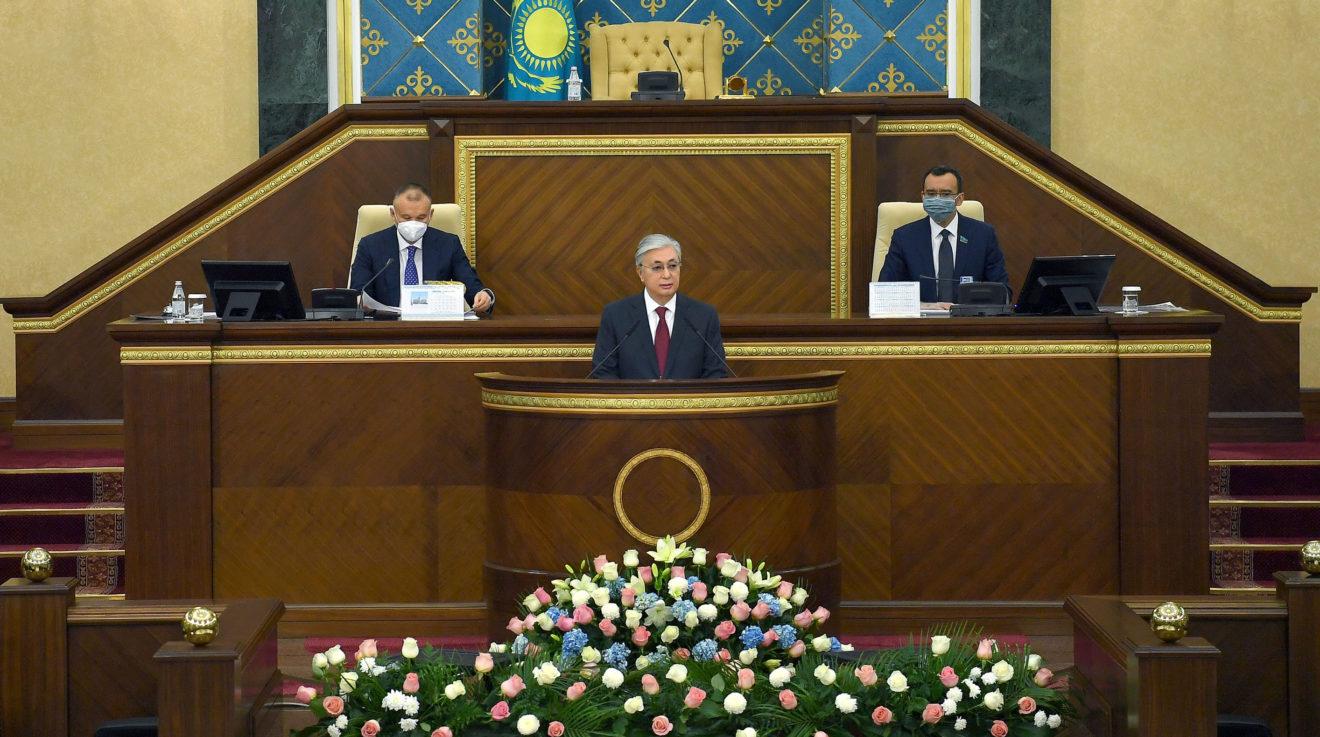
NUR-SULTAN – Kazakh President Kassym-Jomart Tokayev proposed further political modernization and outlined his 2021 priorities for the Kazakh Parliament and government at the Dec. 15 opening of the first session of the Parliament of the seventh convocation.
At the end of the last parliamentary elections, two Kazakh political parties were just a few percent away from earning seats in the Majilis (lower house of the Parliament). The President proposed to reduce the mandatory vote threshold from seven to five percent for more political parties to be able to enter the Majilis and, thereby, increase the political competition.
“The time has come to make such a decision. Such a rule will stimulate legally registered parties to participate in the next elections,” he said. “This initiative will expand representation, and allow us to take into account the opinion of the widest possible layers of the population when developing state policy.”
In addition to that, he proposed to return the option “none of the above” to the ballots because “the concept of alternative views and voting against all should be considered normal in Kazakhstan.”
The President informed the citienry about the upcoming akim (governor) elections in rural districts in Kazakhstan. These elections should “strengthen the system of local self-government at the grassroots level,” he stressed.
The Jan. 10 Kazakh parliamentary elections coincided with Kazakhstan’s 30th anniversary year of independence. In this historical year, Tokayev called on the deputies to focus their efforts on building “an effective state and a just society.”
“The main priority is to improve the quality of life and increase the well-being of citizens. The people are waiting for a full return and concrete results from the socio-economic programs we have implemented,” he said.
Tokayev instructed the Parliament to make every effort to develop the rule of law and strengthen government approval.
“The essence of reforms in this area lies in the reasonable decentralization of the system, modernization of the state apparatus, optimization of the quasi-public sector, and digitization of all procedures. Thus, the state apparatus will become as compact, open, and efficient as possible, and the decision-making process will become flexible and transparent. Socio-economic development is impossible without proper protection of the rights of citizens,” Tokayev said.
The President also stressed the importance of modernizing social policies, education, healthcare, and pension systems. In addition to this, Tokayev instructed the Kazakh government to prioritize the progressive growth of the national economy, continue countercyclical macroeconomic policies to support economic activity, as well as to focus on creating favorable conditions for doing business.
“Given the dynamic transformation of the labor market, it is necessary to stimulate the flow of labor from low-productivity to more productive sectors of the economy. As I said earlier, the industry of our country should be flexible and adaptable to change,” said Tokayev.
Another priority will be the infrastructure connecting regions, cities, districts, and villages. According to him, the government will modernize more than 3,500 villages and repair roads between villages and all national highways.
Tokayev concluded that the Parliament is the locus of all activities aimed at protecting the interests of the country. He called on the deputies to make decisions with a sense of the highest responsibility and to always remember that the Kazakh people expect positive changes.


 Latest news
Latest news
Latest newsThe United States Rapidly Expands Missile Production: Pentagon Accelerates Output of Tomahawks and Other Critical Weapons
24.Aug.2026
Record Supplies: Armenia Boosts Fish Exports to Georgia
23.Aug.2026
Political Battle During Wartime: Zelensky Opposes Elections
23.Aug.2026
Romania Approves Construction of One of the Largest Solar Power Plants in Europe
23.Aug.2026
Ex-Ukrainian Defence Minister Fails in Bid to Pressure Zelenskiy
22.Aug.2026
Upper Lars: Why Border Queues Have Become a Political Signal for Georgia and Russia
22.Aug.2026
Russia-Ukraine War: No Decisive Breakthrough on the Front and Intensifying Ukrainian Deep Strikes on Russia
21.Aug.2026
TRIPP, Peace, and a New Geopolitical Crossroads: How Armenia Has Changed One Year After Washington
20.Aug.2026
Tokayev Updates Kazakhstan Foreign Policy Concept: Astana Strengthens Its Strategic Multi Vector Approach
19.Aug.2026
Ukraine Turns Ground Robots into a New Tool in the Fight Against Russia
19.Aug.2026
Tehran Threatens a New Round of War After Talks With the US Collapse
18.Aug.2026
Drones Over Moldova: Accident or a New Threat to National Security?
17.Aug.2026
Spanish F-18 Fighter Jet Shoots Down Drone That Violated Romanian Airspace
17.Aug.2026
The Black Sea Becomes a Risk Zone: Can Turkiye Protect Key Trade Routes?
16.Aug.2026
Ukraine Intensifies Long-Range Strikes: Flamingo Missiles Hit a Rocket and Space Center and Airbase in Russia
15.Aug.2026