
 24 Jun 2026









Armenia After June 7: Pashinyan Remains in Power, Moscow Unhappy
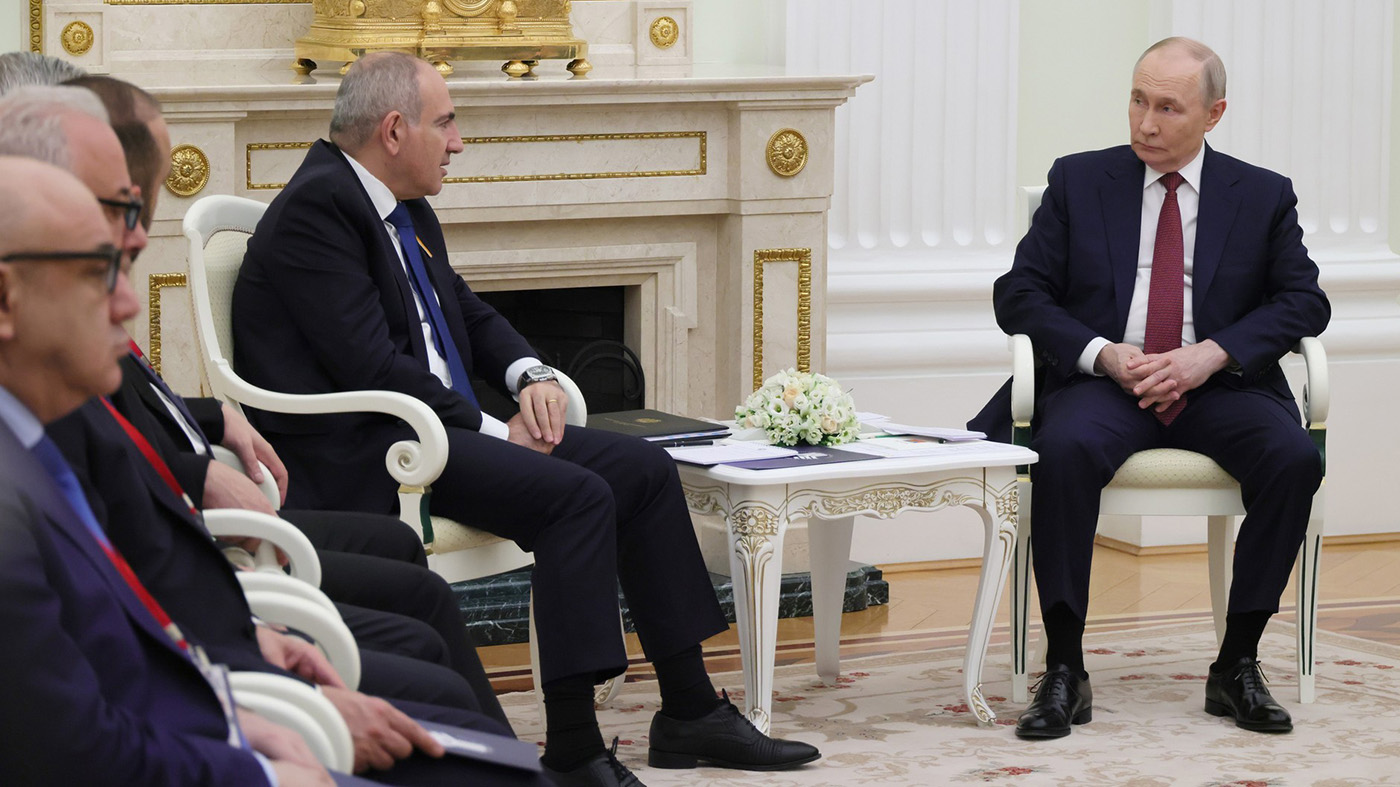
The elections in Armenia ended with a victory for Prime Minister Nikol Pashinyan’s party, which won 49.74% of the vote. Armenia’s Central Electoral Commission (CEC) announced the final results of the June 7, 2026 parliamentary elections and allocated seats as follows: the Civil Contract party received 64 seats, Strong Armenia won 29 seats, and the Armenia Alliance secured 12 seats. Prosperous Armenia, which received 3.98% of the vote, failed to enter parliament.
The international reaction was revealing: nearly all leaders of major states congratulated Armenia on holding the elections. Russia and Belarus remain notable exceptions. The Kremlin has maintained silence, while Russian state media reported “unprecedented violations”, despite the conclusions of both CIS and European observer missions, which stated that the vote was conducted without violations significant enough to affect the results.
Although Russia has stated that it is awaiting the final election results, the fact remains that it has not rushed to recognize them even after their official publication. Experts believe the Kremlin’s pause is intended to encourage potential protest sentiments in Armenia. However, large-scale protests have not materialized so far.
The ruling party retained the ability to form a government on its own but failed to secure a constitutional majority. Voter turnout reached 58.97% — almost ten percentage points higher than in 2021. Strong Armenia finished second with 23.27% of the vote. It is also the party whose representatives face the largest number of criminal investigations related to alleged vote-buying. Third place went to the Armenia Alliance, which unites former President Robert Kocharyan and the Armenian Revolutionary Federation (Dashnaktsutyun), winning about 9.9% of the vote and 12 parliamentary seats.
What’s Next for the Opposition: Legal Challenge or Street Pressure?
The CEC ruled that after invalidating the results from three polling stations, there was no need for repeat voting.
“The Central Electoral Commission believes that invalidating the results at polling stations No. 12/13, No. 10/51, and No. 36/65 does not affect the overall election outcome”, said CEC Chairman Vaagn Hovakimyan, adding that no violations of Armenia’s Electoral Code capable of affecting the election results had been identified.
Iveta Tonoyan, a representative of Prosperous Armenia, stated:
“You are obstructing the development of democracy in the Republic of Armenia — the very democracy your own government proclaimed”.
Responding to opposition allegations of widespread violations, Arusyak Julhakyan of Civil Contract countered:
“If anything was widespread in this electoral process, it was the mass vote-buying carried out by the opposition”.
Daniel Ioannisyan, a member of the Independent Observer Alliance, described the CEC’s refusal to order repeat voting as “a clear and obvious violation of the law”.
Six opposition parties issued a joint statement:
“Full responsibility for any further escalation of the situation in the country lies entirely with Nikol Pashinyan and his administration”.
The statement was signed by the Armenia Alliance, Strong Armenia, Prosperous Armenia, Bright Armenia, the Armenian National Congress, and the National Democratic Pole.
None of the pro-Russian opposition forces has fully accepted the election results. However, rather than mobilizing supporters for street protests, they are currently focusing on legal mechanisms. Strong Armenia and the party of former Human Rights Defender Arman Tatoyan intend to appeal to the Constitutional Court, citing administrative pressure.
Expert Forecasts
David Stepanyan: Protests Will Happen, But Briefly
Political analyst David Stepanyan believes the opposition will likely attempt to organize street protests, but their potential is limited.
“Attempts to bring people into the streets will most likely occur. But I do not think this will become a prolonged campaign. We may see another ‘hot political season’ — a few days or weeks of heightened political activity. However, it is unlikely to lead to a revision of the election results or major changes in the situation”.
According to Stepanyan, the opposition will ultimately accept its mandates and begin working in parliament. Recounts may reveal technical errors but will not alter the overall outcome.
He views Russian rhetoric about election violations as politically motivated:
“Russia will eventually recognize the results. It is impossible to simultaneously refuse to recognize the elected government while negotiating with it on key bilateral issues”.
Pressure from Moscow may continue or even intensify in political and economic spheres, but relations are unlikely to collapse, as both sides remain interested in maintaining dialogue.
Foreign policy became one of the central themes of the campaign. Some voters supported closer ties with the European Union, while those favoring stronger relations with Russia backed opposition parties. Following the elections, Armenia’s European integration process, including visa liberalization efforts, may receive additional momentum.
Grant Mikaelyan: Armenian-Russian Relations May Deteriorate Further
Political analyst Grant Mikaelyan believes the opposition currently favors institutional and legal methods rather than large-scale protests.
“Isolated demonstrations are possible, but I do not yet see the conditions for major and sustained protests. The opposition is currently appealing to various institutions, and its next steps will largely depend on the decisions made. At this stage, the emphasis is clearly on institutional action”.
According to Mikaelyan, the grounds for challenging the election results extend beyond vote counting and include the broader campaign environment, including arrests, administrative pressure, and foreign interference.
“During the campaign, a narrative was actively promoted that framed the choice as one between Russia and the West, while alternative political forces often found themselves in positions where their views were discredited”.
He also commented on the situation surrounding Prosperous Armenia. According to Mikaelyan, recounts initially suggested that the party might surpass the electoral threshold, but the annulment of results at two polling stations cast doubt on that possibility once again.
“It is difficult to predict the CEC’s final decision. Regardless of the outcome, however, the situation has already become the subject of a serious political dispute and will affect perceptions of the elections’ legitimacy”.
Mikaelyan also emphasized that the concentration of a supermajority in the hands of one political force is not typical of European democracies and expressed doubts that the government and opposition can move toward a genuine culture of consensus under current conditions. He suggested that if the current opposition leaders weaken, one of the most likely new centers of opposition consolidation could emerge around Narek Karapetyan.
According to Mikaelyan, Armenian-Russian relations are likely to become even more strained:
“They are already far from being in good condition. Following a series of recent political developments, the likelihood of a deeper institutional rupture has increased significantly”.
Hovsep Khurshudyan: Even the CIS Did Not Support Moscow
Hovsep Khurshudyan, chairman of the Free Citizen NGO, believes the likelihood of large-scale street protests is extremely low.
“I do not think the opposition will be able to organize a serious protest movement. Even if attempts are made to bring people into the streets, they will most likely be symbolic actions incapable of having a real impact on the situation”.
One reason, he argues, is the lack of broad public support. In addition, many radical opposition voters are distancing themselves from politicians associated with Russian influence.
Khurshudyan does not rule out personnel changes or new criminal investigations involving certain opposition leaders but considers it unlikely that these developments will produce a new influential political alternative.
In his assessment, the chances of Prosperous Armenia entering parliament after recounts remain low, while the discrepancies identified are largely technical. Even if the party does gain parliamentary representation, it would not threaten the Civil Contract government, which could still rely on situational support from segments of the opposition on specific issues.
“Moscow’s influence within post-Soviet institutions is no longer unconditional”.
According to Khurshudyan, this is demonstrated by the fact that Russian officials’ claims of election violations were not supported even by CIS observers. Pressure from Moscow may continue, but its effectiveness is diminishing as Armenia expands its ties with the European Union.
“Armenia remains a democratic state, and this creates additional opportunities for deepening cooperation with European institutions”.
Beniamin Matevosyan: The West Actively Influenced the Pre-Election Process
Political analyst Beniamin Matevosyan believes it is too early to predict the outcome of any legal challenge to the election results.
“Much depends on the evidence the opposition presents, its ability to mobilize supporters, and how the authorities respond. Calls have already been made for demonstrations outside the CEC building on the day the final results are officially published”.
In Matevosyan’s view, the opposition does have grounds for contesting the outcome.
“In terms of the use of administrative resources, these were the most problematic elections in Armenia since 1996. Numerous violations were recorded both on election day and during the campaign. The opposition has sufficient arguments to appeal both to the CEC and the Constitutional Court”.
According to him, the issue of electoral legitimacy remains unresolved. Opposition demands include both a second round of voting and the possible annulment of the election results. Matevosyan considers it premature to discuss changes in opposition leadership.
“The opposition itself does not consider the political process finished, and future developments may follow a variety of scenarios”.
He paid particular attention to the possibility of Prosperous Armenia entering parliament, arguing that even such a development would not resolve the political crisis.
“Based on the figures published by the CEC, the country is entering a new stage of political, economic, and geopolitical crisis. Under these conditions, it will be extremely difficult for the authorities to implement key initiatives — from constitutional reforms to the ratification of a peace agreement”.
He interprets the absence of congratulations from Moscow as a signal that pressure on the Armenian government will continue.
“The range of possible actions by Moscow is very broad — from political criticism to questioning the legitimacy of the elections”.
According to Matevosyan, Western countries also actively influenced the electoral process. However, even this was not enough to push the ruling party above the 50% threshold, which he sees as evidence that a significant portion of society does not support the current political course.
The Main Outcome of the Elections
The main result of the elections is not only that Civil Contract retained power but also that a new political configuration has emerged. Pashinyan secured a stable parliamentary majority and the ability to continue implementing his political agenda. At the same time, he failed to achieve a constitutional majority, meaning he must still take into account the views of a substantial segment of society represented by the opposition.
The opposition suffered defeat but retained parliamentary representation and the support of roughly one-third of voters. As a result, Armenia’s political struggle does not end on election day — it is entering a new phase in which relations with Russia and the West, European integration, and the country’s future development will remain the central issues.
Journalist
Marine KHARATYAN


 Latest news
Latest news
Latest newsUkraine’s Battlefield Experience Opens New Opportunities in Asia’s Drone Market
19.Jun.2026
Azerbaijan’s Oil Trap: Why the Economy Is Standing Still
18.Jun.2026
Motorcycle Noise Seen as Obstacle to Air Defense Operations in Crimea
17.Jun.2026
Rising Wages and Euro Integration: Bulgaria Enters a New Economic Era
17.Jun.2026
Armenia After June 7: Pashinyan Remains in Power, Moscow Unhappy
17.Jun.2026
$300 Billion Deal: Iran Poised to Receive the Largest Investment Package in Modern Middle Eastern History
16.Jun.2026
Infrastructure Pressure: Putin Acknowledges the Economic Impact of Ukrainian Attacks
15.Jun.2026
Kyiv and Moscow Trade Blame After Damage Reported at Kyiv Pechersk Lavra
15.Jun.2026
IMF Raises Georgia’s Economic Growth Forecast to 6.5% for 2026
15.Jun.2026
EU Opens the Door to Ukraine and Moldova as First Membership Talks Begin
14.Jun.2026