
 24 Jun 2026









What are the messages from Ilham Aliyev’s latest interview and to whom are they addressed? - a talk with Arkady Dubnov at 20:00
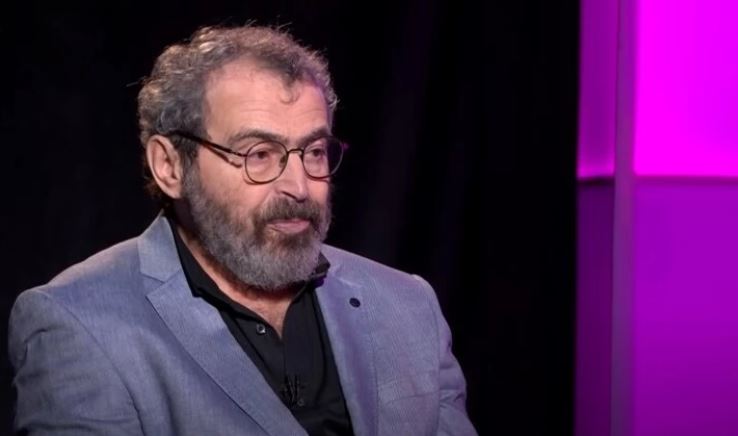
In an interview aired on January 7, Azerbaijani President Ilham Aliyev delivered a scathing critique of the West, singling out the United States, France, and the European Union. The question of who these remarks were directed toward and their broader implications was addressed by Arkady Dubnov, a political analyst and Central Asia expert, during the program “Difficult Question.”
Dubnov interprets Aliyev’s sharp tone toward the Biden administration as reflective of shifting dynamics in U.S. politics. “Aliyev felt emboldened to make such remarks because the Biden administration is on its way out, and a Republican administration under Donald Trump is poised to take office,” Dubnov explained.
He described the transition in the U.S. as a “turning point in American politics,” with significant implications for global power structures. According to Dubnov, Aliyev’s criticism of the Biden administration was something he likely held back before the U.S. presidential elections in November, where Vice President Kamala Harris lost to a Republican challenger.
“Aliyev seems to be expressing grievances that he refrained from airing before November 5,” Dubnov noted, adding that such rhetoric may have long-term consequences: “The world doesn’t easily forgive this level of candor. Who knows how it might resonate in four years?”
Aliyev’s remarks revealed deep frustration with what he perceives as the Biden administration’s neglect of U.S.-Azerbaijan relations in favor of Armenian-American ties. This, according to Dubnov, was a cornerstone of Aliyev’s message.
Touching on Trump’s attitude toward human rights and democratic values, Dubnov remarked, “Trump has never shown much respect for such principles. Leaders like Aliyev, who are sensitive to criticism on these issues, likely take satisfaction in knowing they won’t face such scrutiny anymore.”
Despite Aliyev’s critical stance, Dubnov cautioned against expecting a swift change in U.S. policy toward the South Caucasus under Trump’s administration. “While the South Caucasus is on the U.S. radar, it is not among its top priorities,” he observed.
Aliyev’s criticism of French President Emmanuel Macron and his policies toward Armenia reflects longstanding tensions. Dubnov argued that any French president, not just Macron, would adopt a similar pro-Armenian stance.
“France is one of the most Armenia-oriented countries in the world, alongside the United States. The reasons for this are well-known,” Dubnov said. He attributed Aliyev’s sharp criticism of Macron to France’s bolstered ties with Armenia under his leadership, including an arms supply agreement.
In an unexpected turn, Dubnov speculated that Aliyev’s branding of Armenia as a “fascist state” might stem from a sense of moral superiority over Moscow following the December crash of an Azerbaijani plane.
Dubnov’s analysis underscores the complexity of Aliyev’s remarks, framing them as a blend of domestic and international grievances aimed at multiple audiences. As Azerbaijan navigates its relationships with global powers, Aliyev’s words serve as both a warning and a strategic signal.
10.01.2025 12:04


 Latest news
Latest news
Latest newsUkraine’s Battlefield Experience Opens New Opportunities in Asia’s Drone Market
19.Jun.2026
Azerbaijan’s Oil Trap: Why the Economy Is Standing Still
18.Jun.2026
Motorcycle Noise Seen as Obstacle to Air Defense Operations in Crimea
17.Jun.2026
Rising Wages and Euro Integration: Bulgaria Enters a New Economic Era
17.Jun.2026
Armenia After June 7: Pashinyan Remains in Power, Moscow Unhappy
17.Jun.2026
$300 Billion Deal: Iran Poised to Receive the Largest Investment Package in Modern Middle Eastern History
16.Jun.2026
Infrastructure Pressure: Putin Acknowledges the Economic Impact of Ukrainian Attacks
15.Jun.2026
Kyiv and Moscow Trade Blame After Damage Reported at Kyiv Pechersk Lavra
15.Jun.2026
IMF Raises Georgia’s Economic Growth Forecast to 6.5% for 2026
15.Jun.2026
EU Opens the Door to Ukraine and Moldova as First Membership Talks Begin
14.Jun.2026